Our Chemicals
Browse our range of industrial and specialty chemicals
Showing 181–200 of 356 products

Ethylhexyl Stearate
A branched-chain ester emollient (INCI Ethylhexyl Stearate) that spreads dry rather than oily. The branch on the alcohol keeps it liquid and low in viscosity where straight stearate esters would be waxy.

Butyl Stearate
The n-butyl ester of stearic acid: a low-viscosity, low-pour-point oil used as an internal lubricant in PVC, a plasticiser for rubber and polyolefins, a metalworking additive and a defoamer.

Potassium Gluconate
The potassium salt of gluconic acid (E577): very soluble, non-toxic, readily biodegradable, and a way to deliver potassium or to chelate metal ions without the sodium load of the sodium salt.

Oxidised Polyethylene Wax
High-density polyethylene wax carrying carboxyl and hydroxyl groups from controlled air oxidation. The polar groups give it the pigment wetting and filler dispersion that an unmodified PE wax cannot provide.

Guar Gum Powder Industrial Grade
Industrial-grade guar gum powder for viscosity control, hydration, binding, suspension and water-loss management in oilfield, paper, textile, mining and formulated chemical applications.

Modified Tapioca Starch (Textile Sizing Grade)
Technical-grade modified tapioca starch for warp sizing. Forms a flexible, strongly adhering size film on cotton and blended yarn, runs at high solids in the size box and desizes readily with amylase.

Oxidised Tapioca Starch (Paper & Corrugating Grade)
Technical-grade oxidised tapioca starch for surface sizing and corrugating adhesive. Carboxyl groups give adhesion to cellulose fibre, and the cut chain length allows high solids at a viscosity a size press can run.
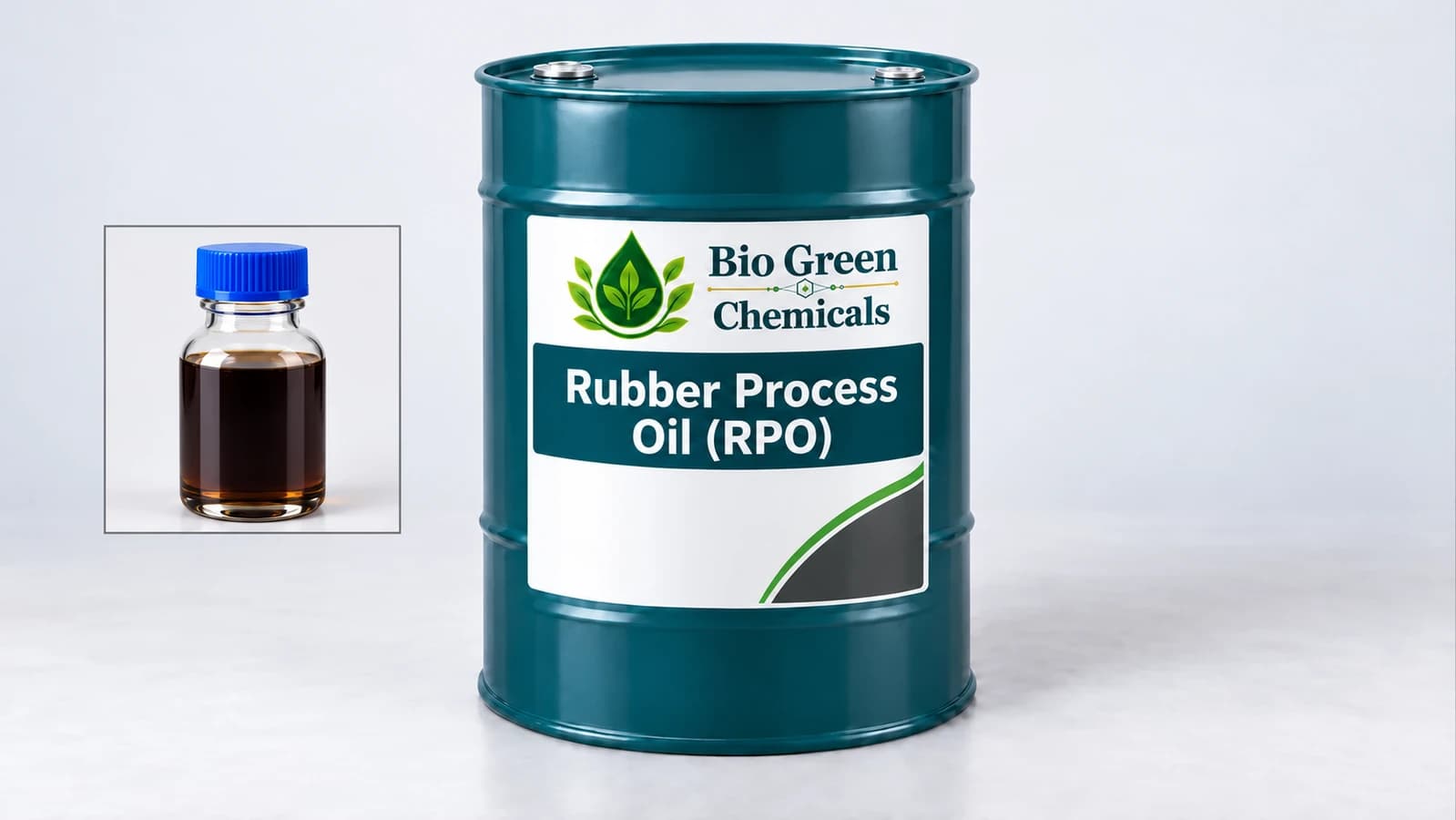
Rubber Process Oil (RPO)
Rubber Process Oil (RPO) is a dense aromatic plasticiser drawn from heavy lube processing, with VGC 0.94 – 0.99 and a viscosity of 14.0 – 37.0 cSt at 100 °C, used in tyre, tread rubber, belting and extruded rubber compounds.
Low Extract Oil (LEO)
Low Extract Oil (LEO) is the lighter, lower-viscosity extract-type process oil in this range, set at min 2.5 cSt at 100 °C with flash point min 150 °C, and used as a softener in EVA soles, sealants and lighter polymer compounds.
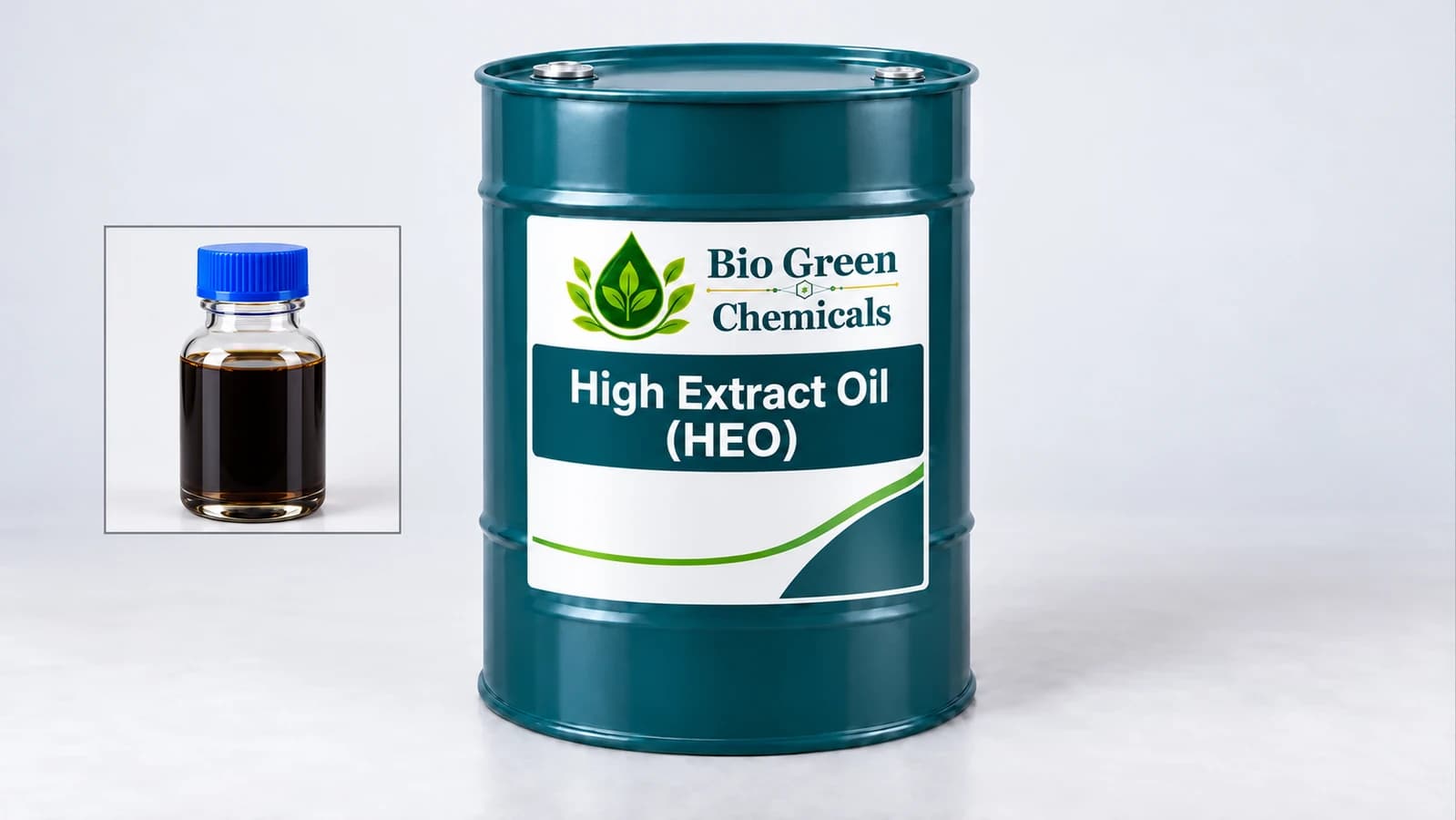
High Extract Oil (HEO)
High Extract Oil (HEO) is the heavier, more aromatic extract from solvent refining of lube distillates, with viscosity min 12.0 cSt at 100 °C, used for extending and reclaiming rubber, in tyre compounding and for fluxing bitumen.
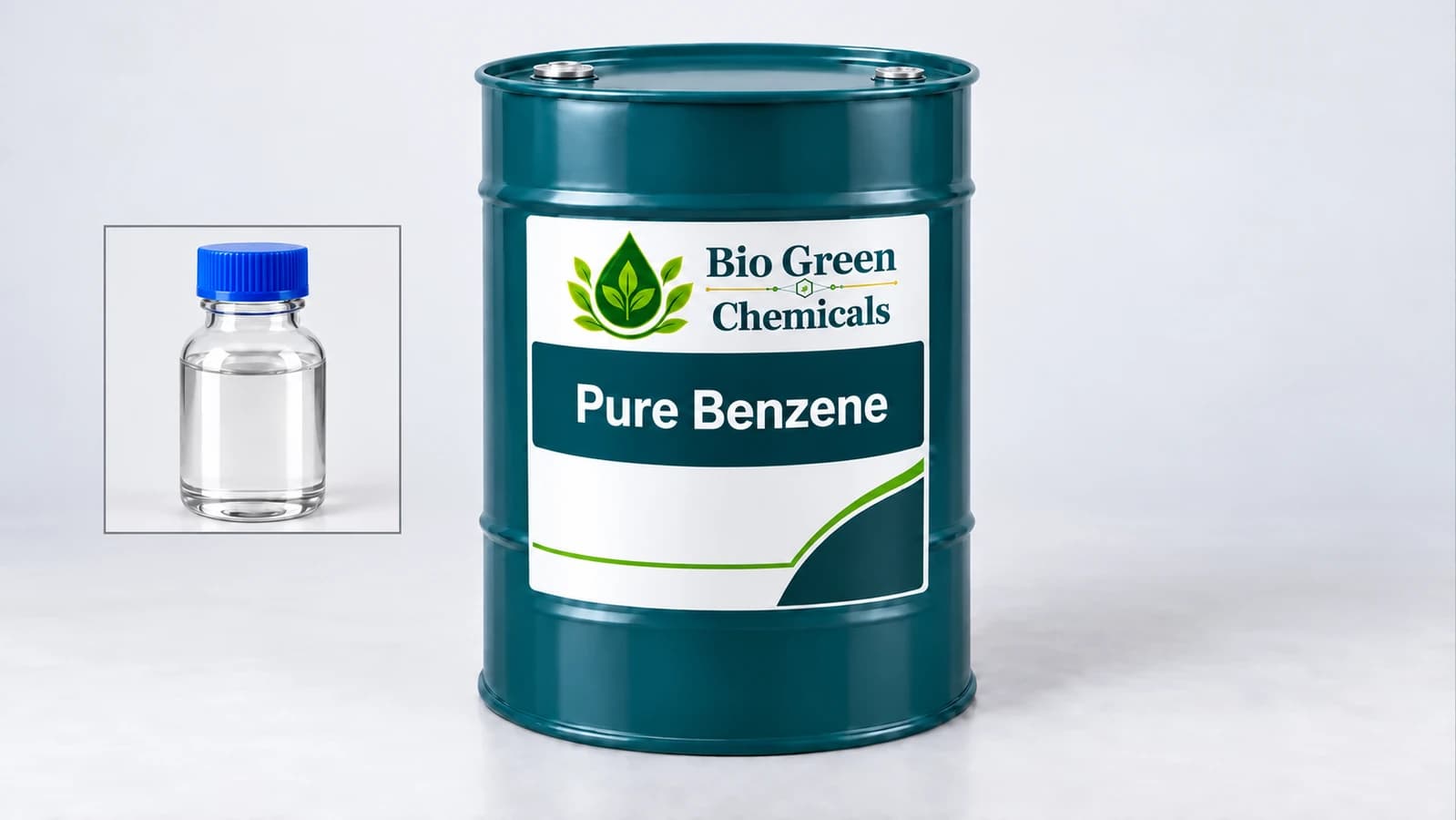
Pure Benzene (Nitration Grade)
Pure Benzene (Nitration Grade) is a reformate-derived aromatic with solidification point min 4.85 °C and a distillation range within 1°C (including 80.1°C), bought as feedstock for styrene, cumene, cyclohexane, nitrobenzene and linear alkyl benzene.
Pure Toluene (Nitration Grade)
Pure Toluene (Nitration Grade) is an aromatic solvent and chemical intermediate recovered from reformate, distilling within 1°C (including 110.6°C) with non-aromatic hydrocarbons max 1.5 vol %, used in paints, inks, thinners, adhesives and nitration towards TDI.
Mixed Xylenes (Nitration Grade)
Mixed Xylenes (Nitration Grade) is a blend of xylene isomers and ethylbenzene from reformate, with IBP min 137 °C, dry point max 143 °C and non-aromatics max 4.0 vol %, used as a solvent for coatings, resins and agrochemical formulations.
Solvent Oil (Mineral Turpentine / White Spirit)
Solvent Oil (Mineral Turpentine / White Spirit) is a clear petroleum hydrocarbon solvent with aromatics max 8.0 vol %, sulphur max 0.05 wt % and a negative doctor test, used as a paint thinner, cleaning solvent and degreaser.

DPM - Dipropylene Glycol Methyl Ether
Dipropylene glycol methyl ether, DPM, is the two-unit homologue of PM. Doubling the glycol backbone raises the boiling point sharply while keeping full water miscibility, which makes it a slow-evaporating coupling solvent.

DPMA - Dipropylene Glycol Monomethyl Ether Acetate
Dipropylene glycol monomethyl ether acetate, DPMA, is the acetate of DPM. It has no active hydrogen, so it is usable in two-pack polyurethane systems, and its high boiling point makes it a very slow tail solvent.

EE - Ethylene Glycol Monoethyl Ether(EGME)
Ethylene glycol monoethyl ether, EE or 2-ethoxyethanol (CAS 110-80-5), is the ethyl homologue of EM. It shares the same reproductive toxicity classification and restricted status, and has largely been replaced by propylene-series solvents.

DE - Diethylene Glycol Monoethyl Ether
Diethylene glycol monoethyl ether, DE or carbitol (CAS 111-90-0), is a high-boiling, fully water-miscible solvent. Under the INCI name Ethoxydiglycol it is also widely used as a penetration aid in cosmetics.

TE - Triethylene Glycol Monoethyl Ether
Triethylene glycol monoethyl ether, TE (CAS 112-50-5), combines a three-unit glycol backbone with an ethyl cap. It is a very high-boiling, water-miscible solvent used where volatility must be almost eliminated.

EM - Ethylene Glycol Monomethyl Ether
Ethylene glycol monomethyl ether, EM or 2-methoxyethanol (CAS 109-86-4), is the shortest E-series glycol ether. It is classified as a reproductive toxicant in the EU and its use is restricted, so supply is for permitted industrial uses only.