Our Chemicals
Browse our range of industrial and specialty chemicals
Showing 78 products
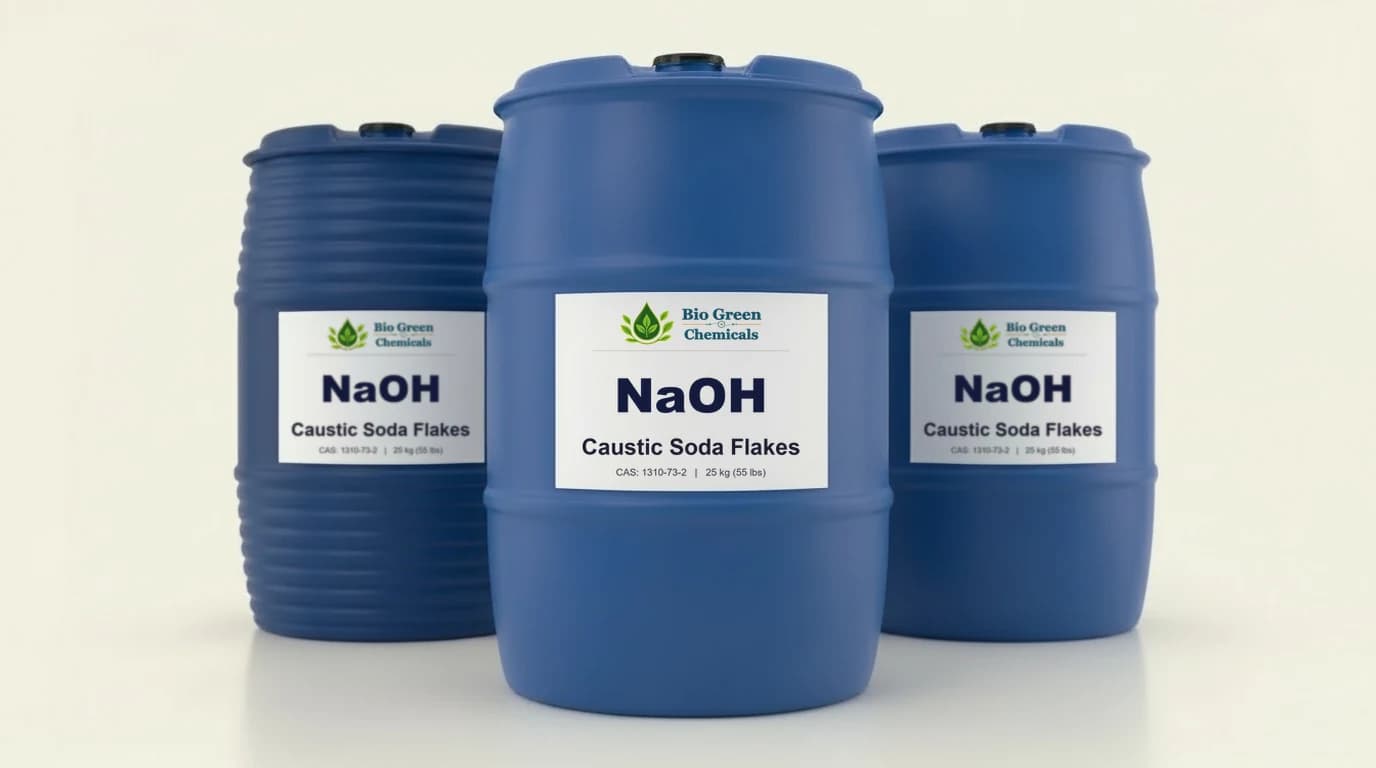
Caustic Soda Flakes
Caustic soda flakes (CAS 1310-73-2) are sodium hydroxide in thin flake form at 99 percent minimum. The large surface area dissolves fast, but it also makes the flakes dusty and quick to absorb atmospheric moisture.
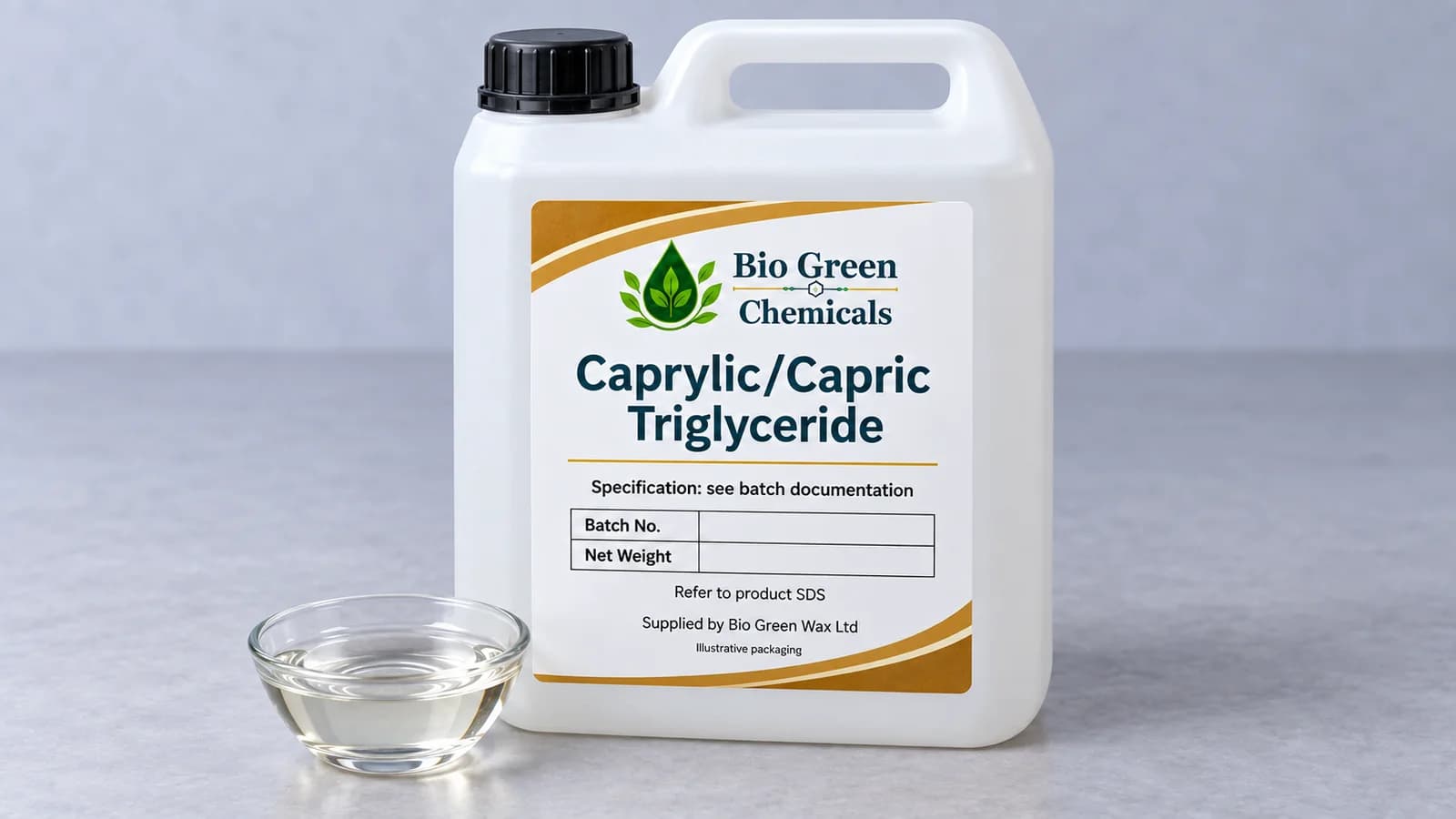
Caprylic/Capric Triglyceride
Caprylic/capric triglyceride (CAS 65381-09-1) is a light emollient ester made by recombining fractionated C8 and C10 fatty acids with glycerol. It has the feel of an oil but none of a natural oil's tendency to go rancid.
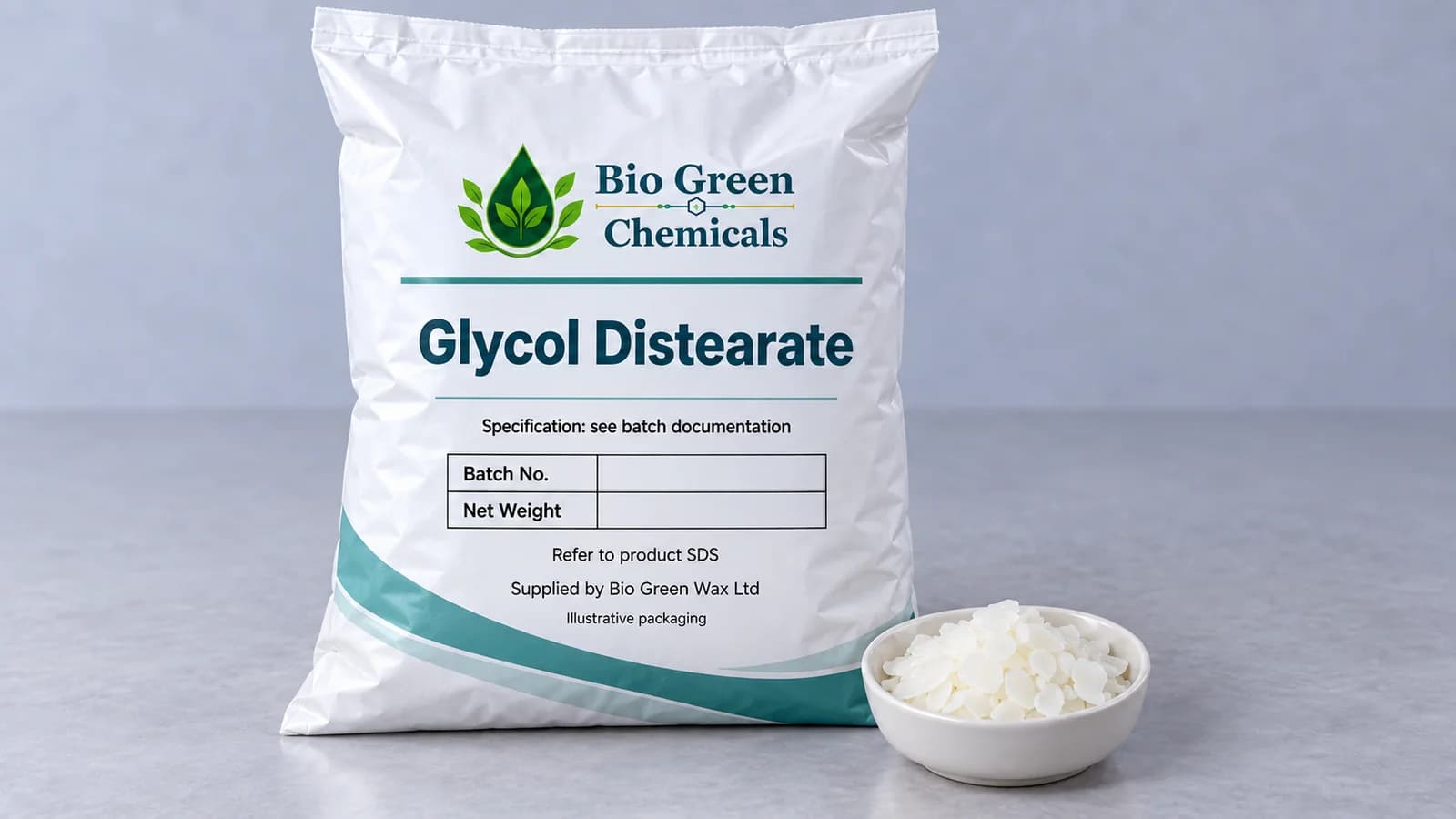
Glycol Distearate
Glycol distearate (CAS 627-83-8, INCI Glycol Distearate) is the pearlising agent that gives shampoos and body washes their opalescent shimmer. The effect comes from crystals that form as the product cools, not from any added pigment.
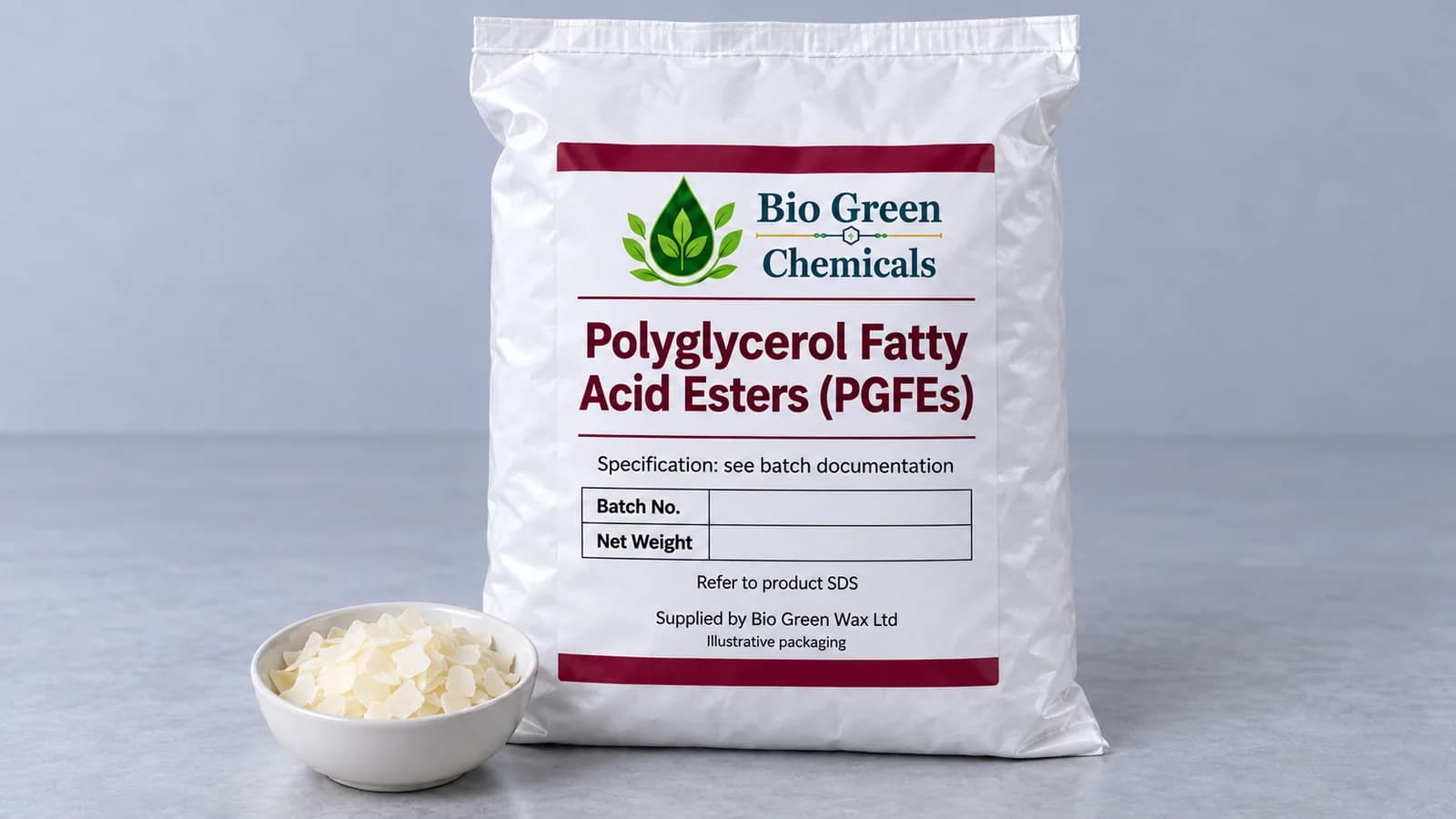
Polyglycerol Fatty Acid Esters (PGFEs)
Polyglycerol fatty acid esters are non-ionic emulsifiers made by esterifying polymerised glycerol with fatty acids. They cover a wide HLB range without any ethoxylation, which is why they are the usual choice for PEG-free formulation.
Sodium Methyl Cocoyl Taurate (SMCT)
Sodium methyl cocoyl taurate (CAS 61791-42-2) is a taurine-based anionic surfactant, known as SMCT. It foams richly even in hard water, where soap and many sulfates fail, and remains mild across a wide pH range.
Sodium Lauroyl Glutamate
Sodium lauroyl glutamate (CAS 29923-31-7) is an anionic surfactant built from glutamic acid and coconut-derived lauric acid. Because it works at skin-compatible pH rather than requiring alkalinity, it is markedly milder than soap.
Cocamide DEA (CDEA)
Cocamide DEA (CAS 68603-42-9) is a non-ionic foam booster and thickener made from coconut fatty acids and diethanolamine. Its regulatory position varies by market, so permitted status should be confirmed before it is specified.
Cocamide MEA (CMEA)
Cocamide MEA (CAS 68140-00-1) is a non-ionic foam booster made from coconut fatty acids and monoethanolamine. Supplied as a waxy solid rather than a liquid, it gives a creamier lather than the DEA type and avoids its regulatory baggage.
Polysorbate 20
Polysorbate 20 (CAS 9005-64-5, INCI Polysorbate 20) is a non-ionic solubiliser made from sorbitol and lauric acid. Its high HLB of about 16.7 is what lets it carry fragrance and essential oils into clear water-based products.
Polysorbate 60
Polysorbate 60 (CAS 9005-67-8, INCI Polysorbate 60) is a non-ionic emulsifier based on stearic acid, with an HLB of about 14.9. Unlike the solubiliser grades it is used to build stable opaque oil-in-water creams and lotions.
Polysorbate 80
Polysorbate 80 (CAS 9005-65-6, INCI Polysorbate 80) is a non-ionic solubiliser based on oleic acid, with an HLB near 15.0. Its longer unsaturated chain suits heavier oils that Polysorbate 20 cannot hold in clear solution.
Jasmine Sambac Botanical Extract
Jasmine sambac botanical extract is prepared from the flowers of Jasminum sambac, the Arabian jasmine. It is supplied as a solubilised extract for skin care and fragrance, distinct from the floral wax recovered from the same processing.
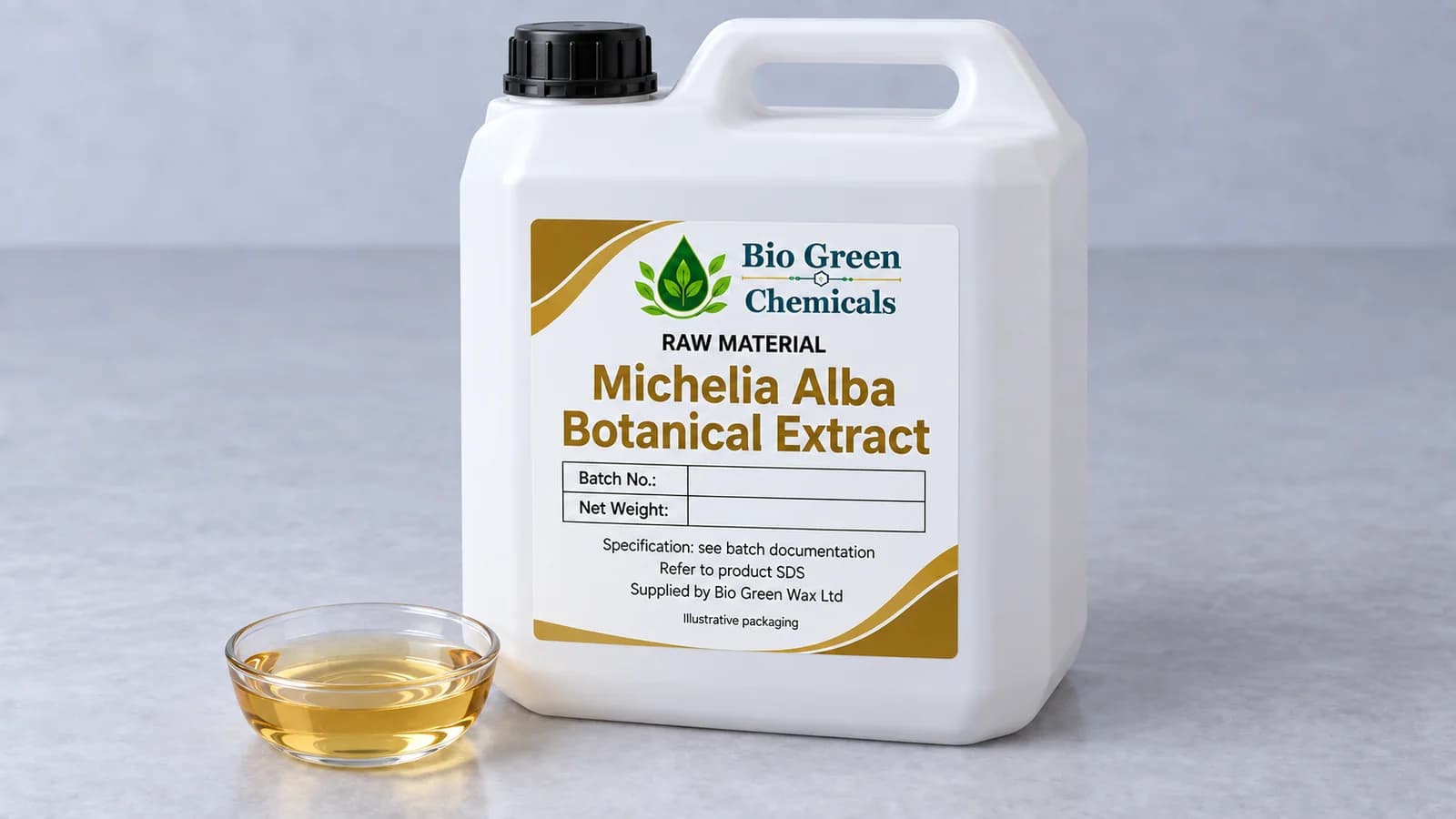
Michelia Alba Botanical Extract
Michelia alba botanical extract is prepared from the flowers of Michelia alba, the white champaca. It is supplied as a solubilised extract carrying the flower's fresh, green, tea-like character into skin and hair formulations.
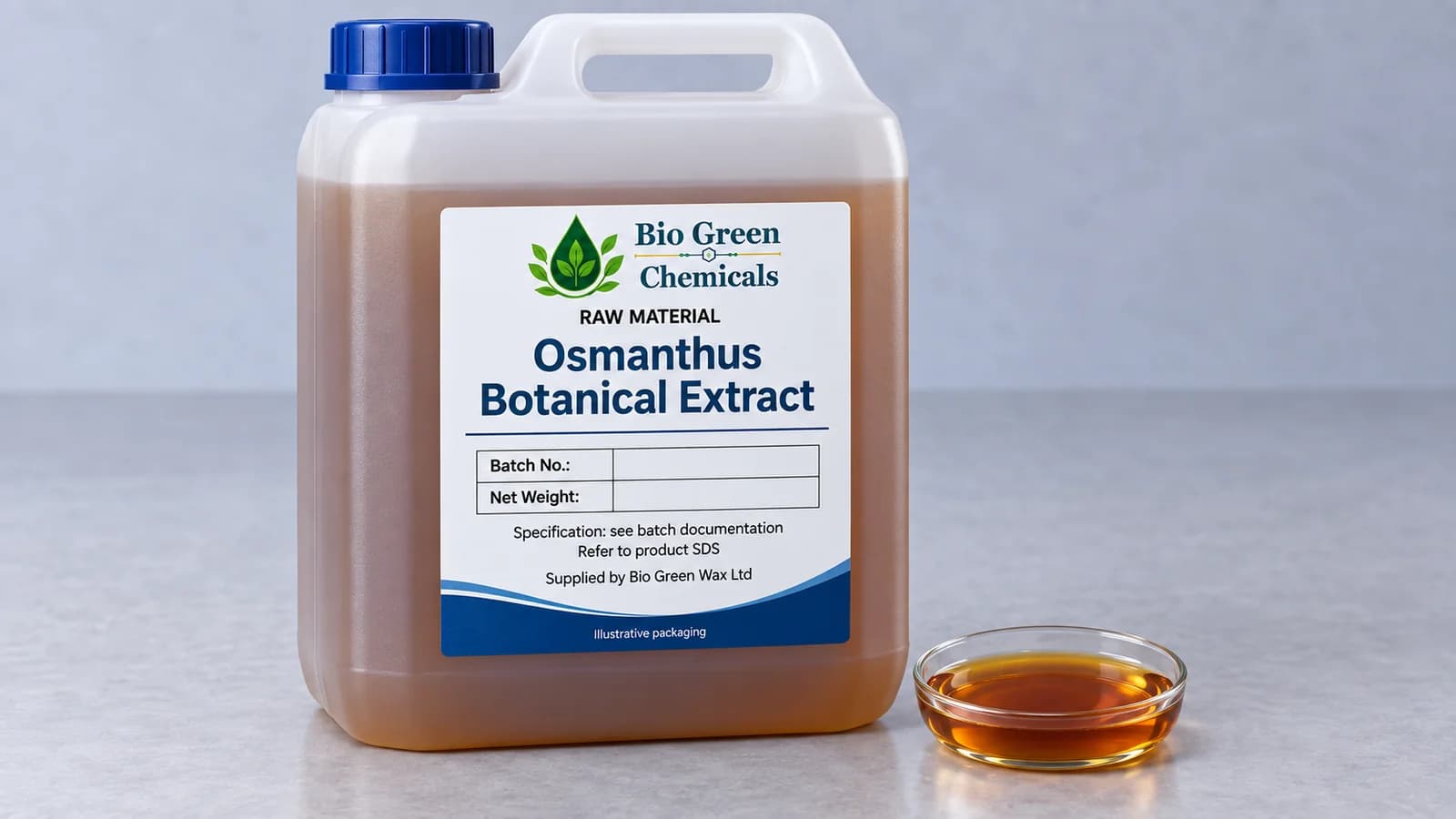
Osmanthus Botanical Extract
Osmanthus botanical extract is prepared from the flowers of Osmanthus fragrans, the sweet olive. Supplied as a solubilised extract for skin care, it carries the flower's characteristic apricot and tea-like character in a formulation-ready form.
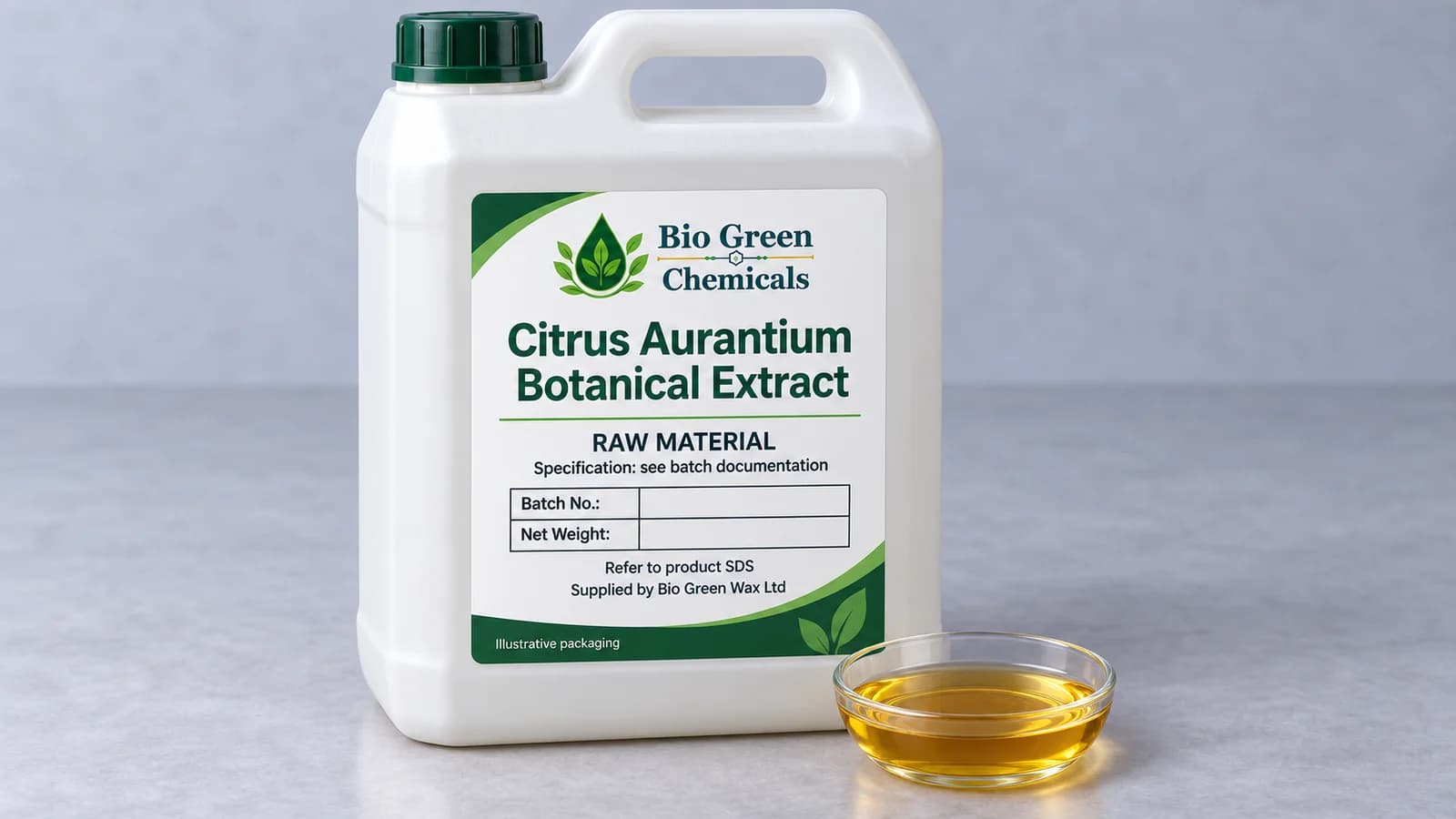
Citrus Aurantium Botanical Extract
Citrus aurantium botanical extract comes from the bitter orange tree, the single plant that yields neroli from its blossom, petitgrain from its leaves and bitter orange oil from its peel. Grade therefore depends entirely on the part used.
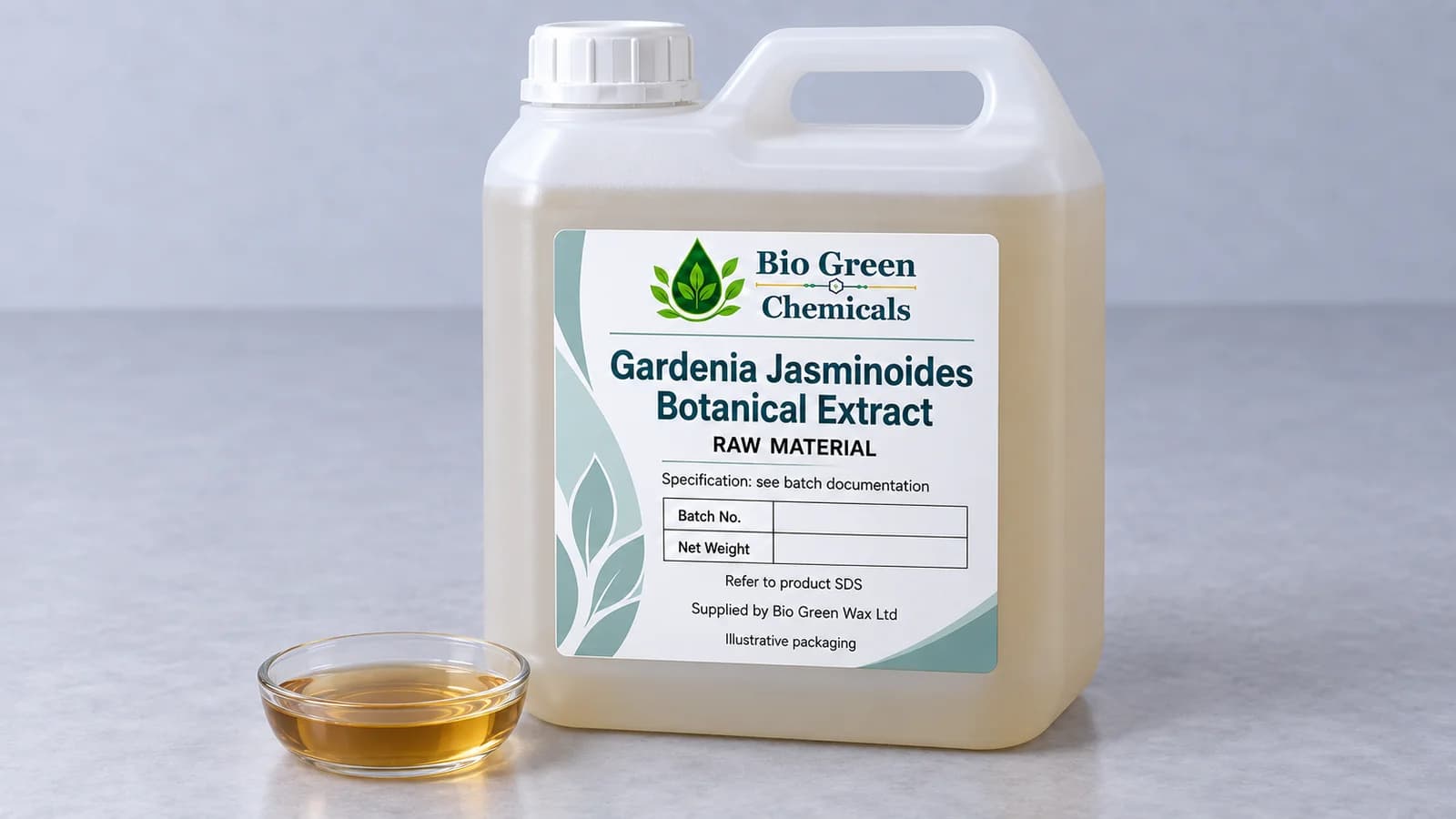
Gardenia Jasminoides Botanical Extract
Gardenia jasminoides botanical extract is prepared from the flower or fruit of the cape jasmine. The fruit is also the source of gardenia blue and yellow, natural colourants used where synthetic dyes are not acceptable.
Dicalcium Phosphate (DCP)
Dicalcium phosphate, DCP (CAS 7757-93-9), is a white insoluble powder supplying calcium and phosphorus in roughly the ratio bone uses them. Its largest market is animal feed, where it is the standard mineral supplement.
Tricalcium Phosphate (TCP)
Tricalcium phosphate, TCP (CAS 7758-87-4), is a very fine insoluble powder with a high specific surface area. That surface area is what makes it one of the most effective anticaking agents available for hygroscopic powders.
MPG - Mono Propylene Glycol
Mono propylene glycol, MPG (CAS 57-55-6, EINECS 200-338-0), does much the same job as MEG but without the toxicity. That single difference is why it, not MEG, is used anywhere near food, people or animals.
DPG - Dipropylene Glycol
Dipropylene glycol, DPG (CAS 25265-71-8, EINECS 246-770-3), is the standard diluent of the fragrance industry. It is almost odourless, low in toxicity and dissolves both fragrance oils and water-soluble materials.
Sorbitol
Sorbitol liquid (CAS 50-70-4) is a 70 percent solution of the six-carbon polyol. Industrially it is the starting material for vitamin C manufacture and a polyol for polyurethane, as much as a humectant.
Glycerine
Glycerine (CAS 56-81-5) is a trihydric alcohol recovered as the co-product of soap making and biodiesel. Industrially it is a polyol building block for alkyd and polyurethane resins as much as a humectant.
Sorbitol Powder
Sorbitol powder (CAS 50-70-4) is the crystalline form of the polyol, used where a dry, free-flowing, directly compressible solid is required rather than a syrup. Crystallising it also makes it far less hygroscopic.
Sodium Dodecyl Sulfate (SLS)
Sodium dodecyl sulfate (CAS 151-21-3) is the standard laboratory anionic detergent as well as an industrial surfactant. In SDS-PAGE it denatures proteins and coats them with uniform negative charge so they separate purely by size.
Sodium Bicarbonate
Sodium bicarbonate (CAS 144-55-8) is used industrially as a dry sorbent and a mild abrasive. Injected into hot flue gas it decomposes into a highly porous soda that captures sulphur dioxide and hydrogen chloride.
Sodium Citrate
Sodium citrate (CAS 68-04-2) is the neutral salt of citric acid, used industrially as a sequestrant and buffer where free acid would attack the substrate. It chelates without dropping pH.
Citric Acid
Citric acid (CAS 77-92-9) is used industrially as a chelating agent rather than as an acidulant. It binds calcium, iron and copper into soluble complexes, which is the basis of its use in descaling and metal passivation.
Sodium Benzoate
Sodium benzoate (CAS 532-32-1) is a vapour-phase and contact corrosion inhibitor for ferrous metals. In engine coolants and hydraulic fluids it passivates steel surfaces at low dose without the toxicity of chromate inhibitors.
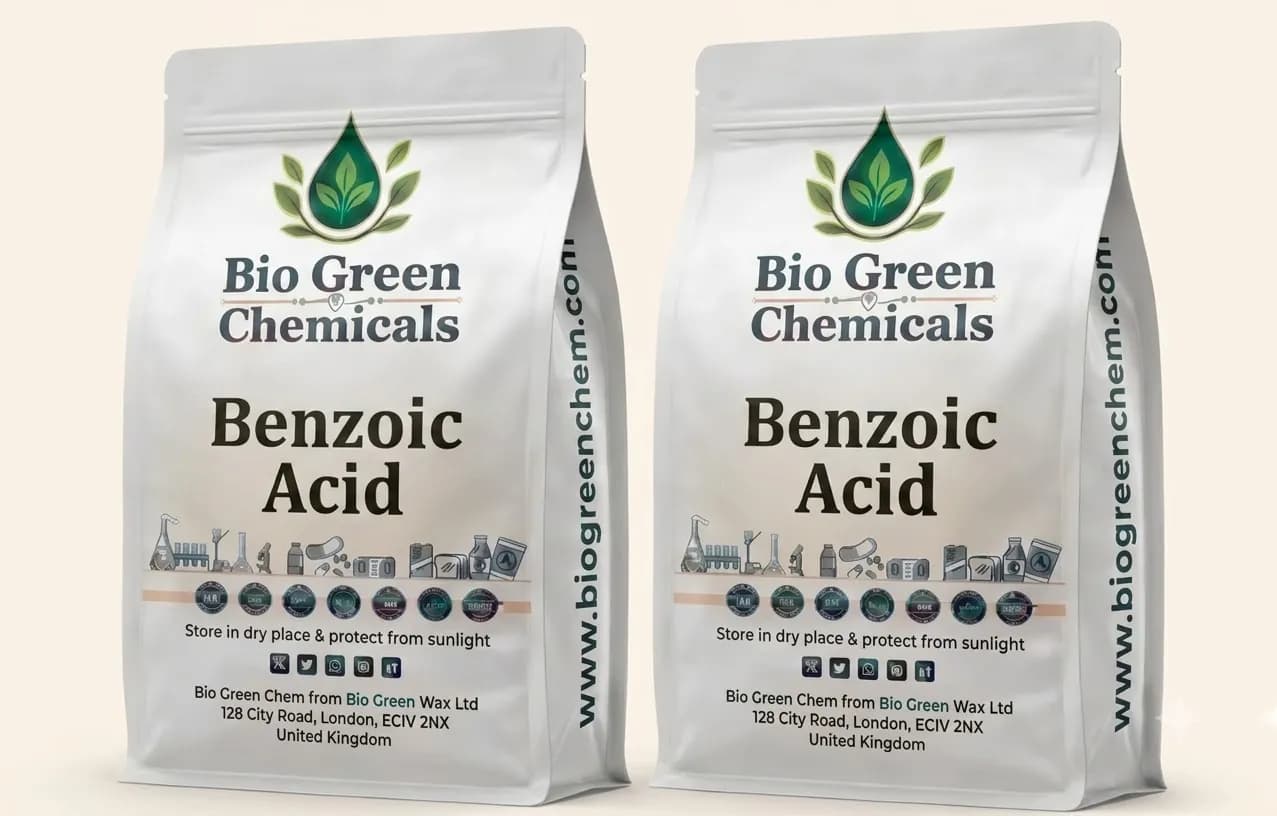
Benzoic Acid
Benzoic acid (CAS 65-85-0) is used industrially as a chemical intermediate and corrosion inhibitor rather than as a preservative. It is the feedstock for phenol, caprolactam and benzoate plasticisers.
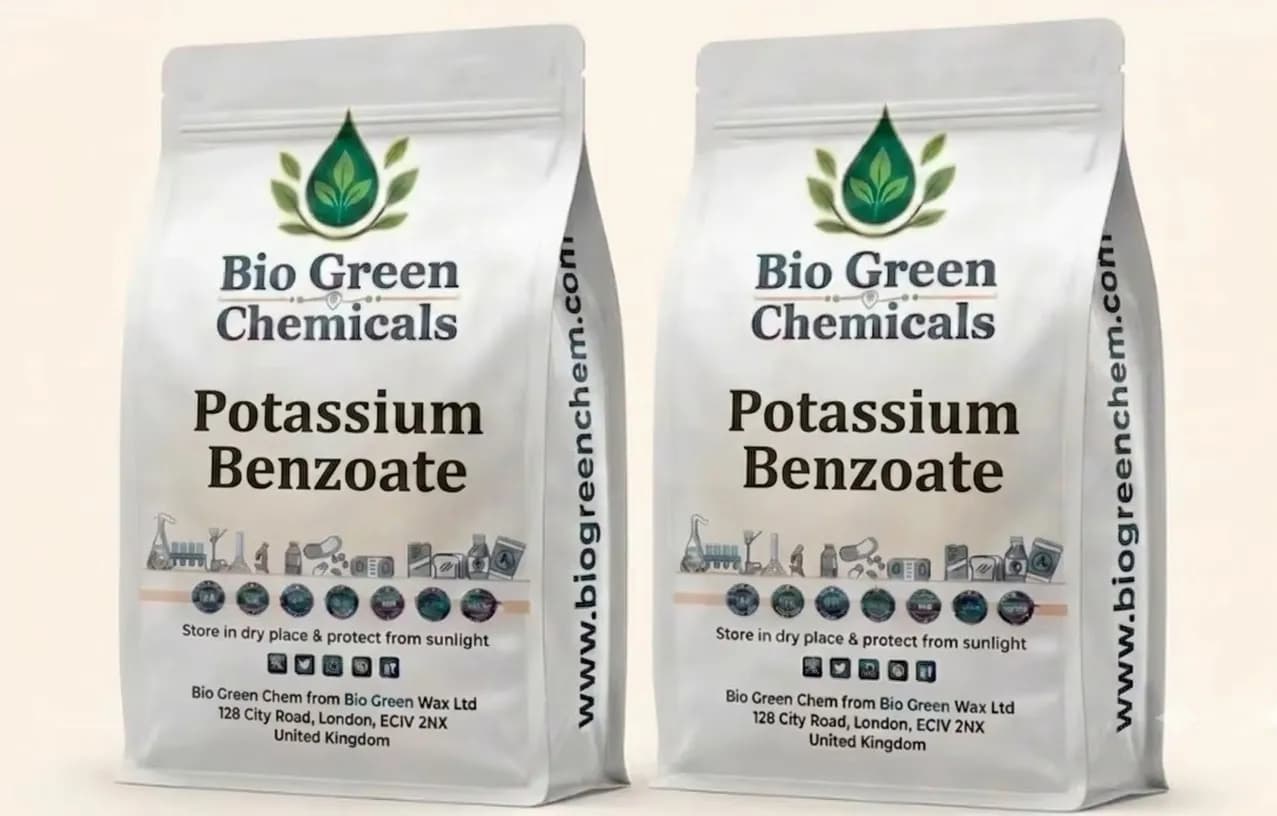
Potassium Benzoate
Potassium benzoate (CAS 582-25-2) delivers the same benzoate chemistry as the sodium salt without contributing sodium. It is specified where sodium would raise conductivity or interfere with the system being protected.
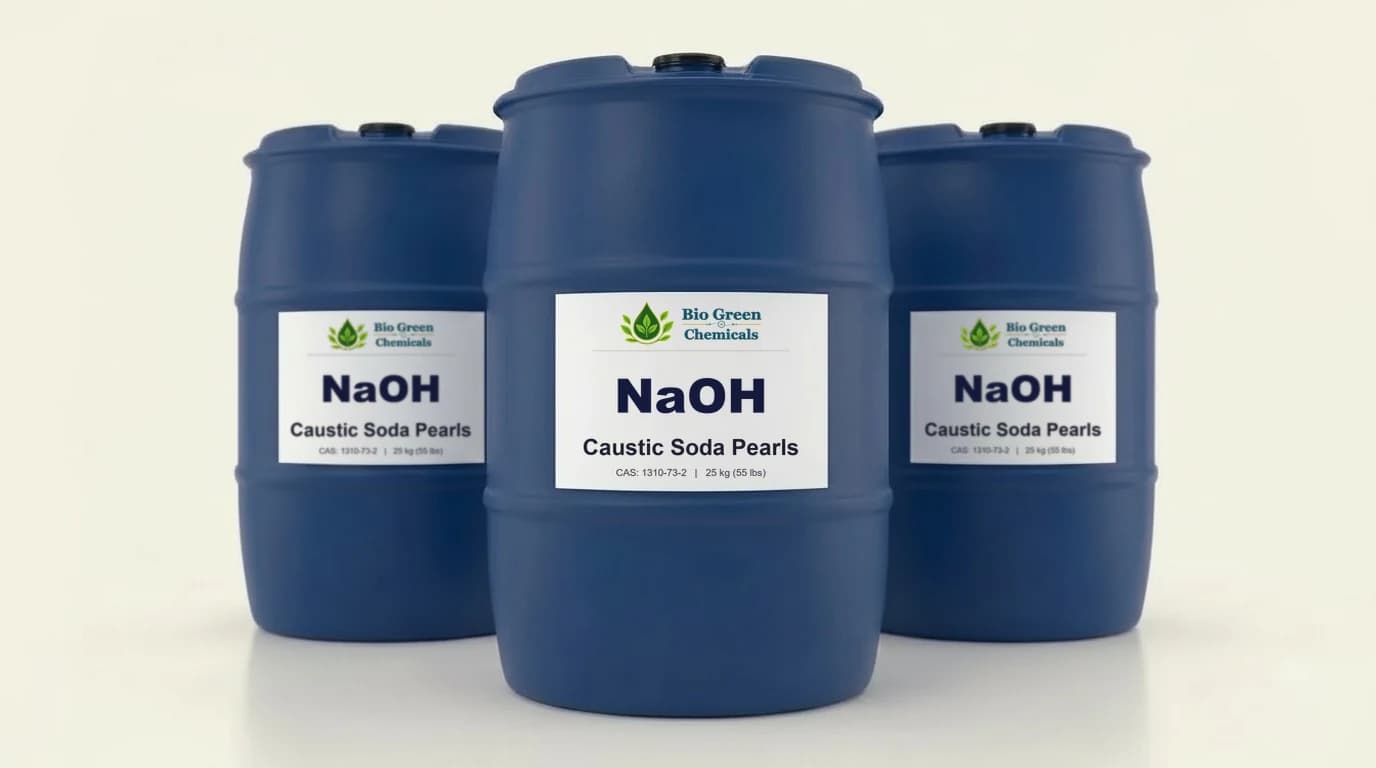
Caustic Soda Pearls
Caustic soda pearls (CAS 1310-73-2) are sodium hydroxide in small spherical beads at 99 percent minimum. The round form flows freely, generates far less dust than flakes and cakes more slowly on storage.
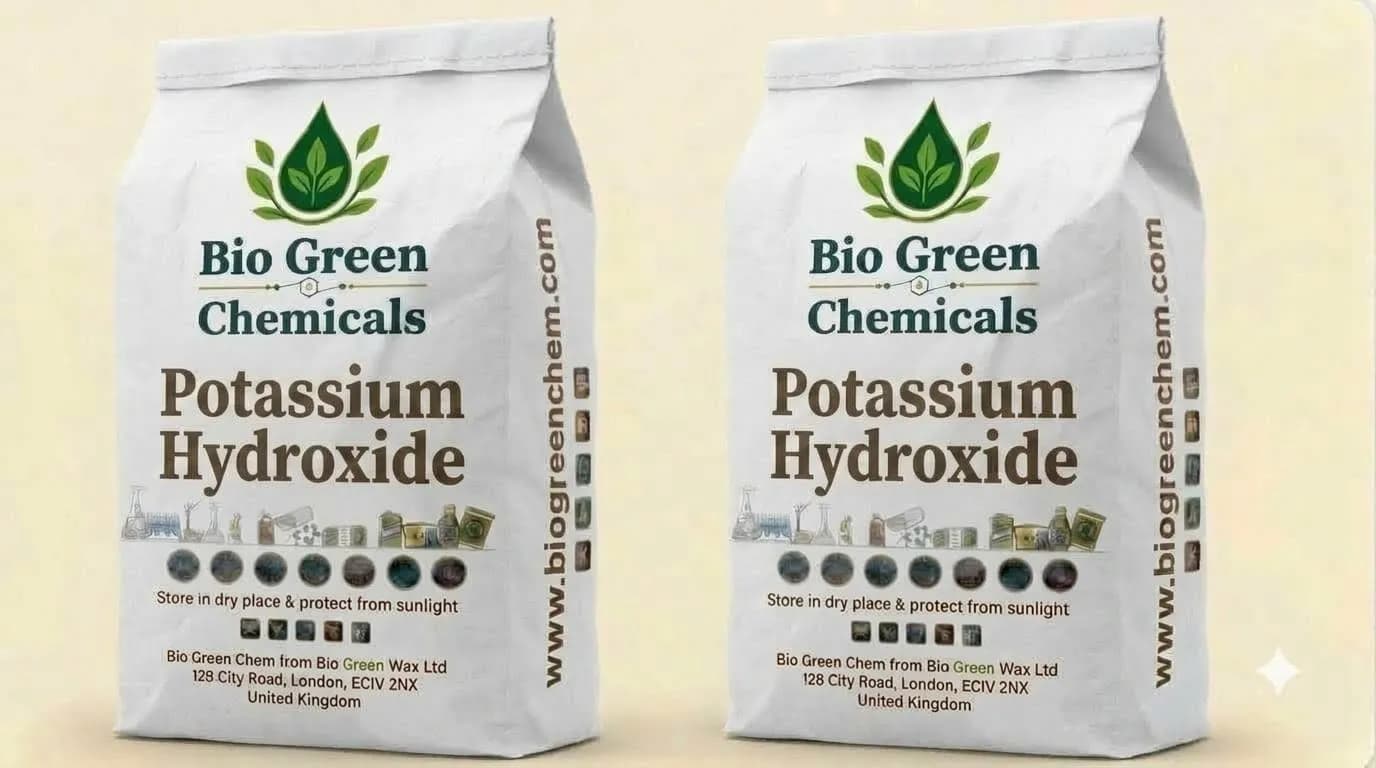
Potassium Hydroxide
Potassium hydroxide (CAS 1310-58-3), caustic potash, is the potassium analogue of caustic soda. The difference in cation matters: potassium soaps are soft and soluble where sodium soaps are hard.
Gelatine
Gelatine (CAS 9000-70-8) is partially hydrolysed collagen, graded by Bloom strength. Its industrial uses depend on its ability to form a thermoreversible gel and to adsorb strongly onto surfaces and crystals.
Xanthan Gum
Xanthan gum (CAS 11138-66-2) is used industrially for its shear-thinning behaviour and its tolerance of salt. In drilling fluids it suspends cuttings at rest yet thins under the pump, which is exactly what a mud must do.
Zinc Oxide
Zinc oxide (CAS 1314-13-2) is consumed in greater tonnage by the rubber industry than by all its other uses combined. It activates the sulphur vulcanisation system, without which accelerators barely work at all.
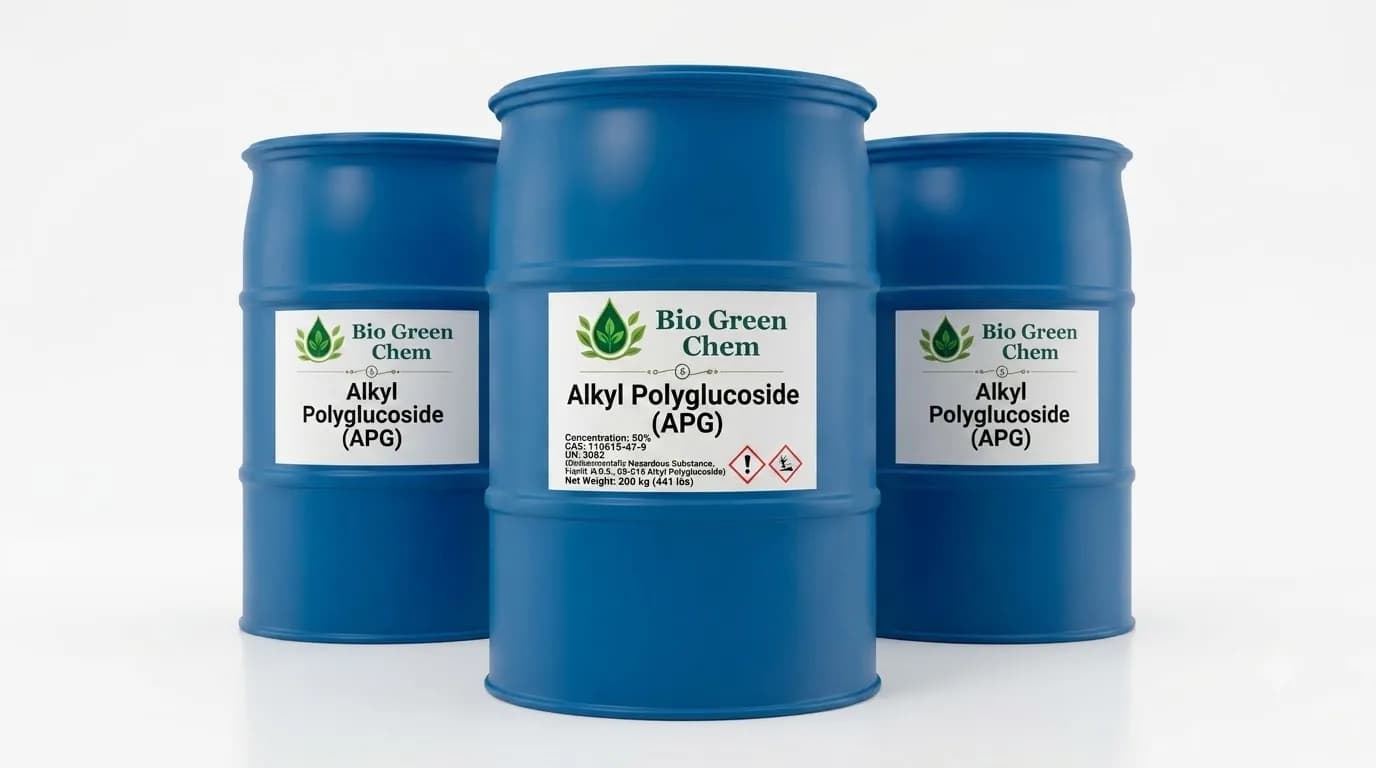
Alkyl Polyglucoside (APG)
Alkyl polyglucoside (CAS 68515-73-1, INCI Coco-Glucoside) is the rare non-ionic surfactant that stays effective in strong caustic. That alkali stability is why it is specified in heavy-duty and CIP cleaning formulations.
Polydimethylsiloxane (PDMS)
Polydimethylsiloxane (CAS 63148-62-9) is the basic silicone fluid, built on a silicon-oxygen backbone rather than a carbon one. That backbone is what gives it thermal stability and a viscosity that barely changes with temperature.
Isobornyl Acetate
Isobornyl acetate (CAS 125-12-2) is a terpene ester with a clean, fresh pine and camphor odour. It is the standard synthetic replacement for pine needle oil in functional fragrance, where cost and stability rule out the natural.
Sericin Powder
Sericin (CAS 60650-88-6) is the gum protein that binds silk fibres together in the cocoon, and it is removed during degumming. Recovering it turns what was an effluent stream into a hydrophilic cosmetic protein.
Silk Amino Acids
Silk amino acids (CAS 96690-41-4, INCI Hydrolyzed Silk) are silk protein broken down completely to free amino acids. At the lowest molecular weight of the silk range, they act as humectants rather than film formers.
Silk Peptide
Silk peptide (CAS 96690-41-4, INCI Hydrolyzed Silk) is silk protein hydrolysed only partway, leaving short chains rather than free amino acids. That intermediate size is what allows it to form a film while staying soluble.
Silk Powder
Silk powder (INCI Silk Powder) is intact fibroin micronised rather than hydrolysed, so it is insoluble. It works optically and by touch, scattering light to soften the appearance of fine lines and giving a dry, silky slip.
Sodium Cocoyl Isethionate (SCI)
Sodium cocoyl isethionate (CAS 61789-32-0) is a crystalline anionic surfactant, which is what allows a cleansing bar to be pressed at all. Liquid surfactants cannot hold bar structure; SCI can.
Sodium Hyaluronate
Sodium hyaluronate (CAS 9067-32-7, INCI Sodium Hyaluronate) is the water-soluble sodium salt of hyaluronic acid, supplied as a white powder. Molecular weight, not purity, is what separates one grade from another.
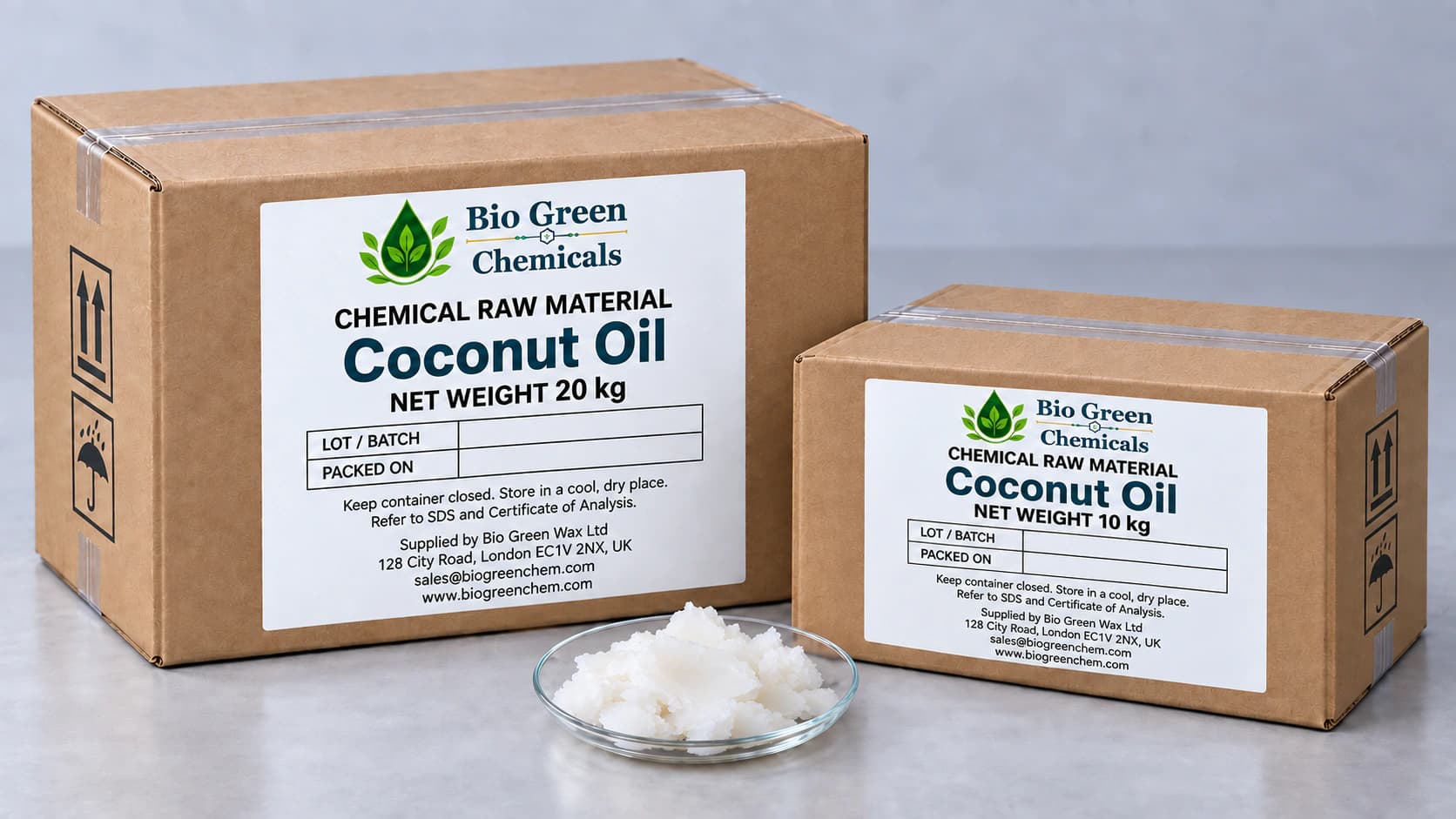
Coconut Oil
Coconut oil (INCI Cocos Nucifera Oil) is a highly saturated lauric oil used in cosmetics as an emollient and cleansing base. Its small lauric molecules penetrate hair more readily than most oils, which is the basis of its use in hair care.
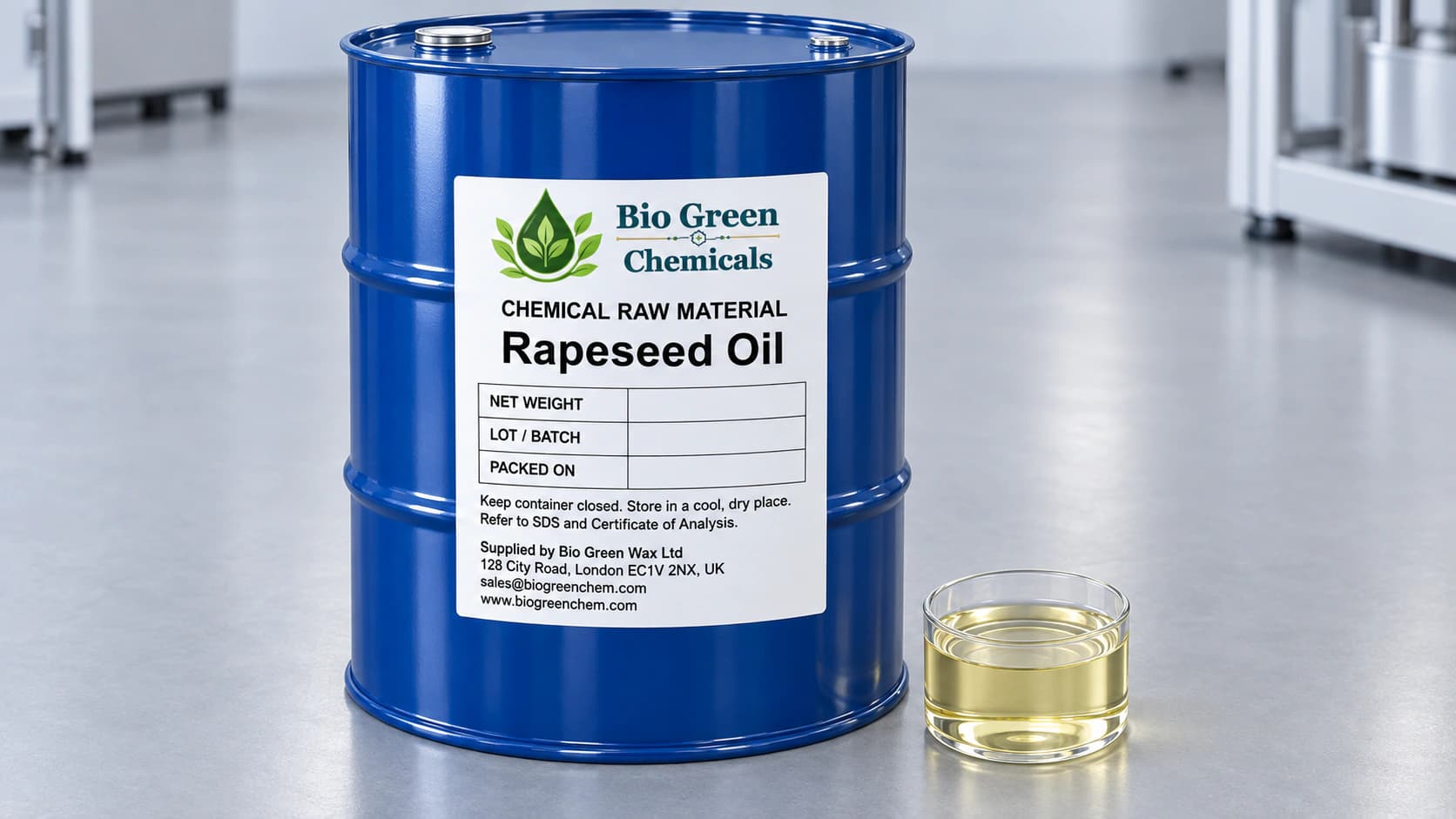
Rapeseed Oil
Rapeseed oil (INCI Brassica Campestris Oil) is a light, high-oleic emollient with the lowest saturated content of the common cosmetic oils. It absorbs quickly and is used where a vegetable oil is wanted without a heavy residual film.
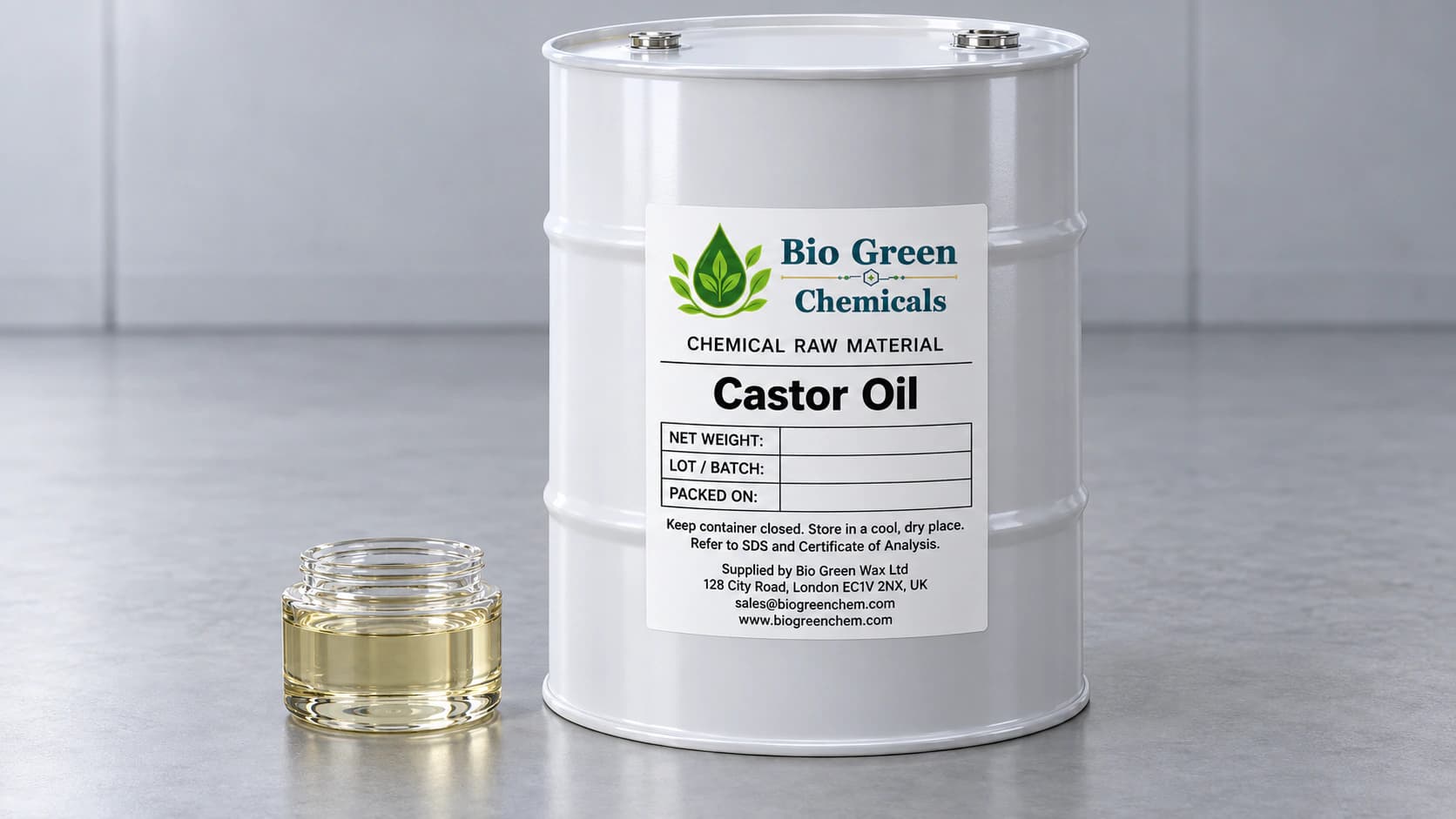
Castor Oil
Castor oil (INCI Ricinus Communis Seed Oil) is the polar oil that makes lipstick work. Its ricinoleic acid content wets and disperses pigment that non-polar oils leave clumped, and gives the wet, high-gloss film of the category.
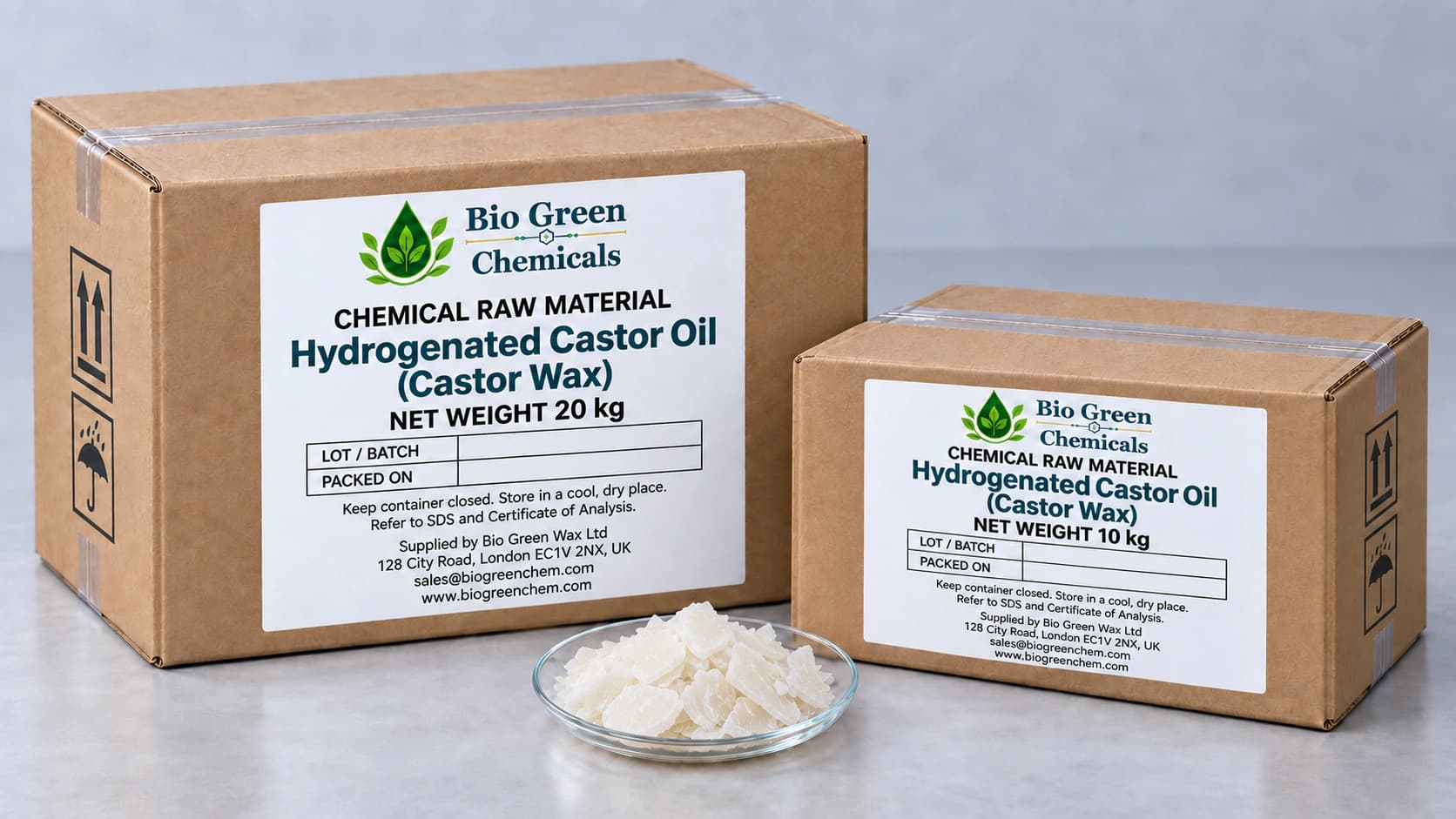
Hydrogenated Castor Oil (Castor Wax)
Hydrogenated castor oil (INCI Hydrogenated Castor Oil) is unusual among waxes in retaining free hydroxyl groups. Those groups hydrogen-bond to one another, so very small additions gel an oil phase and stop pigments settling.
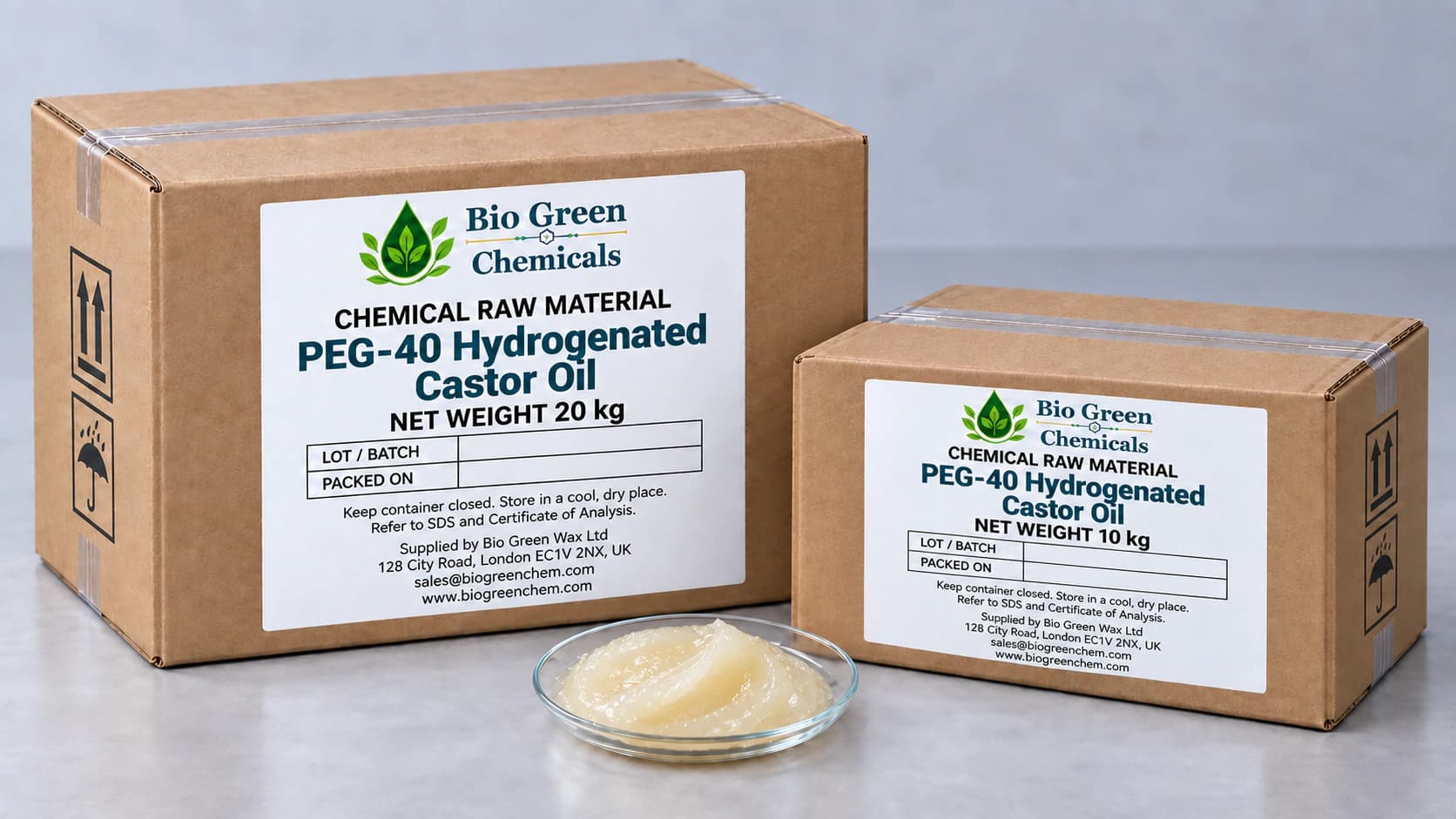
PEG-40 Hydrogenated Castor Oil
PEG-40 hydrogenated castor oil (INCI PEG-40 Hydrogenated Castor Oil) is a high-HLB solubiliser. It forms micelles too small to scatter light, which is what keeps a fragranced water-based product completely clear rather than cloudy.
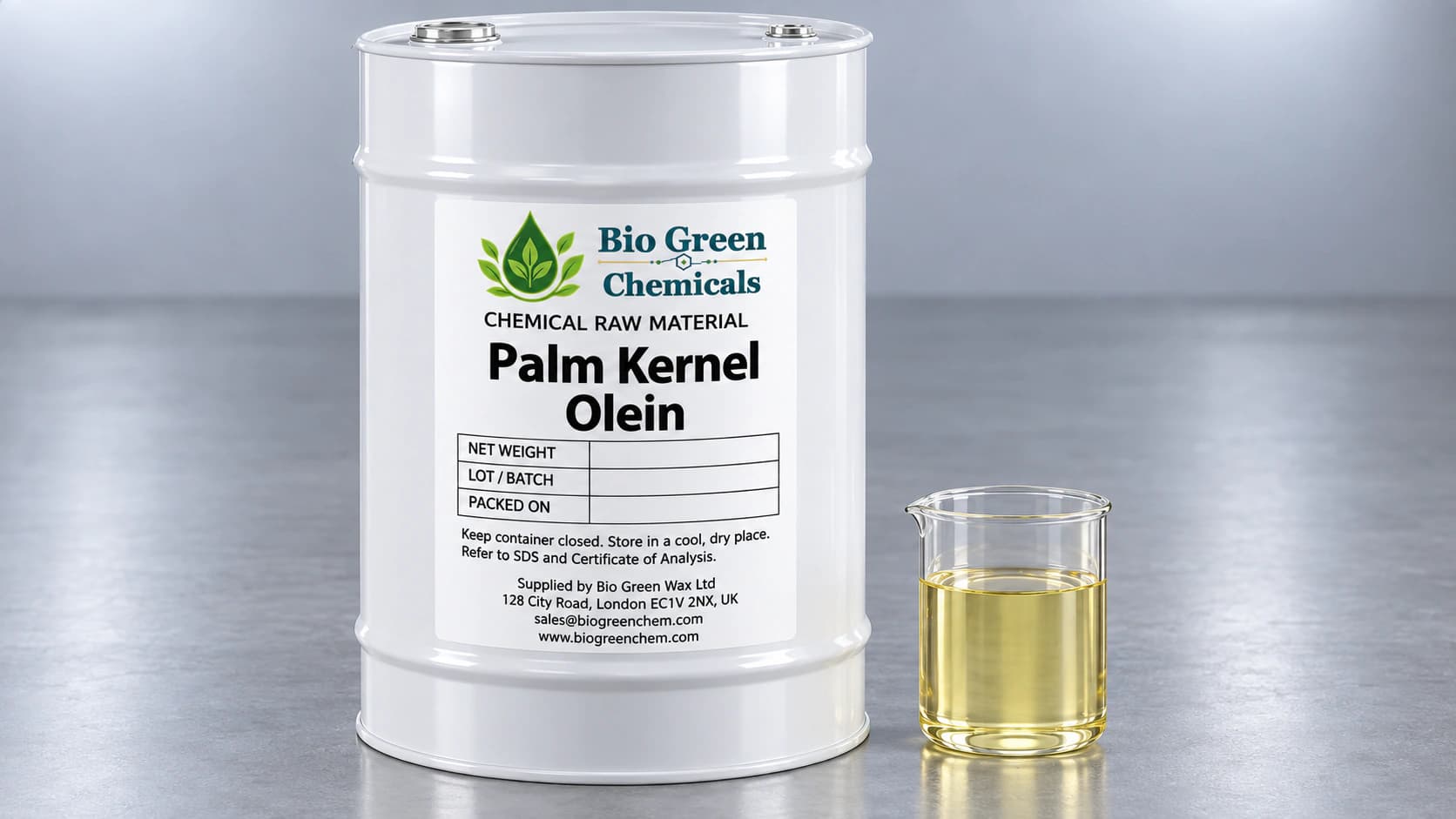
Palm Kernel Olein
Palm kernel olein is the liquid lauric fraction of palm kernel oil, with a cloud point of 8 to 12 degrees Celsius. Staying fluid at room temperature is what makes it usable in liquid soaps, shampoos and lotions without melting.
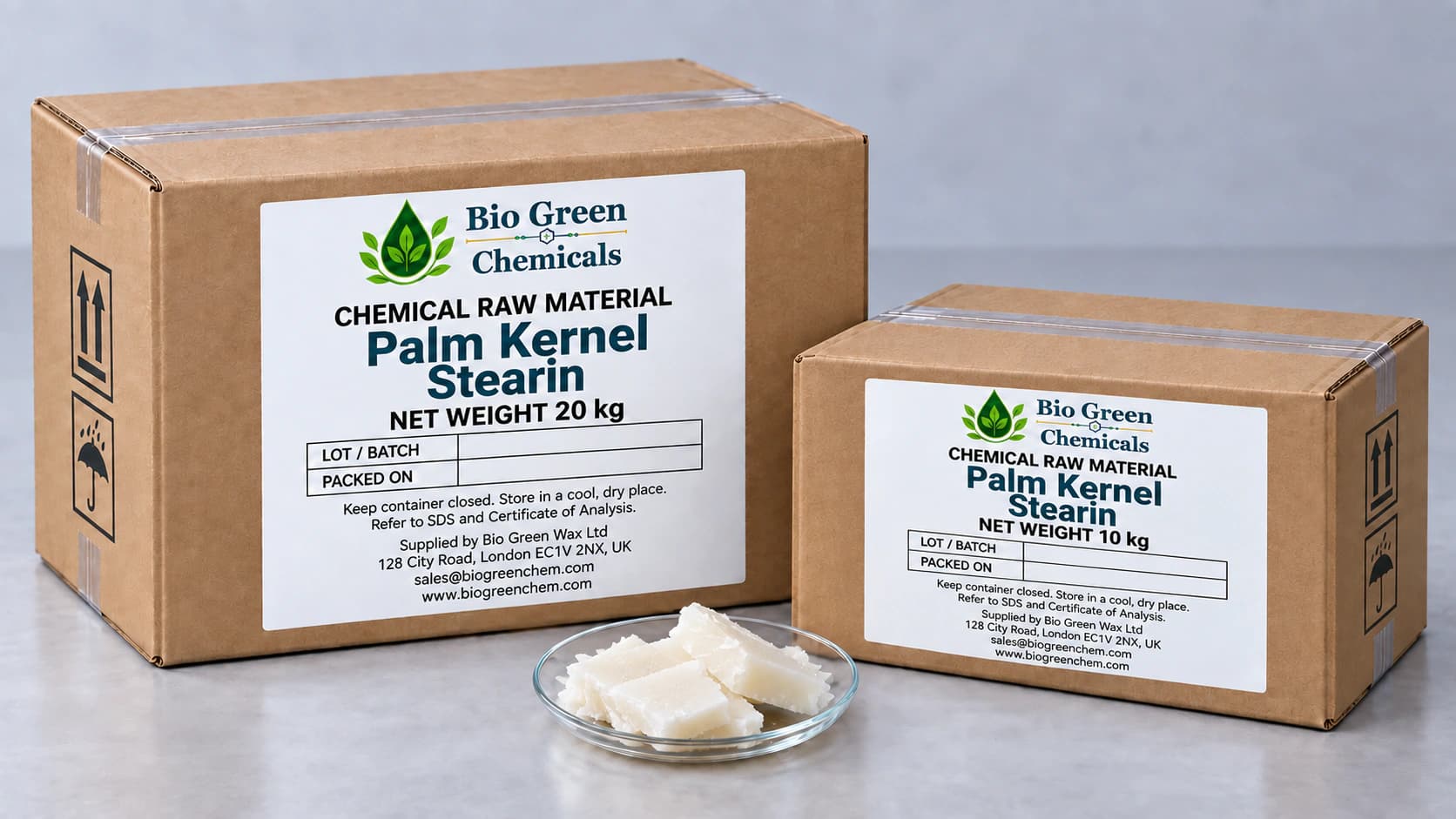
Palm Kernel Stearin
Palm kernel stearin is the hard lauric fraction of palm kernel oil. In personal care it is the base for syndet and toilet soap bases requiring fast lather, and the raw material for C12 to C14 surfactant chains.
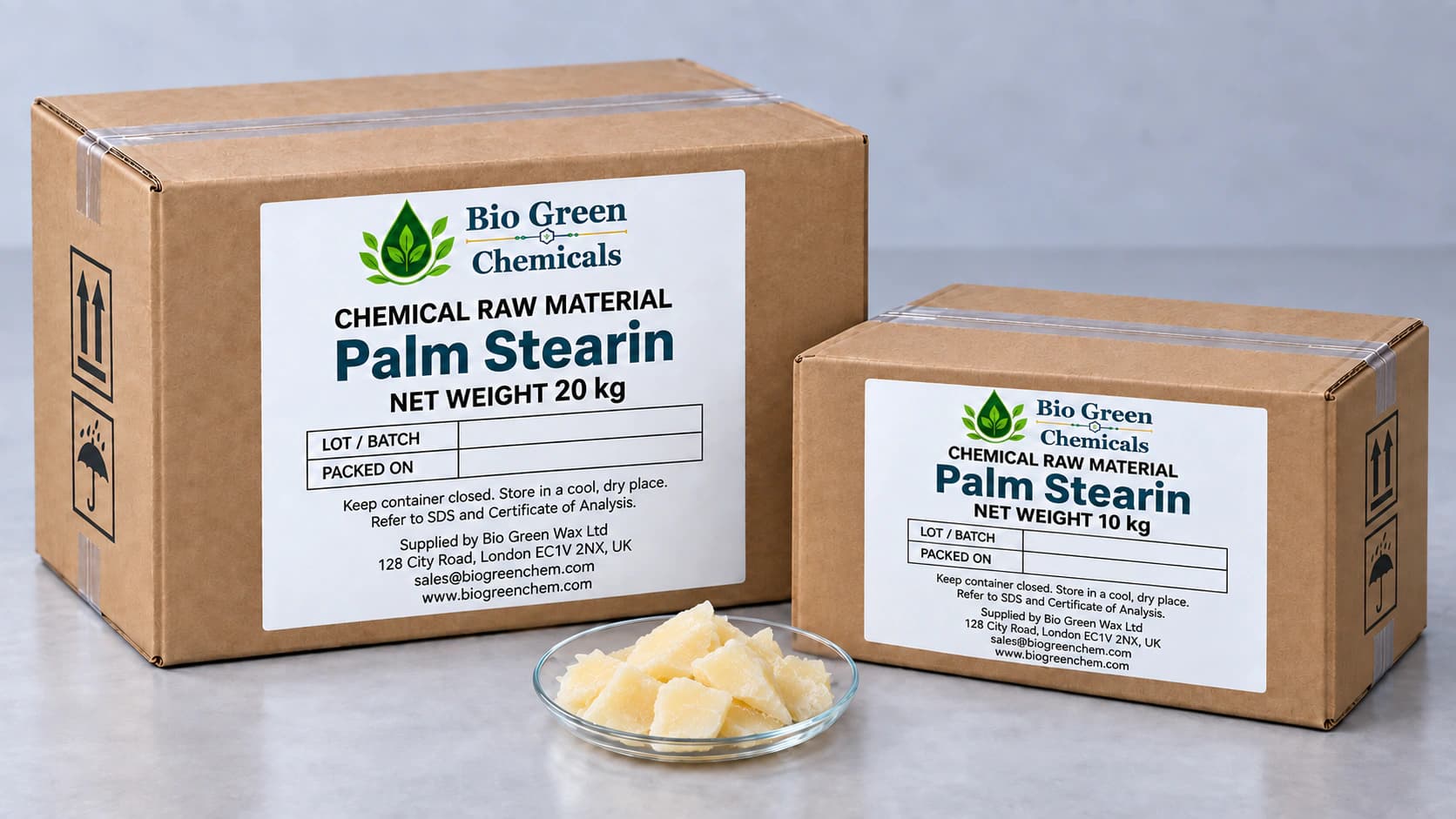
Palm Stearin
Palm stearin is the hard palm fraction used in personal care as a soap hardstock and a structuring fat. Its saturated palmitic chains produce an opaque, slow-wearing bar with low moisture pickup.
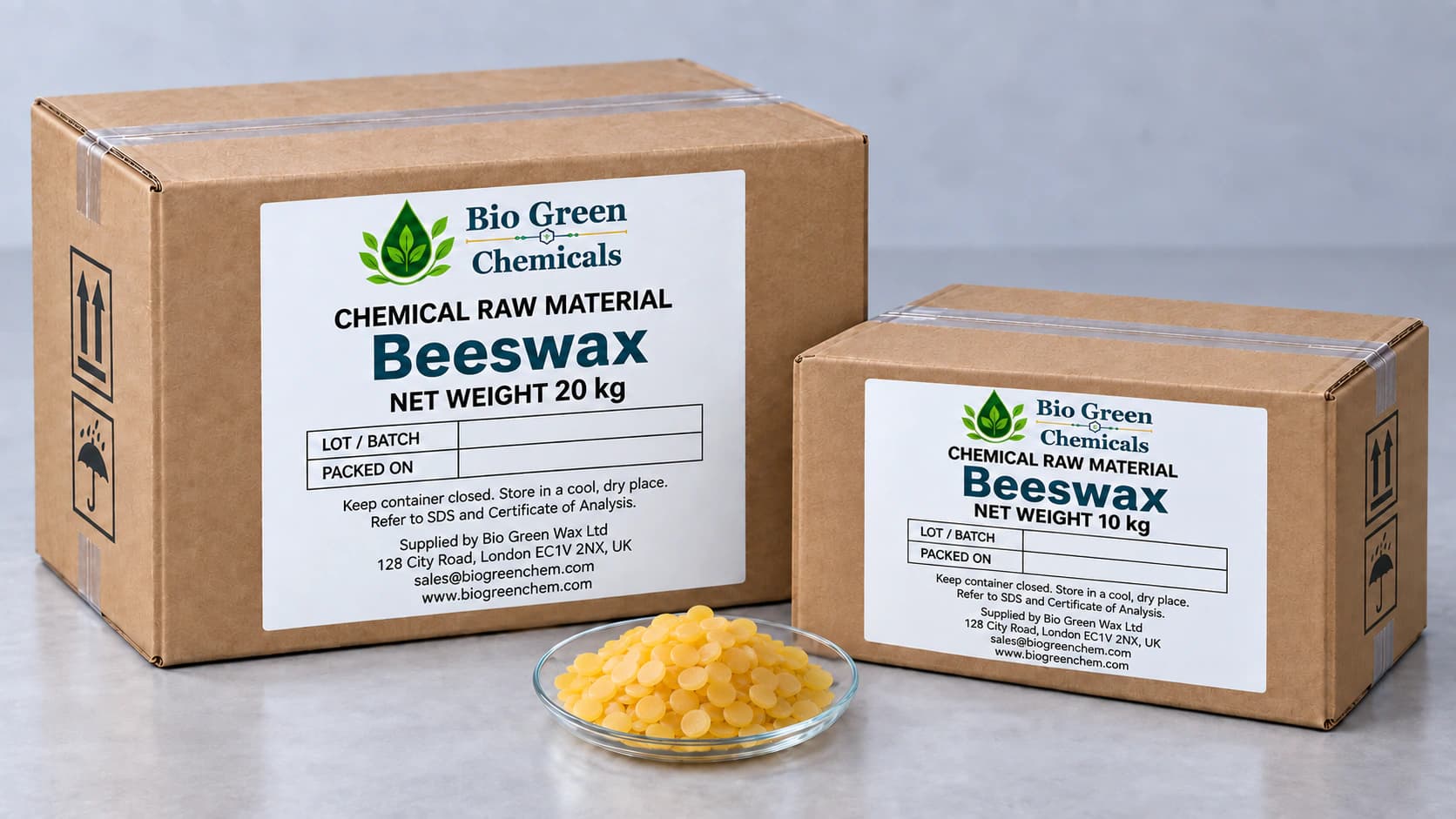
Beeswax
Beeswax (INCI Cera Alba or Cera Flava by grade) is used in cosmetic formulation as a structuring and occlusive wax. At 5 to 20 percent it sets a balm or stick; at lower levels it thickens emulsions and stabilises the oil phase.
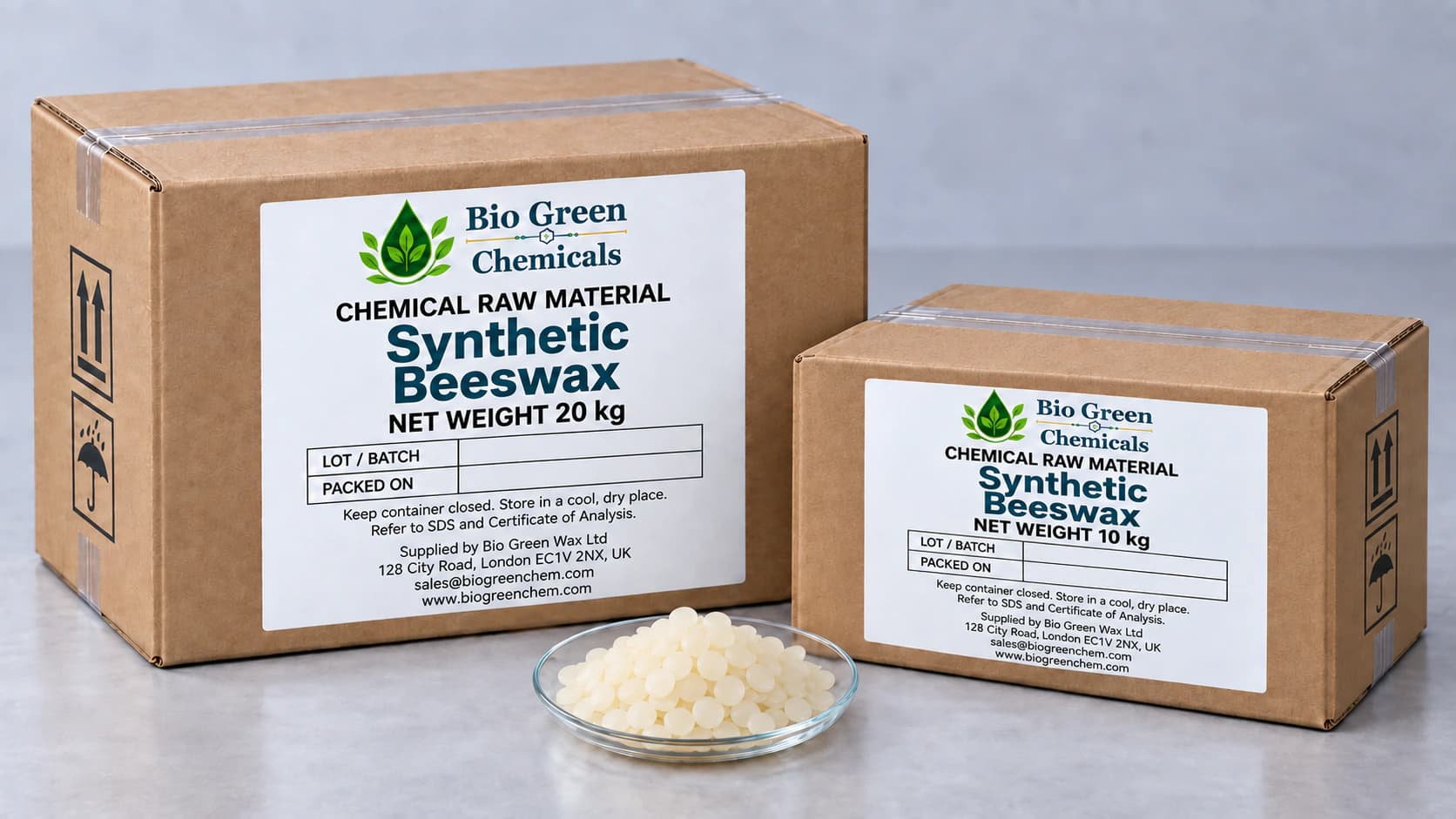
Synthetic Beeswax
Synthetic beeswax (INCI Synthetic Beeswax) reproduces the ester profile and working behaviour of natural beeswax to a fixed specification. It carries no honey aroma, which matters where a fragrance brief has to stay clean.
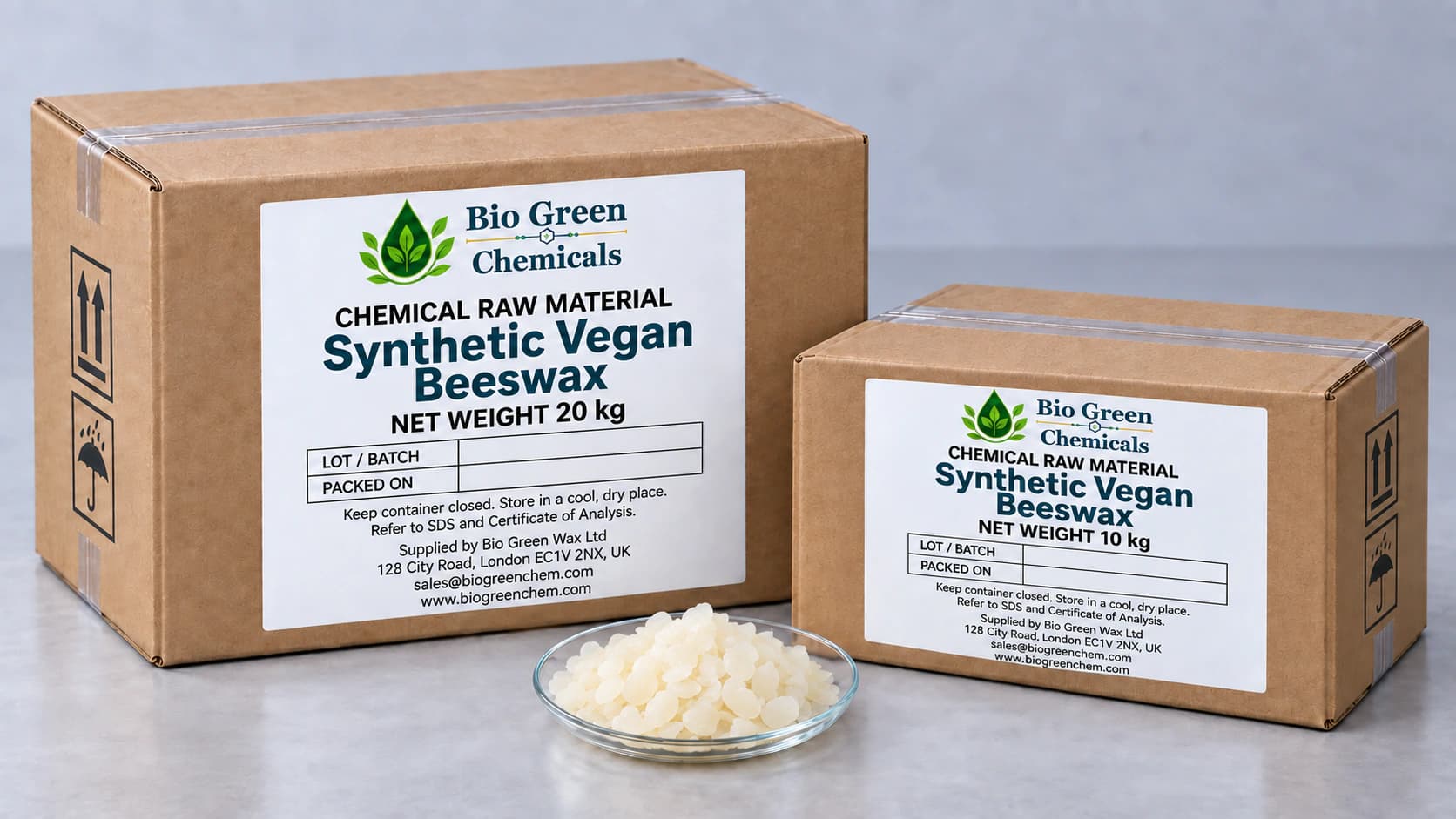
Synthetic Vegan Beeswax
Synthetic vegan beeswax (INCI Synthetic Beeswax) matches the structuring behaviour of beeswax using only non-animal feedstocks throughout, so the finished product can carry a vegan claim without a supply-chain caveat.
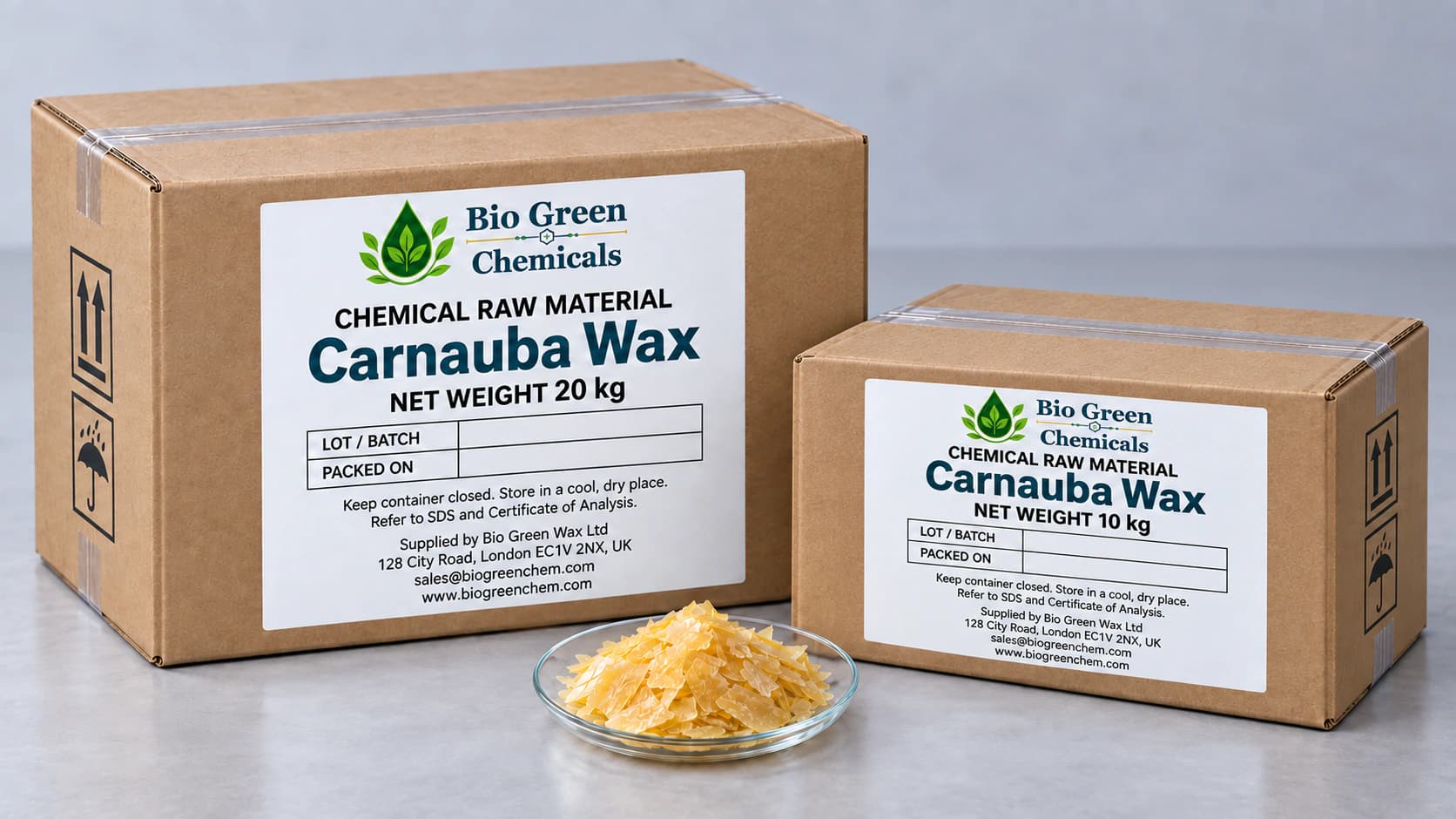
Carnauba Wax
Carnauba wax (INCI Copernicia Cerifera Cera) is used in cosmetic formulation where maximum hardness and gloss are required. A few percent raises the melting point of a stick appreciably and gives mascara and lipstick their shine.
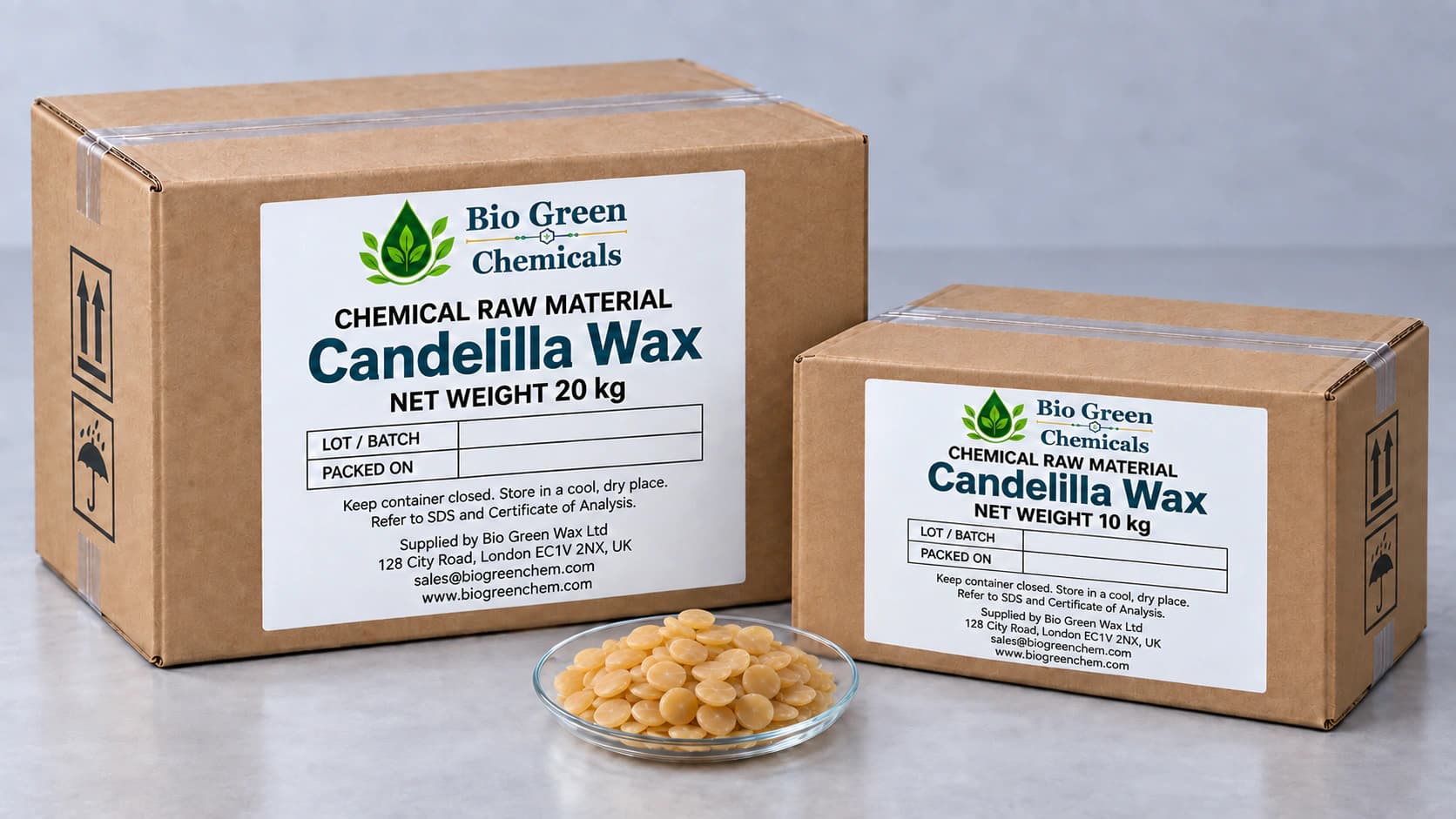
Candelilla Wax
Candelilla wax (INCI Euphorbia Cerifera Cera) is the vegan structuring wax of choice in colour cosmetics. It is roughly twice as hard as beeswax at equal addition, so substitution is made at about half to two thirds the quantity.
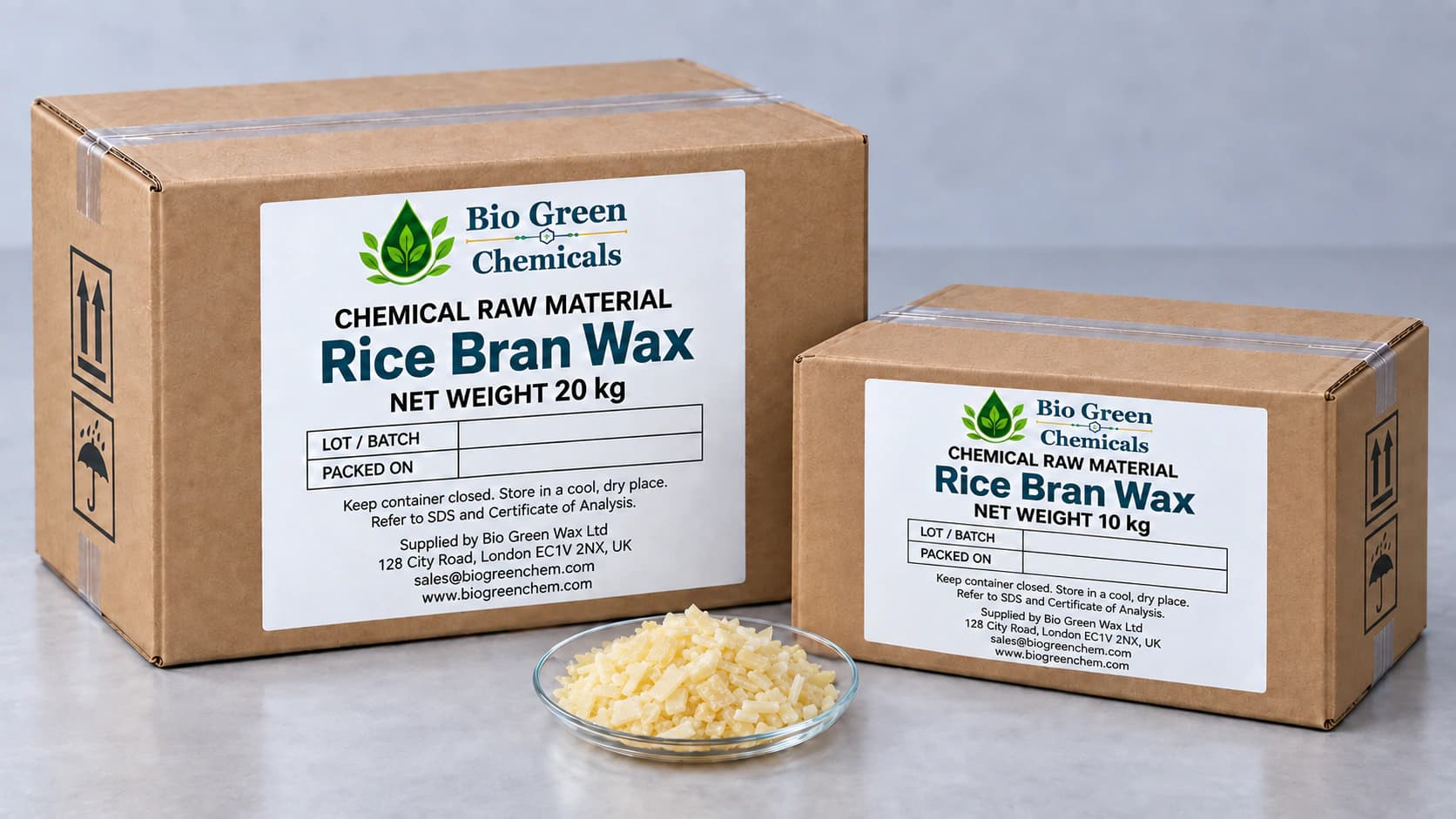
Rice Bran Wax
Rice bran wax (INCI Oryza Sativa Cera) is specified in cosmetics as a vegan oleogelator. At 2 to 4 percent it turns a liquid oil into a self-supporting gel, which is how anhydrous balms are built without hydrogenated fats.
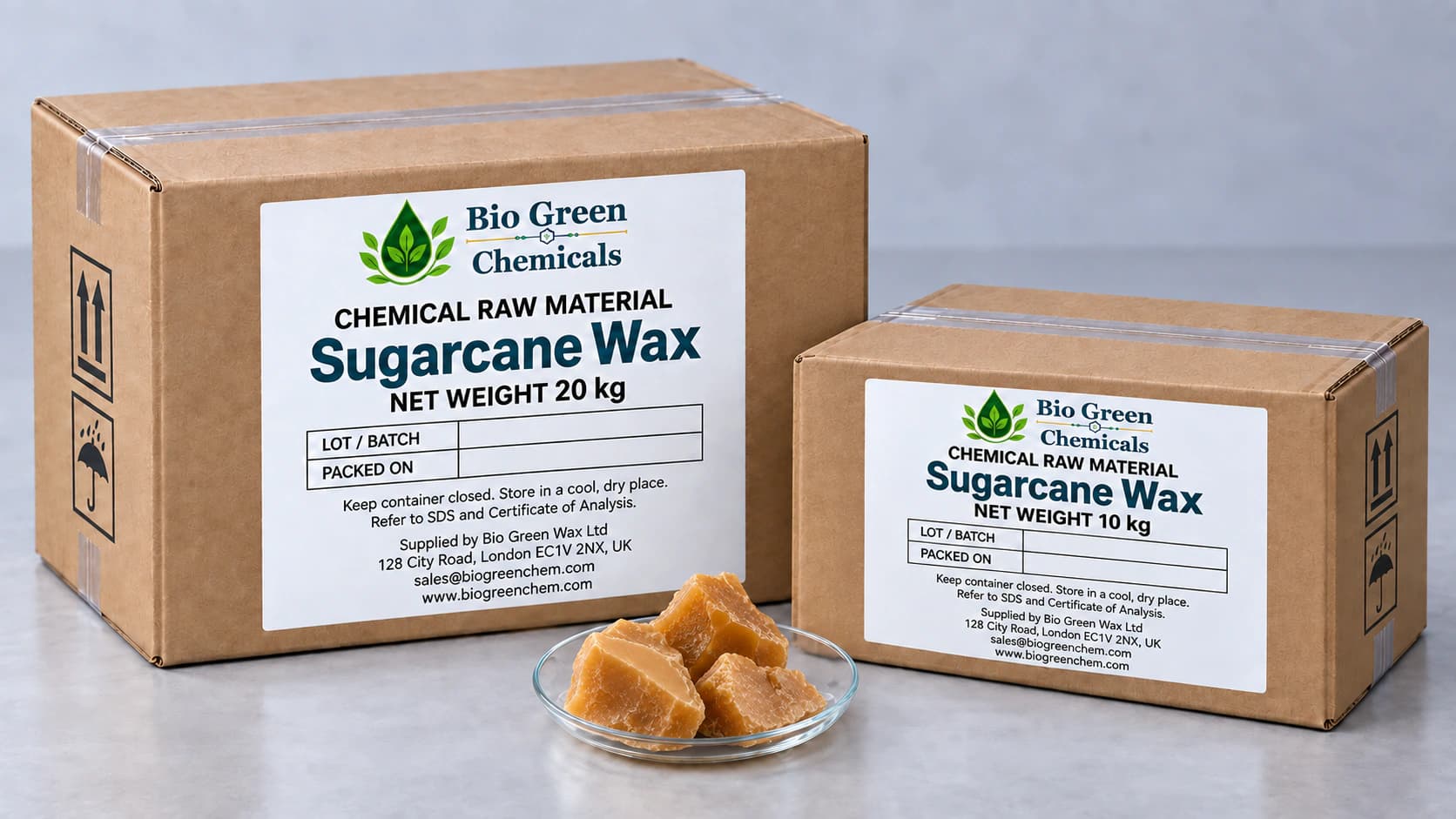
Sugarcane Wax
Sugarcane wax (INCI Saccharum Officinarum Cera) is used in cosmetics as a plant-derived alternative to carnauba. Its higher unsaponifiable content gives a softer, more cushioned feel than carnauba at comparable hardness and gloss.
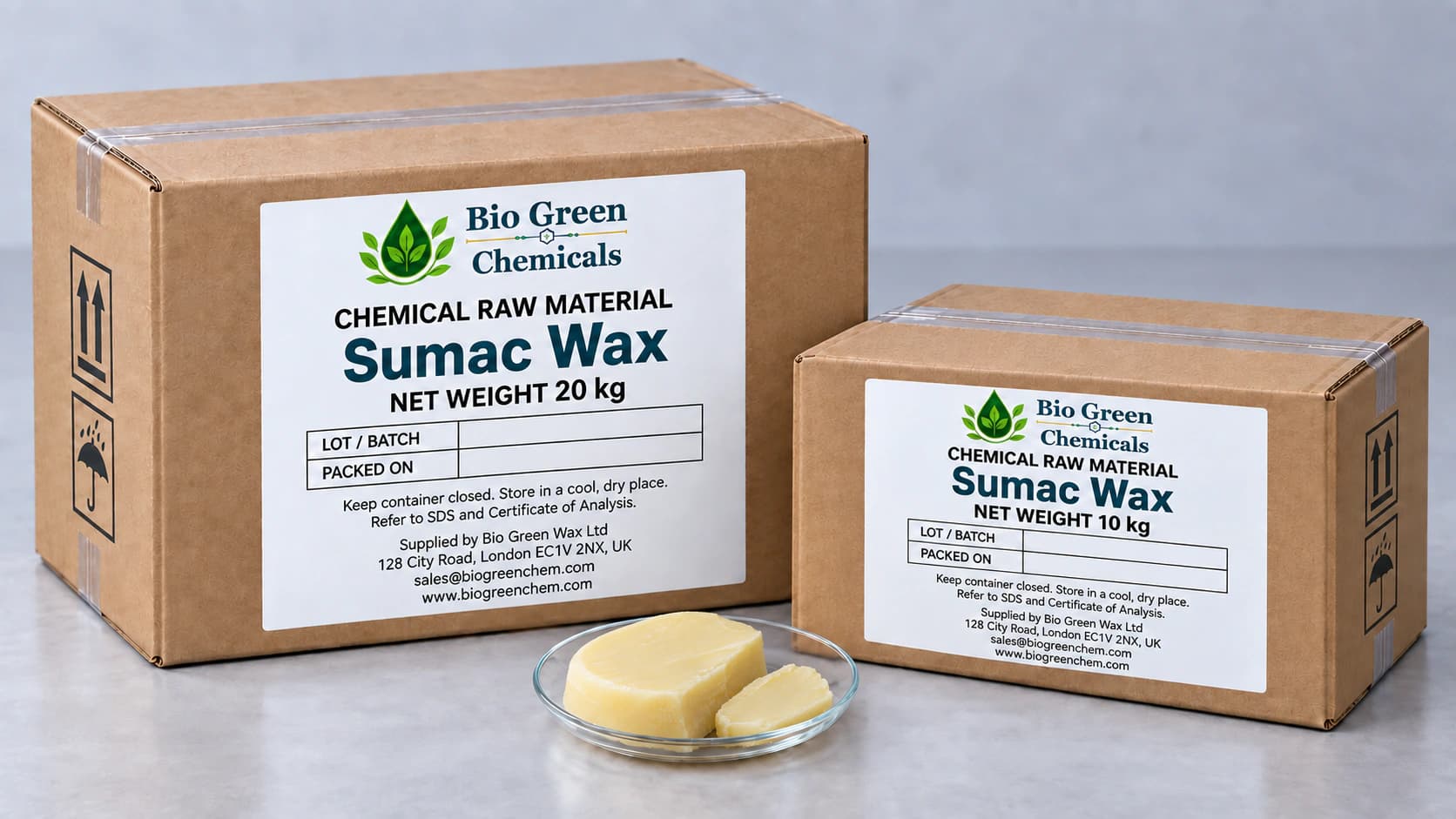
Sumac Wax
Sumac wax (INCI Rhus Succedanea Fruit Cera) is chemically a triglyceride rather than a true wax, which makes it soft and tacky. Formulators use that stickiness deliberately for cling and adhesion in pomades, balms and lip products.
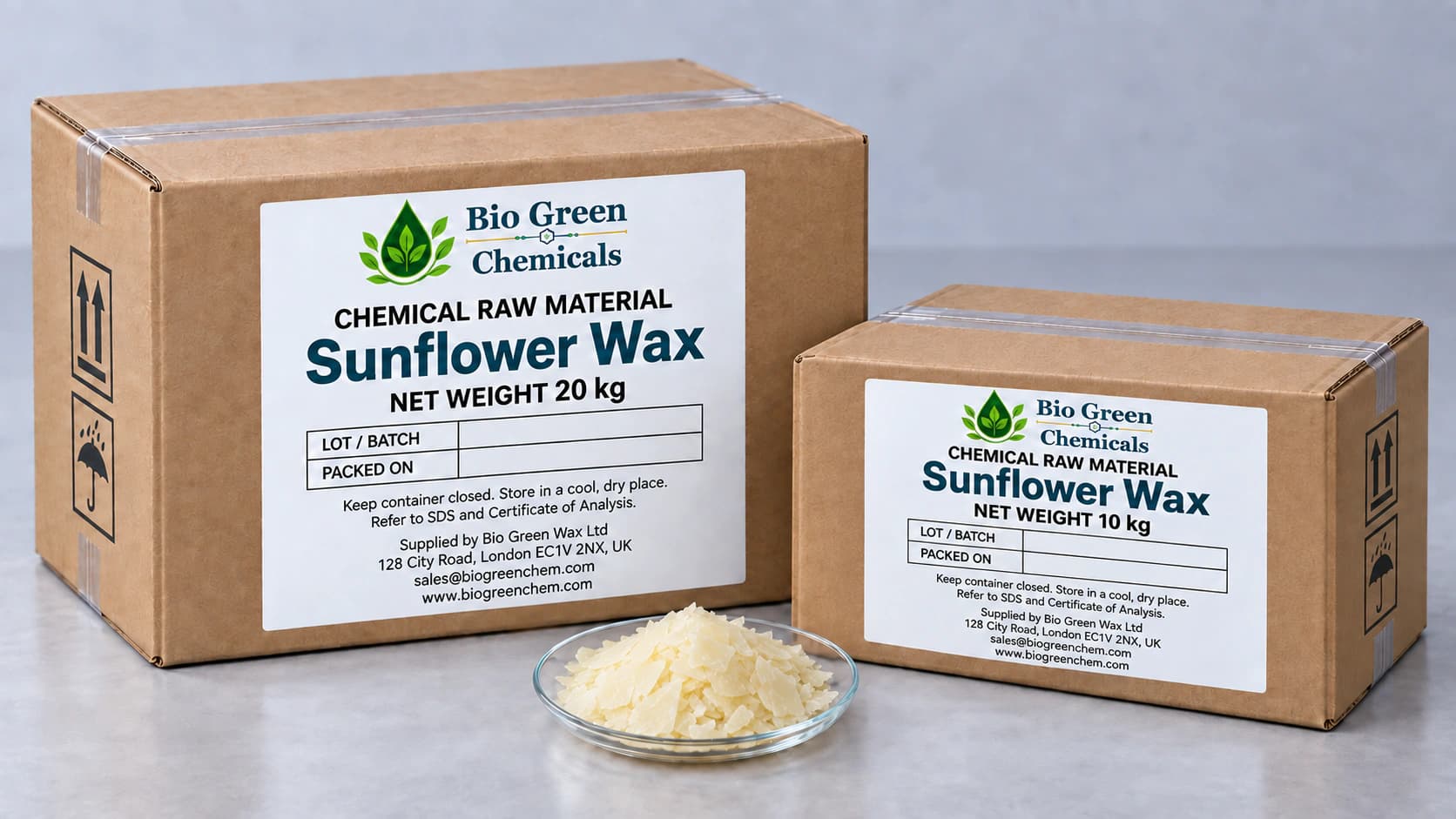
Sunflower Wax
Sunflower wax (INCI Helianthus Annuus Seed Cera) is the most efficient natural oil structurant in cosmetic use, forming a firm gel at only 2 to 3 percent. It gives a cleaner, less draggy spread than harder waxes at equal firmness.
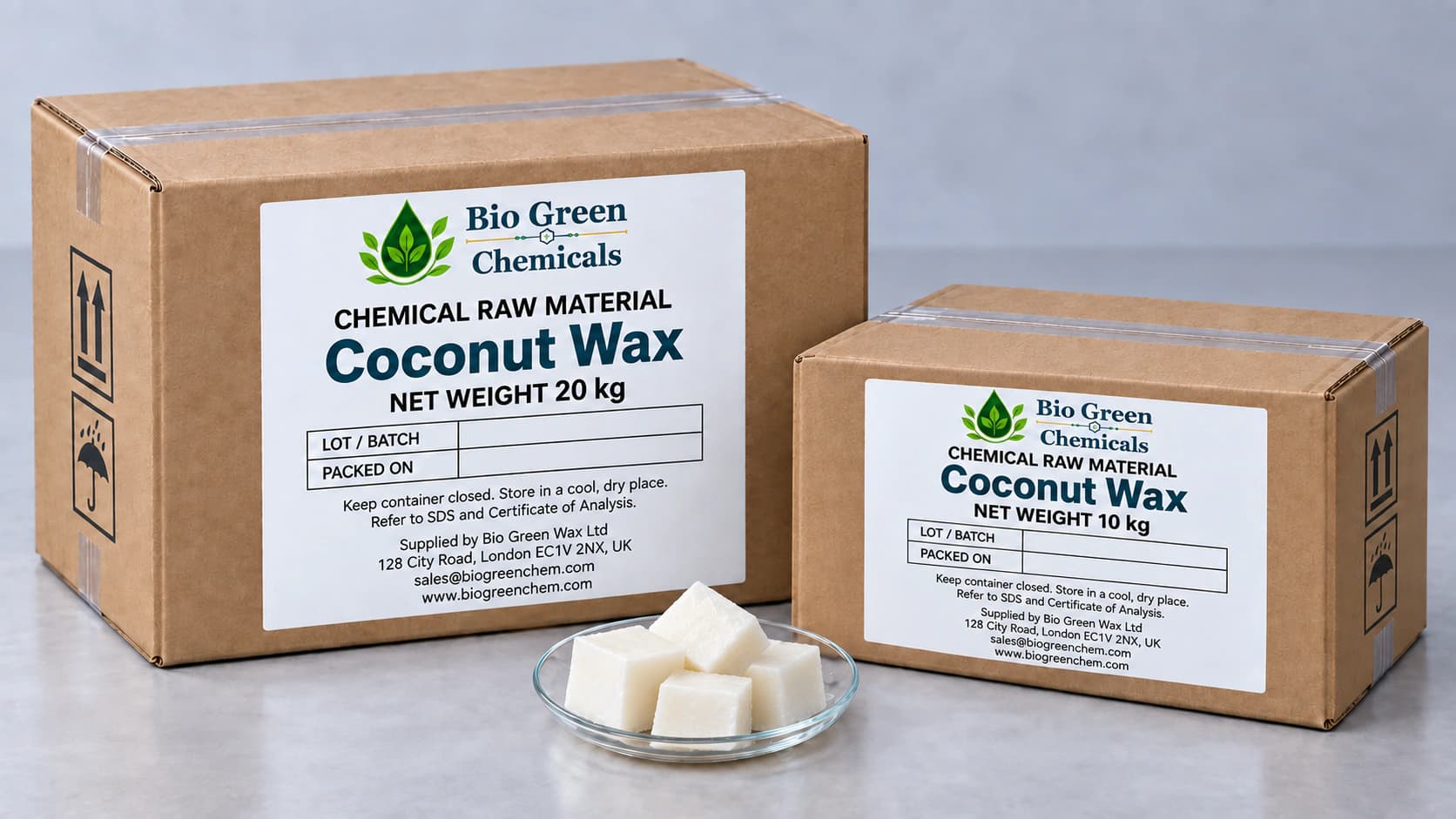
Coconut Wax
Coconut wax (INCI Hydrogenated Coconut Oil) melts at only 38 to 42 degrees Celsius, the softest of the vegetable structuring waxes. In cosmetics that low melt gives a balm that yields immediately to skin warmth rather than dragging.
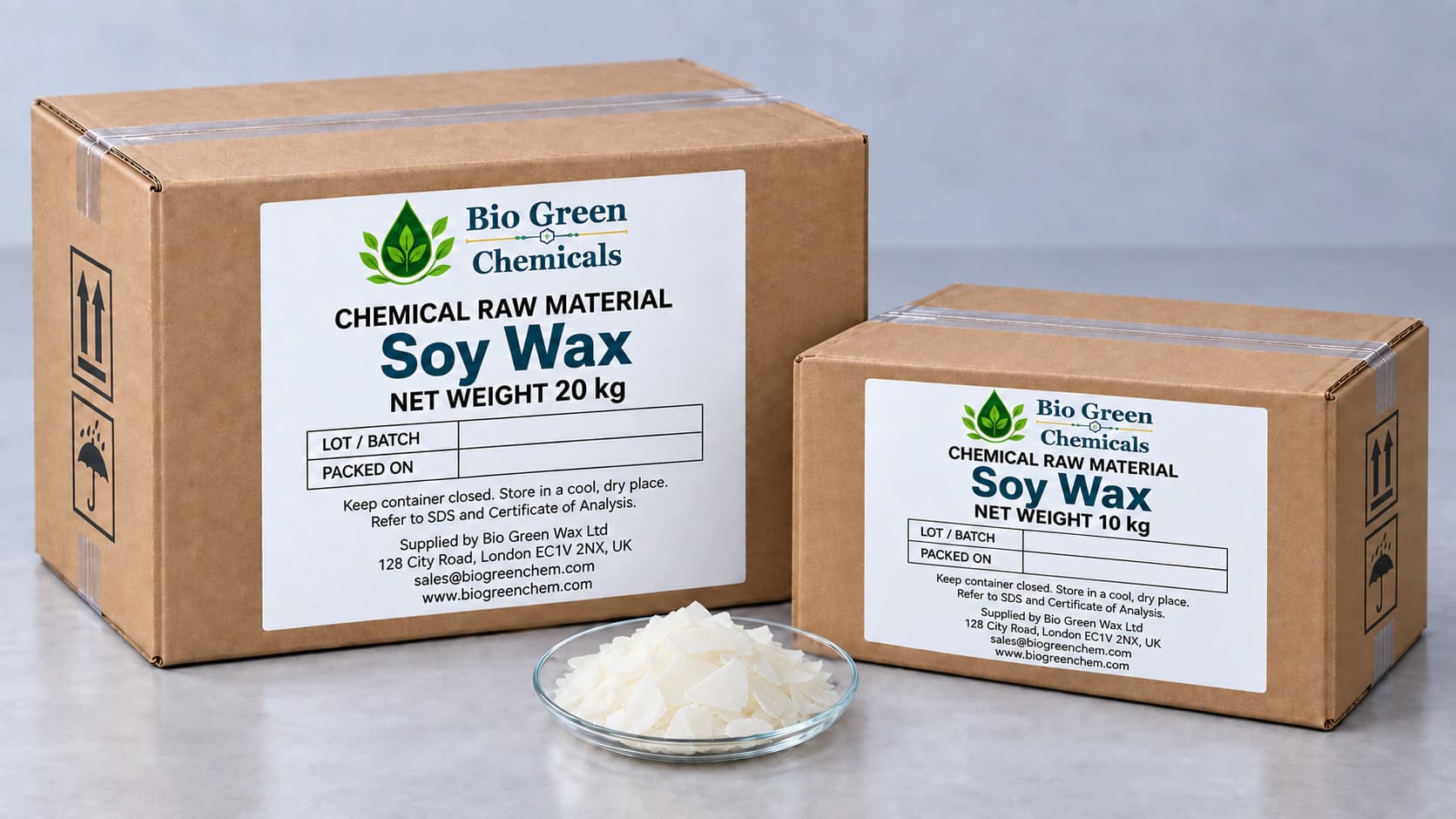
Soy Wax
Soy wax (INCI Hydrogenated Soybean Oil) is used in cosmetic formulation as a soft plant-derived structuring fat. It melts close to skin temperature, so it gives body to a balm without the waxy drag a harder wax leaves behind.
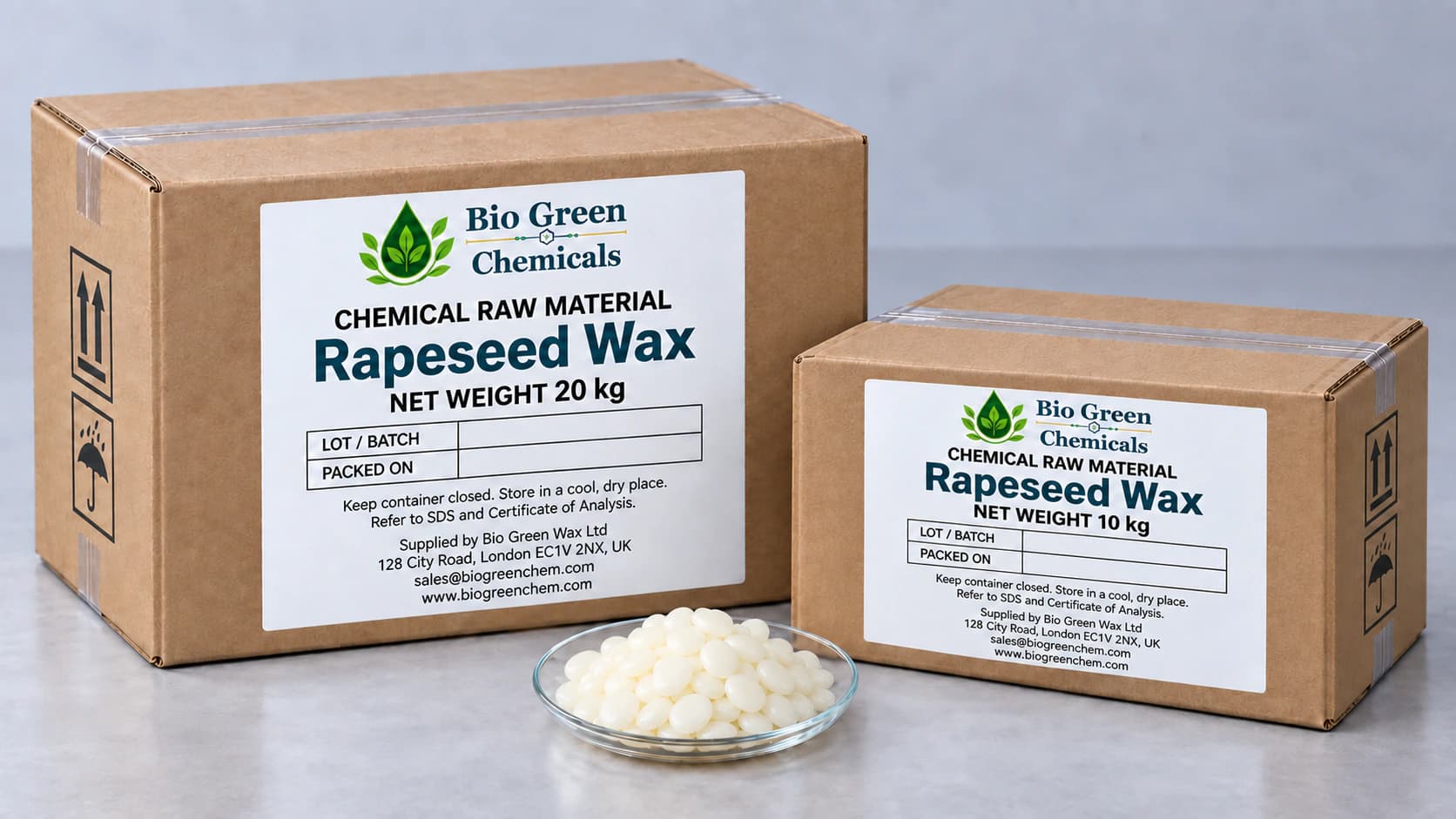
Rapeseed Wax
Rapeseed wax (INCI Hydrogenated Rapeseed Oil) is a soft vegan structuring wax with a European supply chain. In cosmetics it thickens anhydrous systems and stabilises emulsions without the occlusive heaviness of mineral waxes.
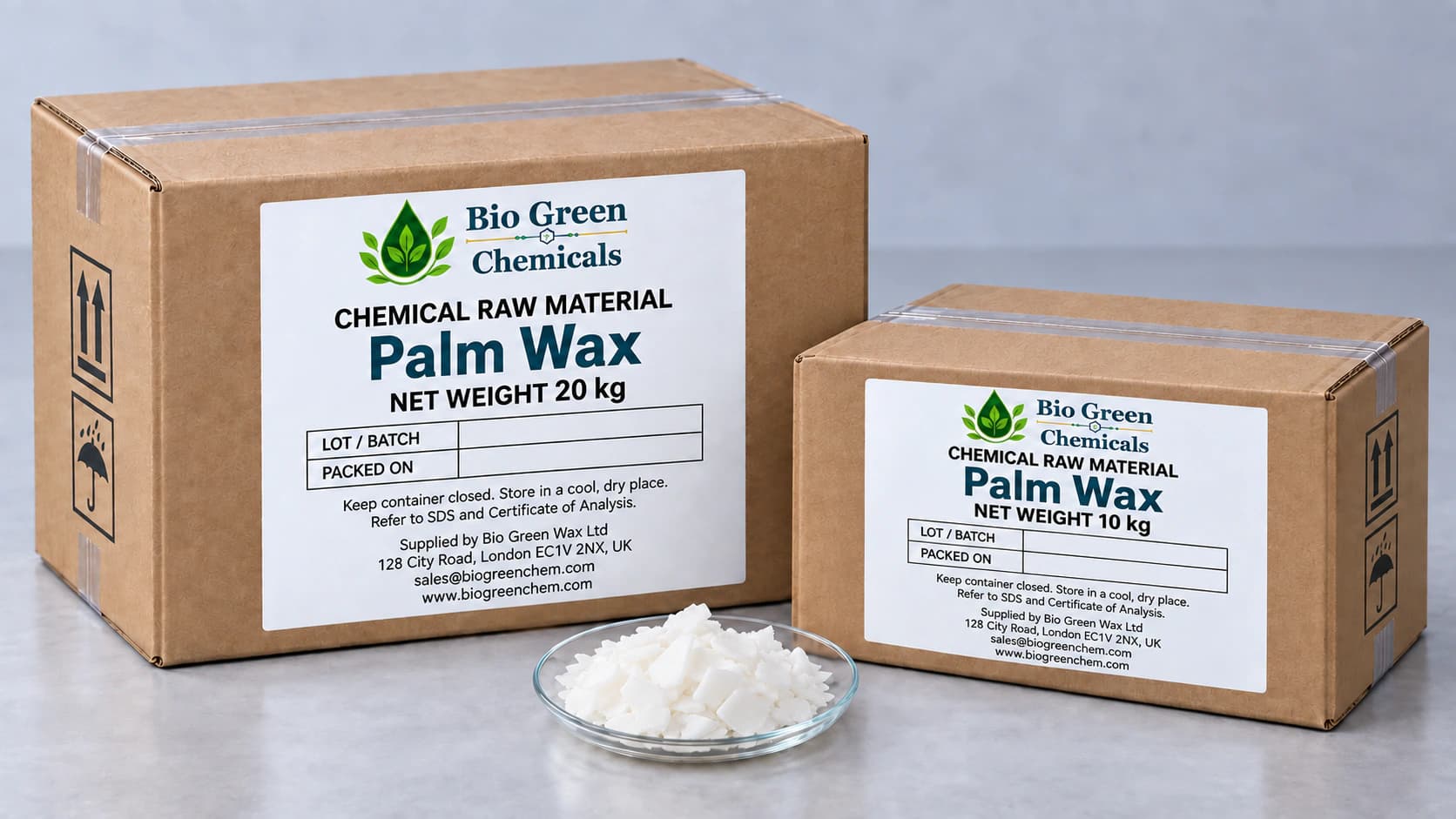
Palm Wax
Palm wax (INCI Hydrogenated Palm Oil) is a firm plant-derived structuring wax supplied in graded melting bands. In cosmetics it raises the melting point and hardness of sticks and balms and contributes opacity to anhydrous systems.
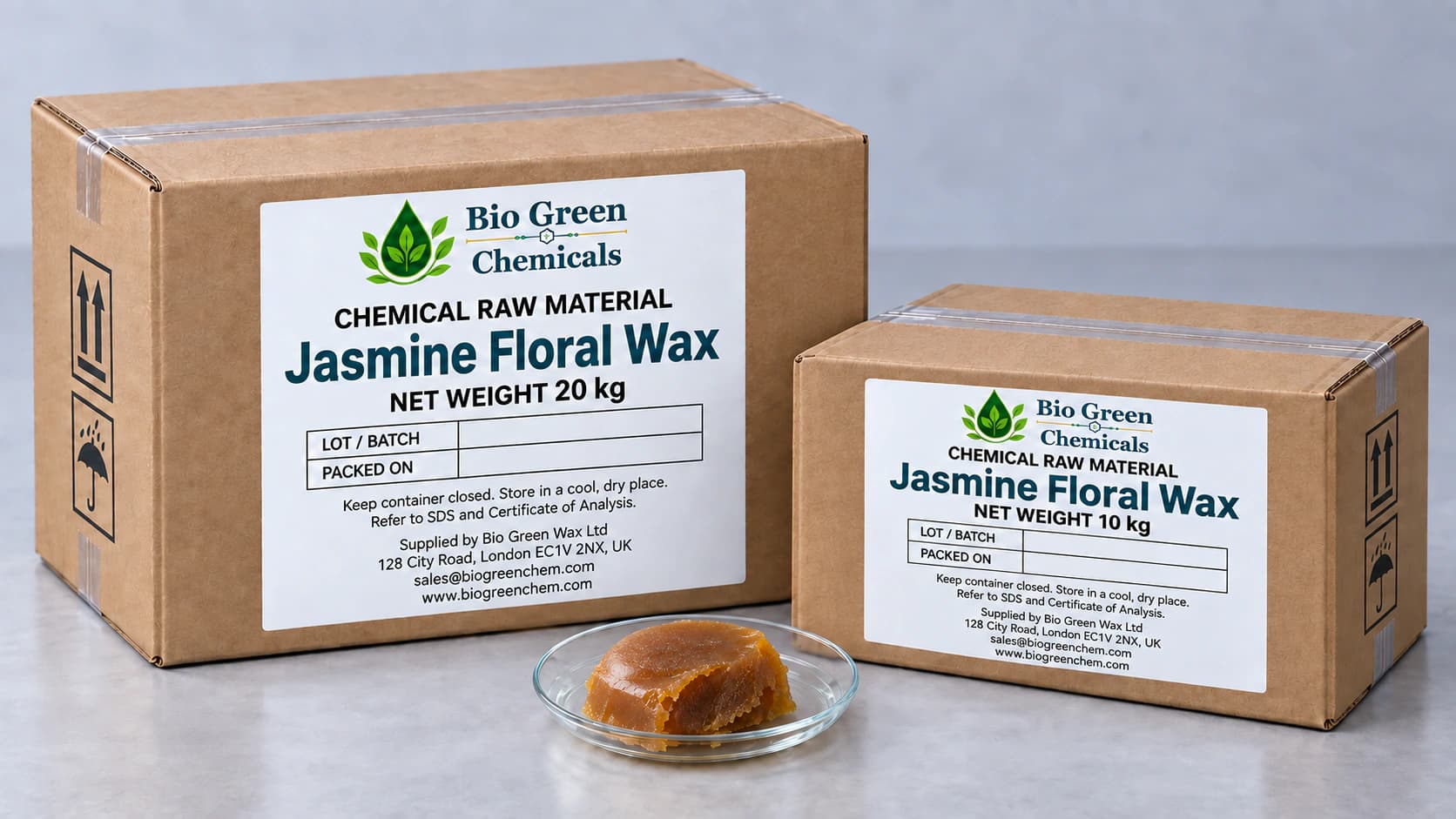
Jasmine Floral Wax
Jasmine floral wax is the wax fraction left when jasmine absolute is washed out of the concrete. In cosmetics it is used at a few percent as a fragrant structuring wax, carrying genuine flower volatiles rather than added fragrance.
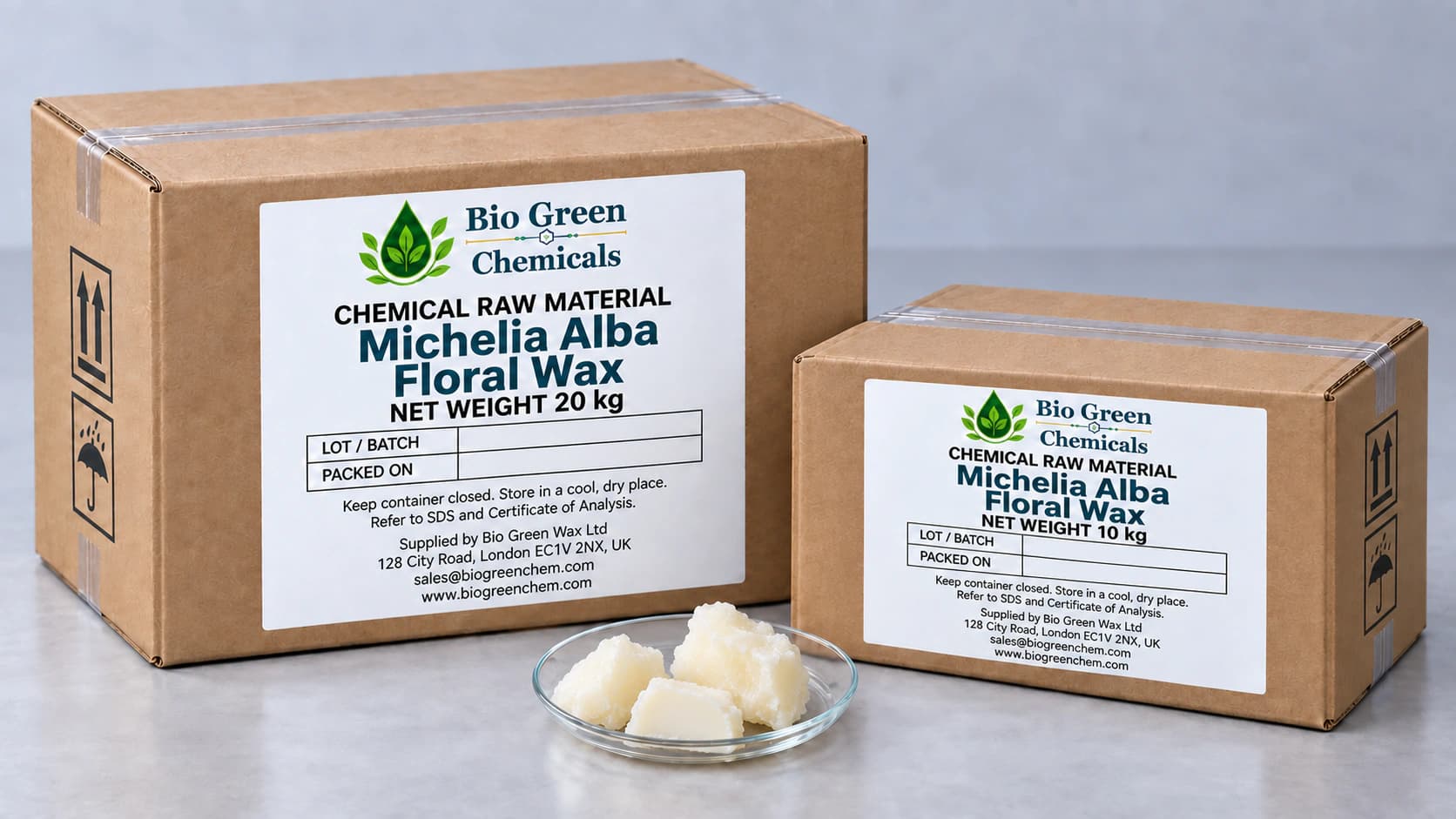
Michelia Alba Floral Wax
Michelia alba floral wax is recovered during white champaca absolute production. In cosmetic use it lends structure to anhydrous bases along with a fresh, green, tea-like floral note quite unlike heavier white florals.
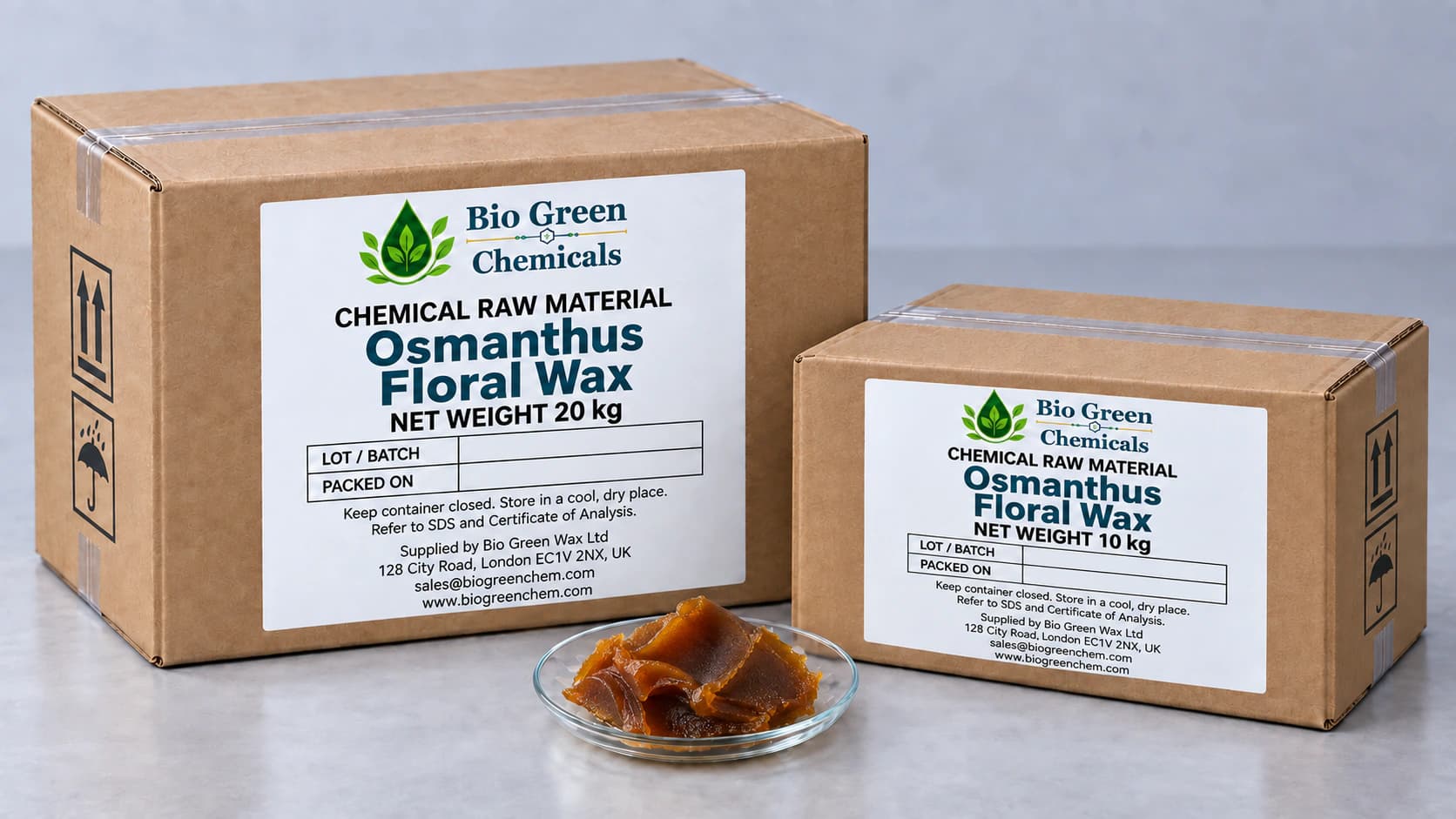
Osmanthus Floral Wax
Osmanthus floral wax is the wax fraction from osmanthus absolute production. Used at a few percent in balms and solid perfumes, it contributes both hardness and the flower's apricot and leather character.
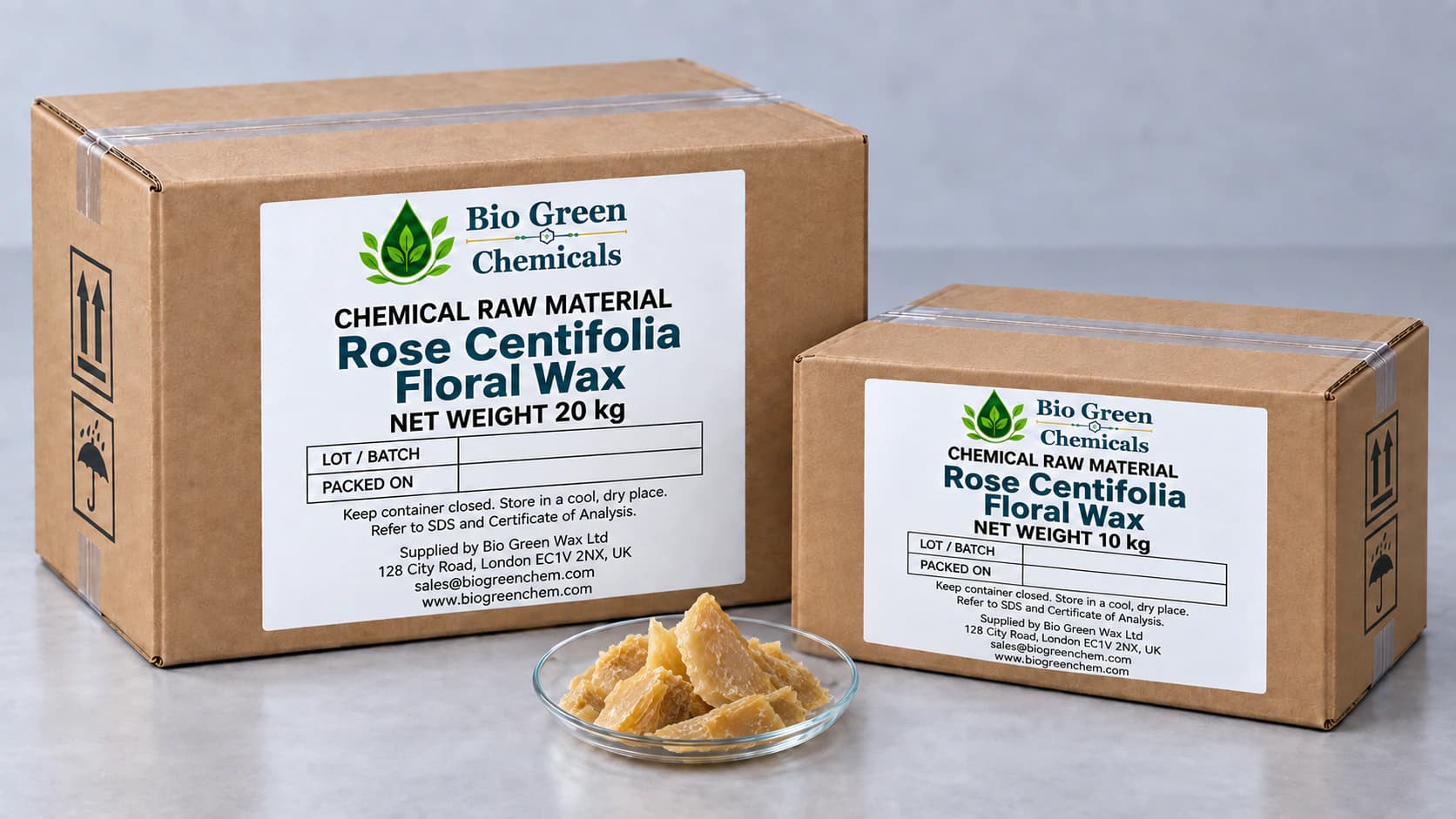
Rose Centifolia Floral Wax
Rose centifolia floral wax is recovered during production of rose absolute. As a cosmetic ingredient it structures anhydrous bases while releasing a soft, honeyed rose note that warms out on skin rather than projecting.
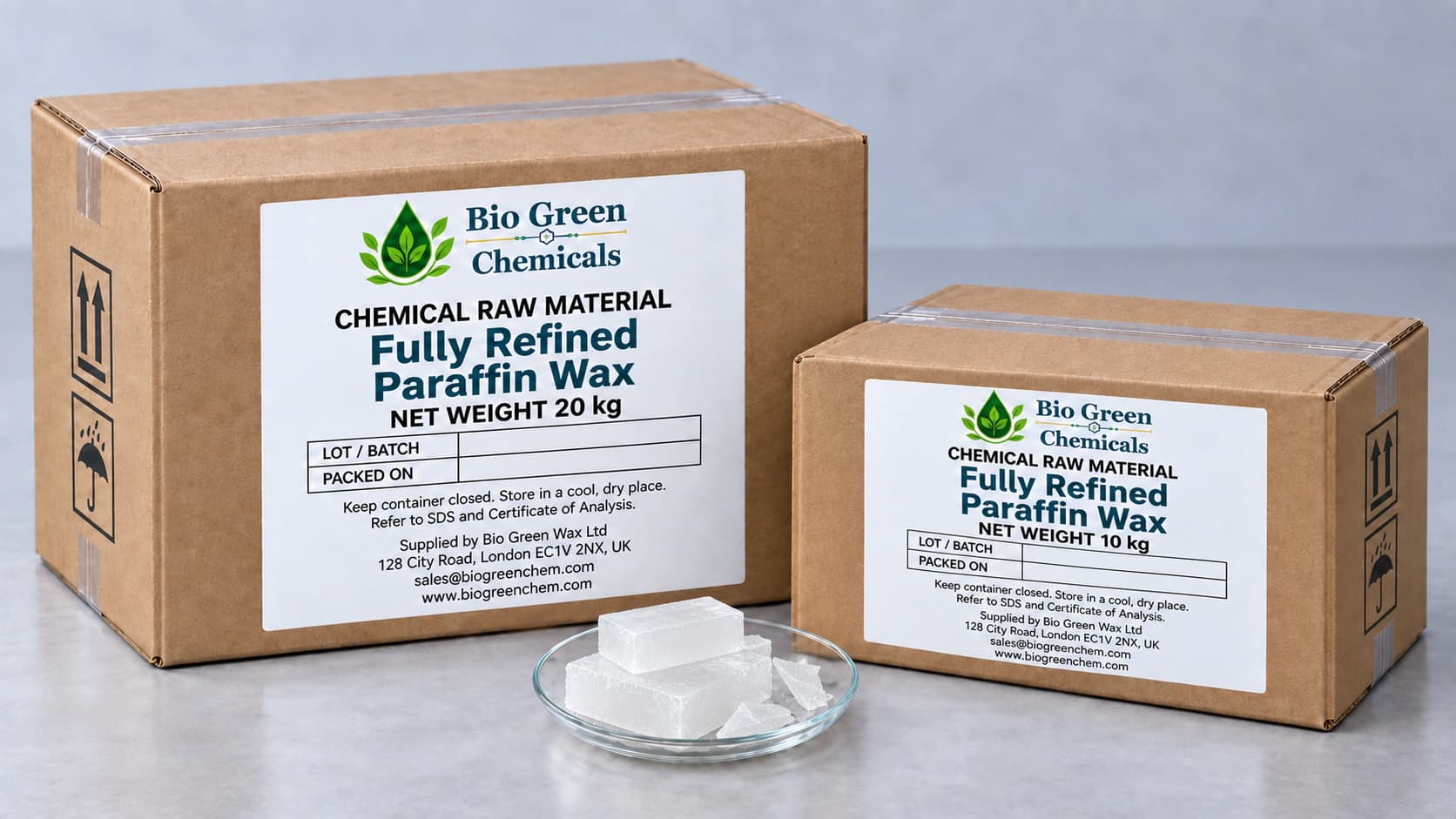
Fully Refined Paraffin Wax
Fully refined paraffin wax (INCI Paraffin) is deoiled below 0.5 percent, which is the threshold for cosmetic use. In formulation it gives a firm, inert, odourless structure with none of the reactivity of a vegetable-derived wax.
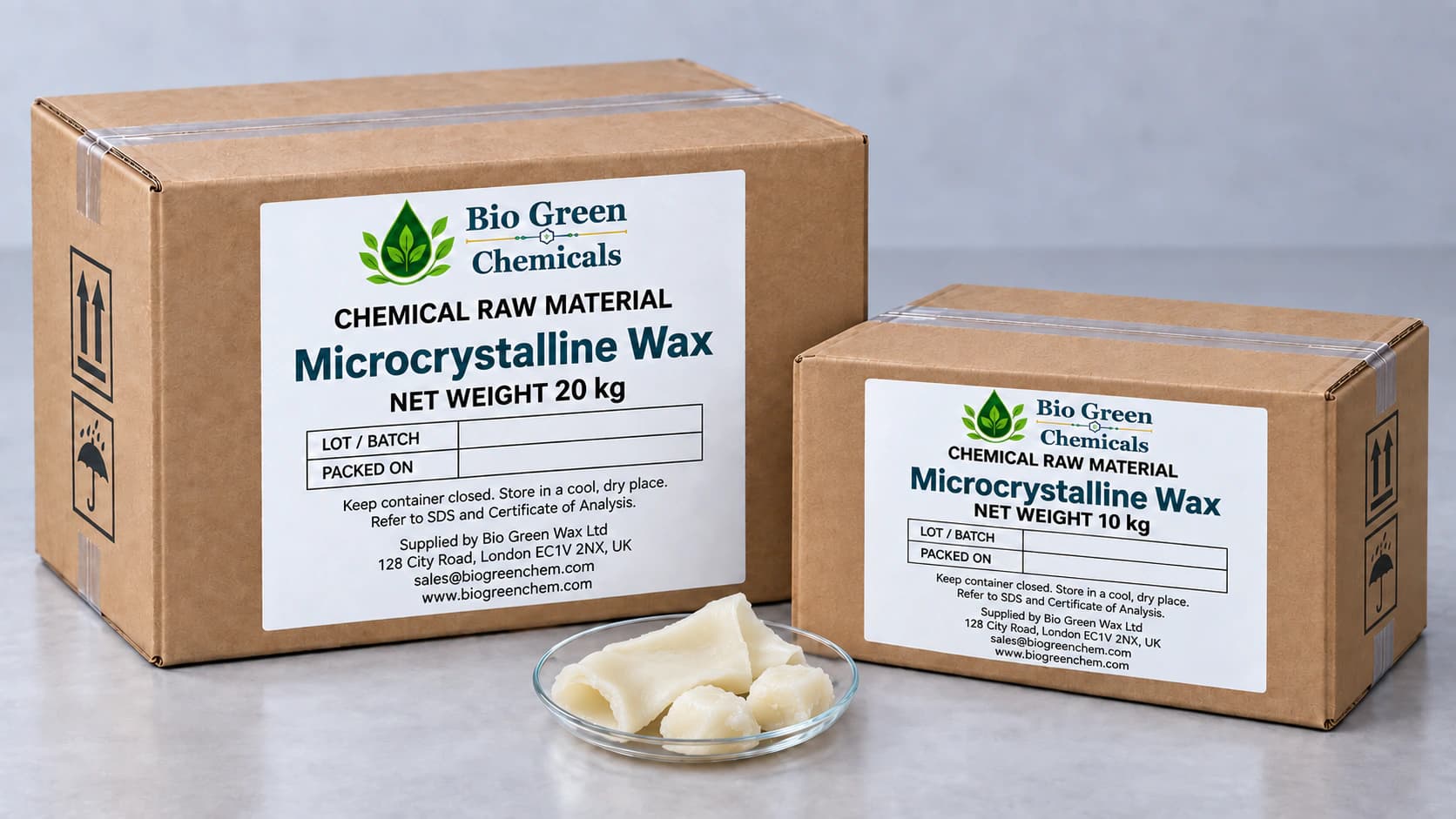
Microcrystalline Wax
Microcrystalline wax (INCI Cera Microcristallina) is used in cosmetics for flexibility rather than hardness. Its small, irregular crystals give sticks resistance to snapping and hold oil that would otherwise sweat out of the base.
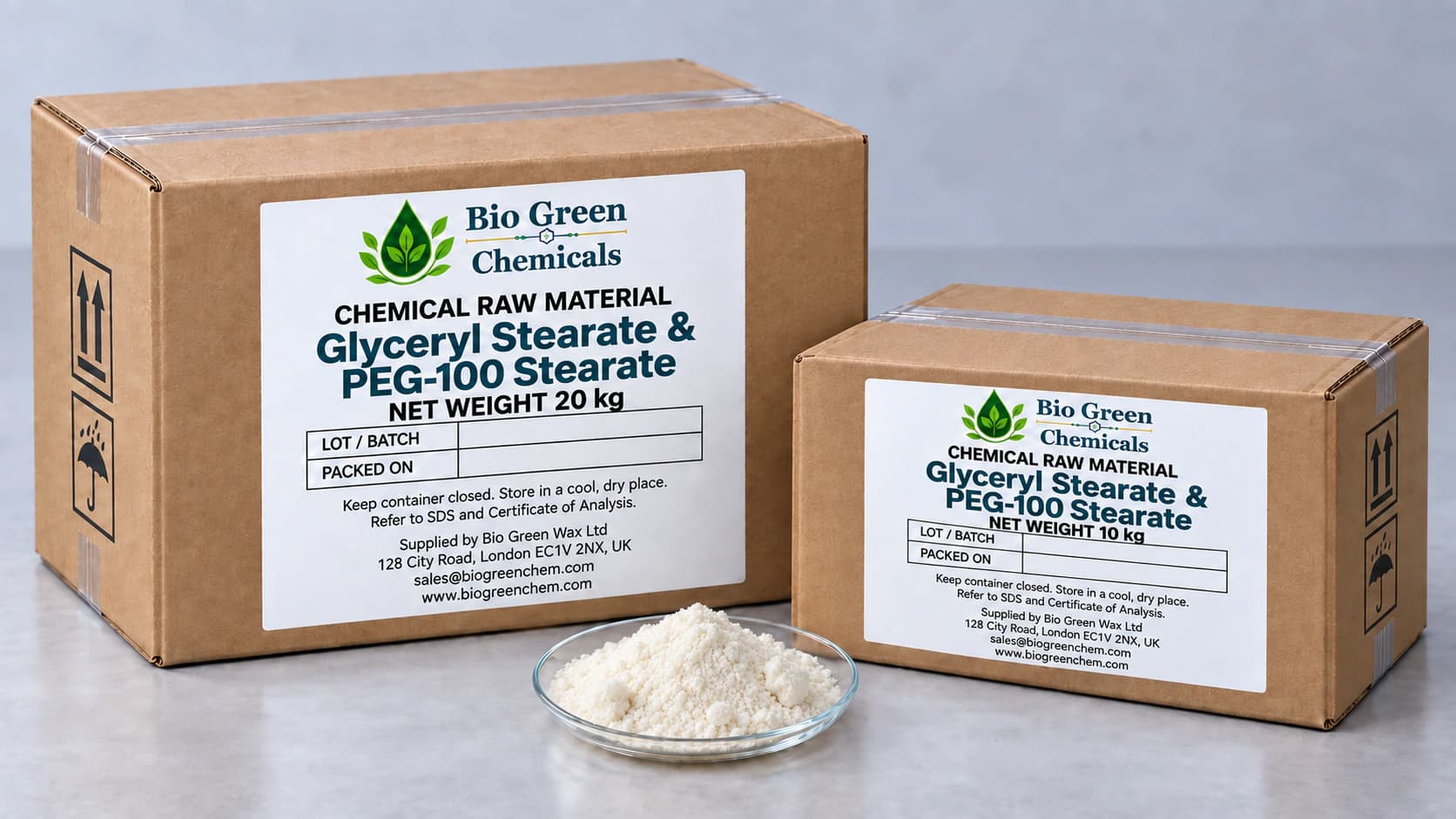
Glyceryl Stearate & PEG-100 Stearate
Glyceryl stearate and PEG-100 stearate (INCI as named) pairs a low-HLB and a high-HLB emulsifier. That combination holds across a broad range of oil phases without being matched to a specific oil, and gives a light, silky feel.
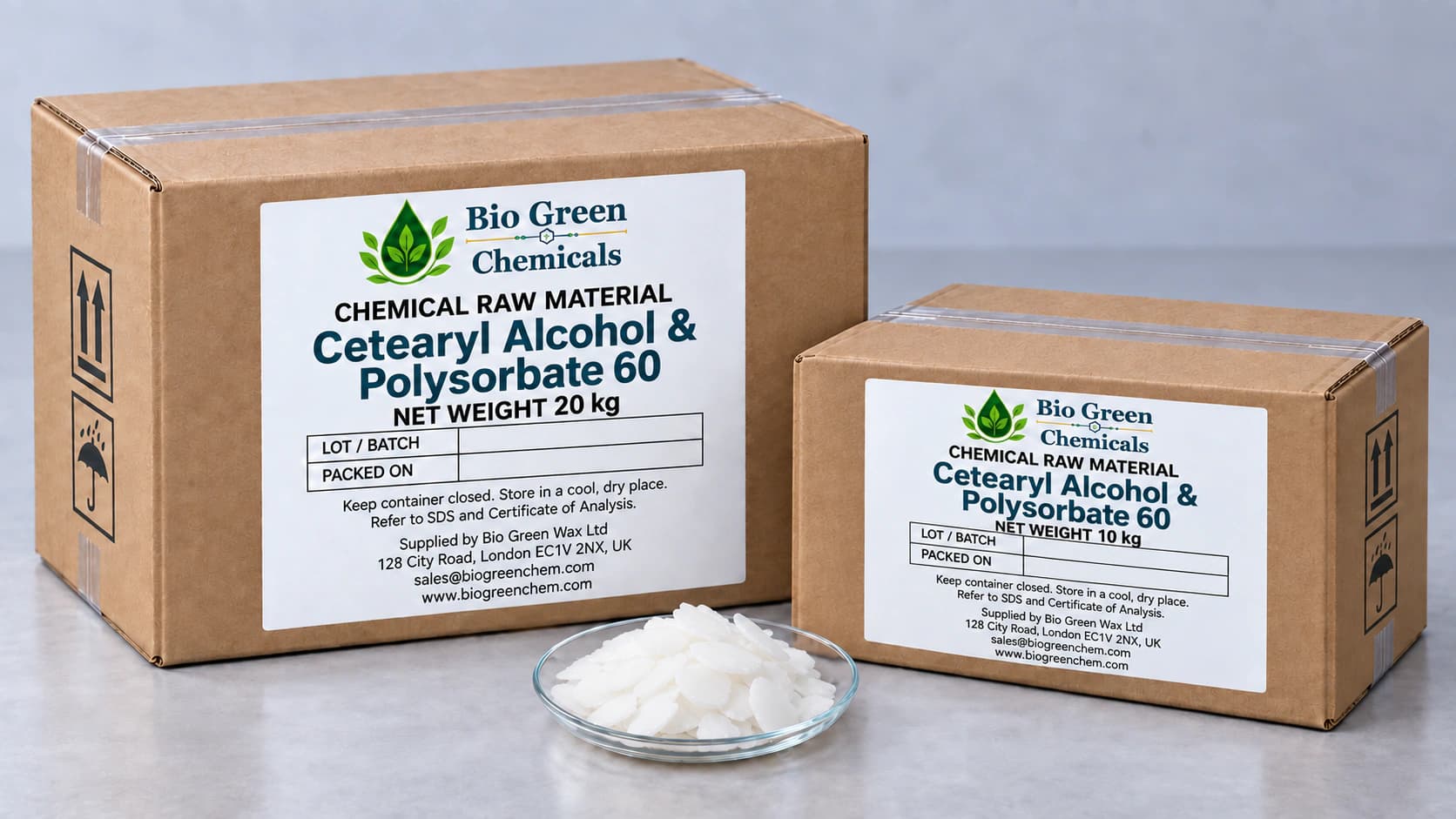
Cetearyl Alcohol & Polysorbate 60
Cetearyl alcohol and polysorbate 60 (INCI as named) is a self-emulsifying non-ionic system. Polysorbate 60 does the emulsifying, cetearyl alcohol stiffens the interfacial film and thickens, and neither builds a robust cream alone.
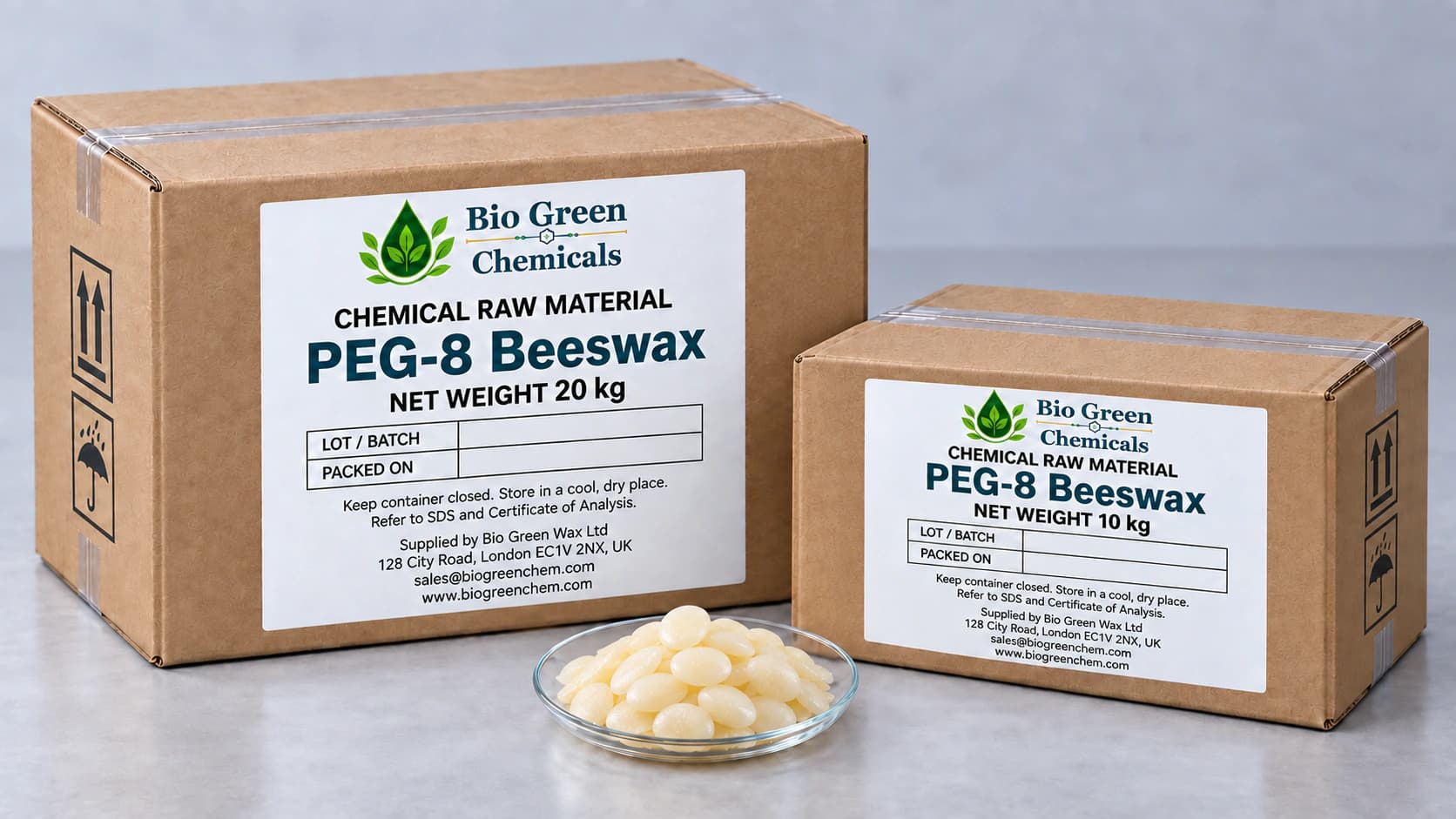
PEG-8 Beeswax
PEG-8 beeswax (INCI PEG-8 Beeswax) is beeswax with PEG chains grafted on, so it emulsifies as well as structures. It lets a cream be built around beeswax without the greasy weight of a traditional beeswax and borax system.
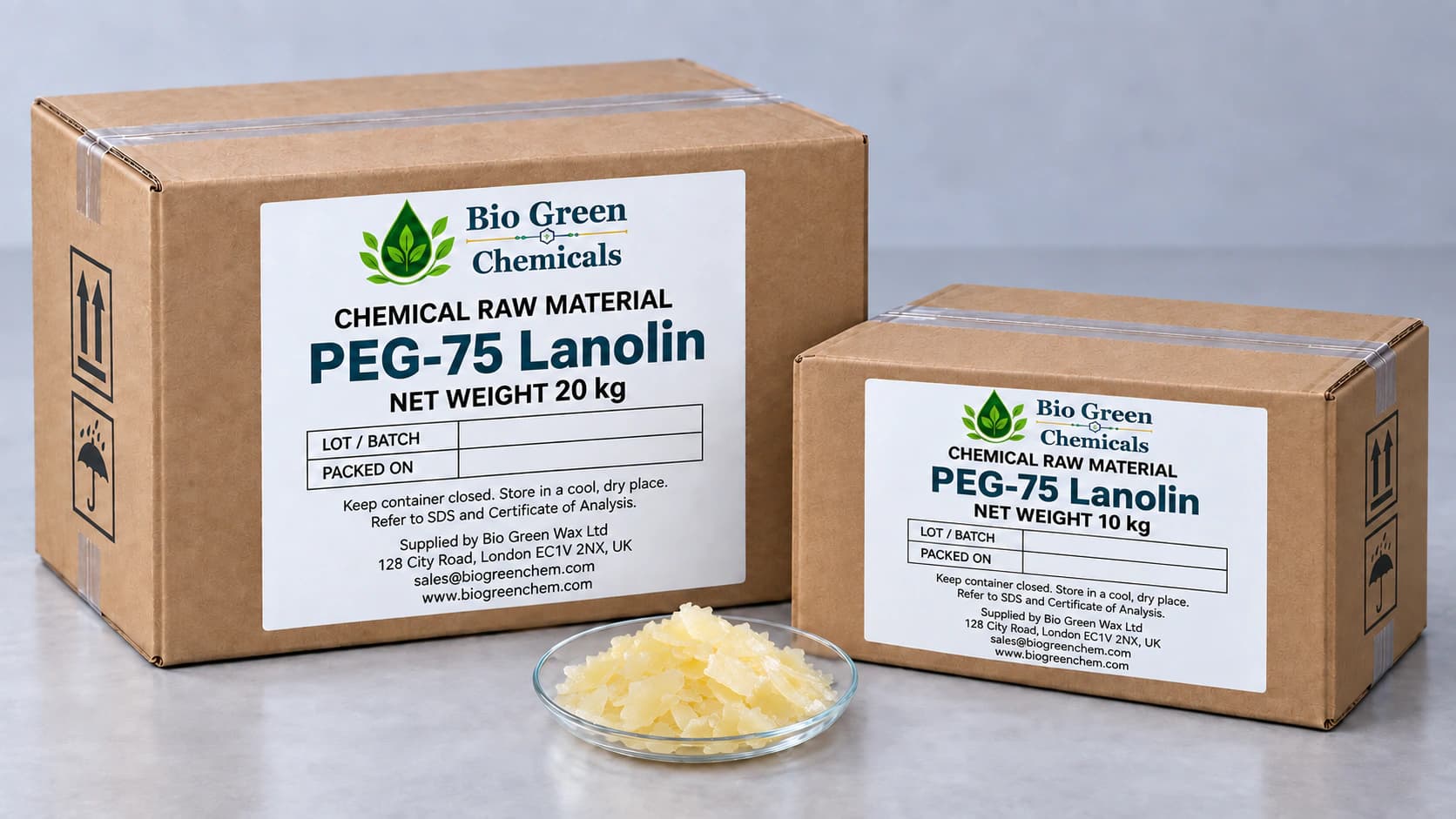
PEG-75 Lanolin
PEG-75 lanolin (INCI PEG-75 Lanolin) is lanolin ethoxylated until fully water-soluble. It deposits a light conditioning film from a rinse-off product without the cloudiness insoluble lanolin would cause in a clear formulation.
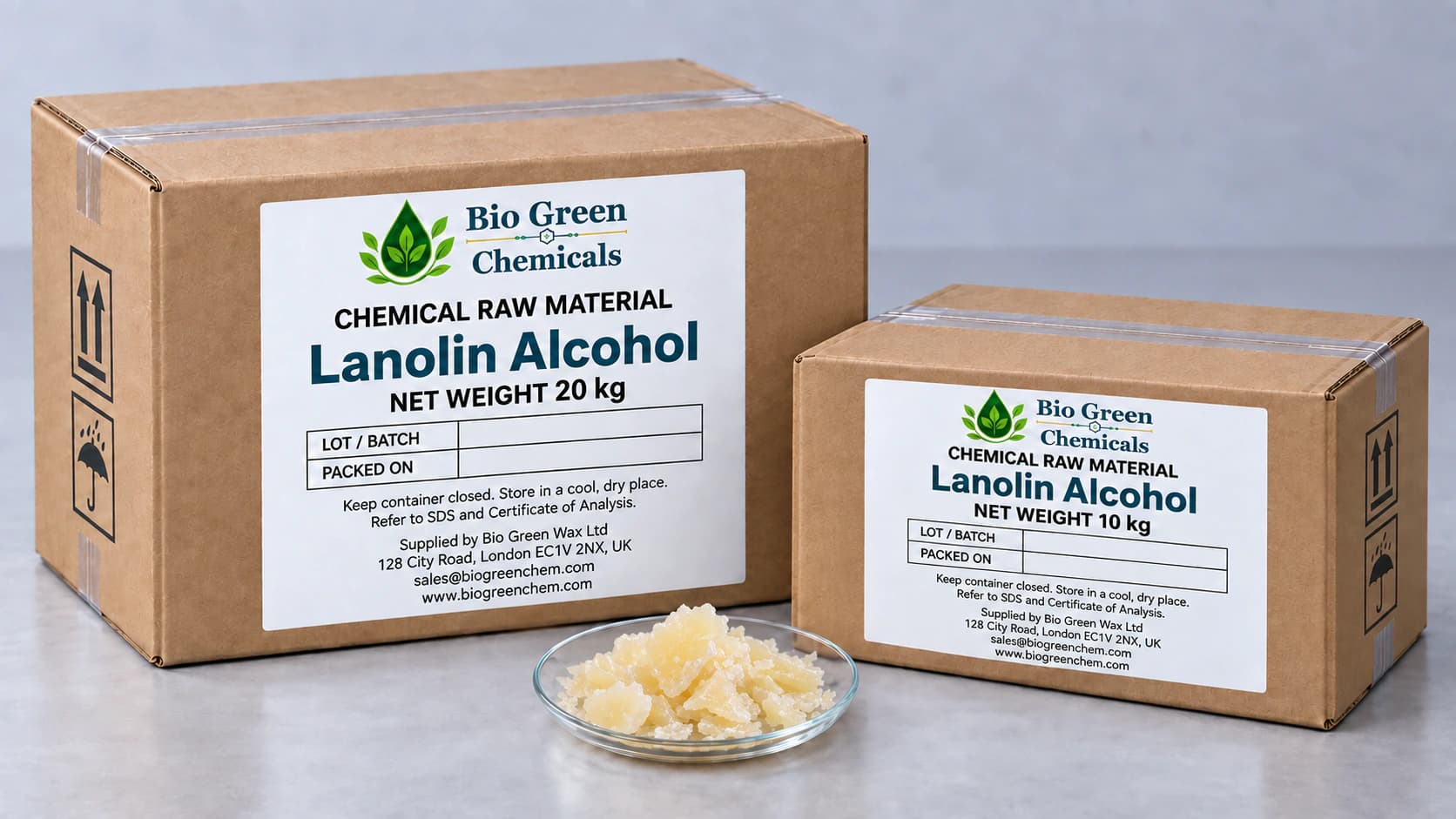
Lanolin Alcohol
Lanolin alcohol (INCI Lanolin Alcohol) is the sterol-rich fraction of lanolin. Its cholesterol content is one of the three lipid classes forming the skin's own barrier, which is why it is so well tolerated on damaged skin.
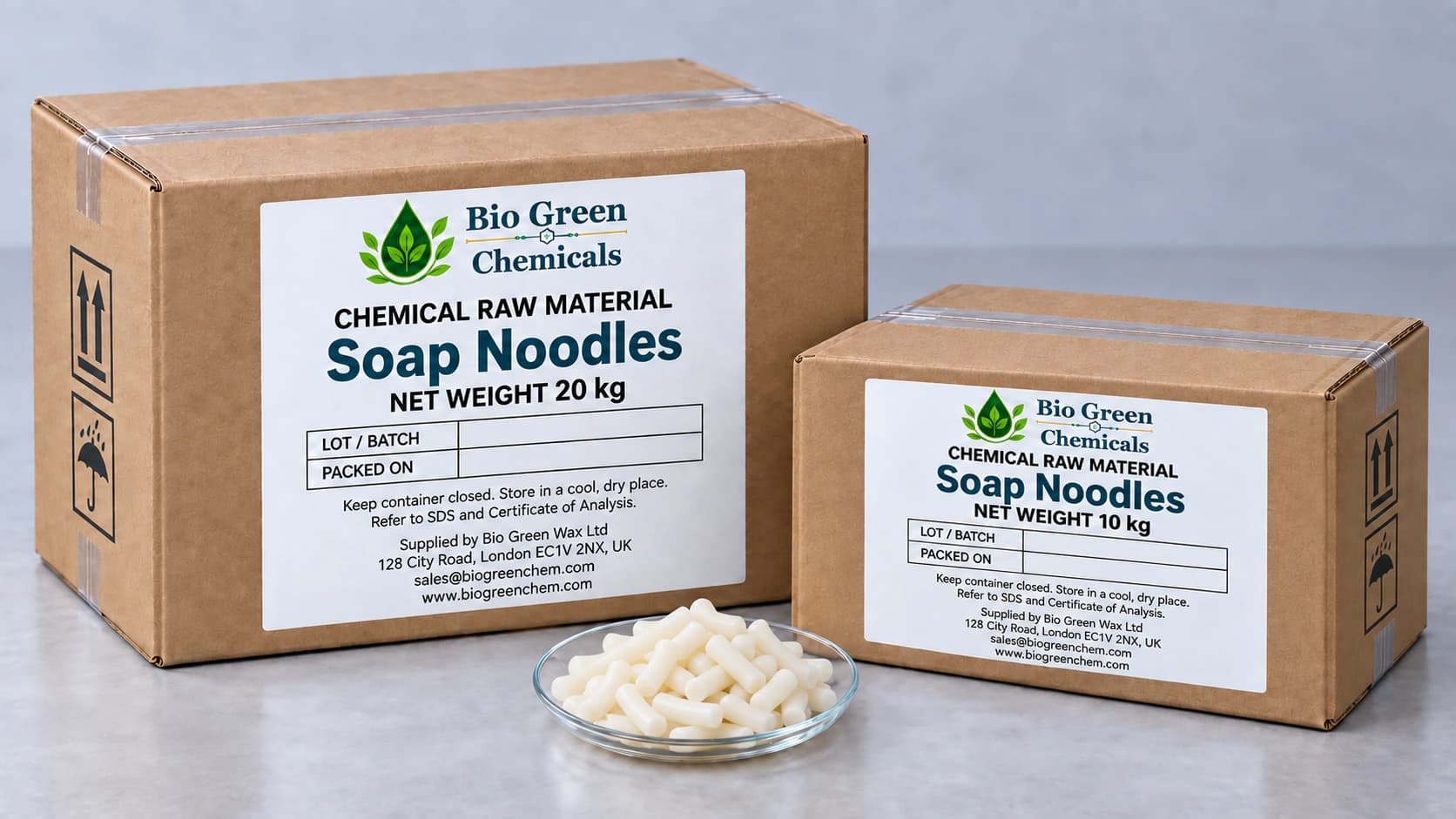
Soap Noodles
Soap noodles are semi-finished extruded soap bought by bar manufacturers who want to skip saponification and drying. Total fatty matter sets bar hardness; the palm to palm kernel ratio trades bar life against lather speed.
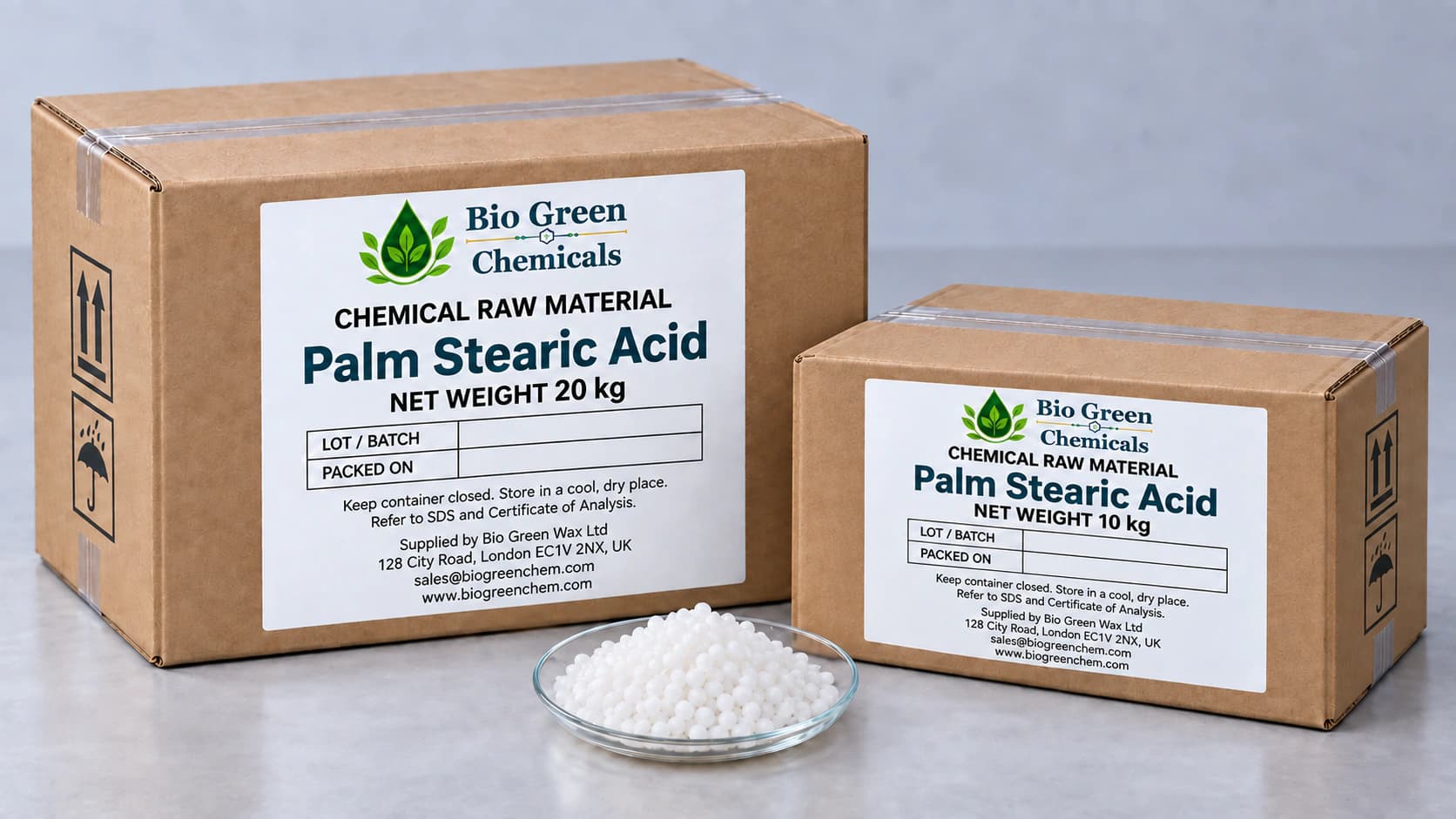
Palm Stearic Acid
Palm stearic acid is a graded blend of palmitic and stearic chains sold by titre, not a pure compound. In cosmetics it is the acid half of the stearic acid and triethanolamine pair that forms classic vanishing creams.