Polyglycerol Fatty Acid Esters (PGFEs)
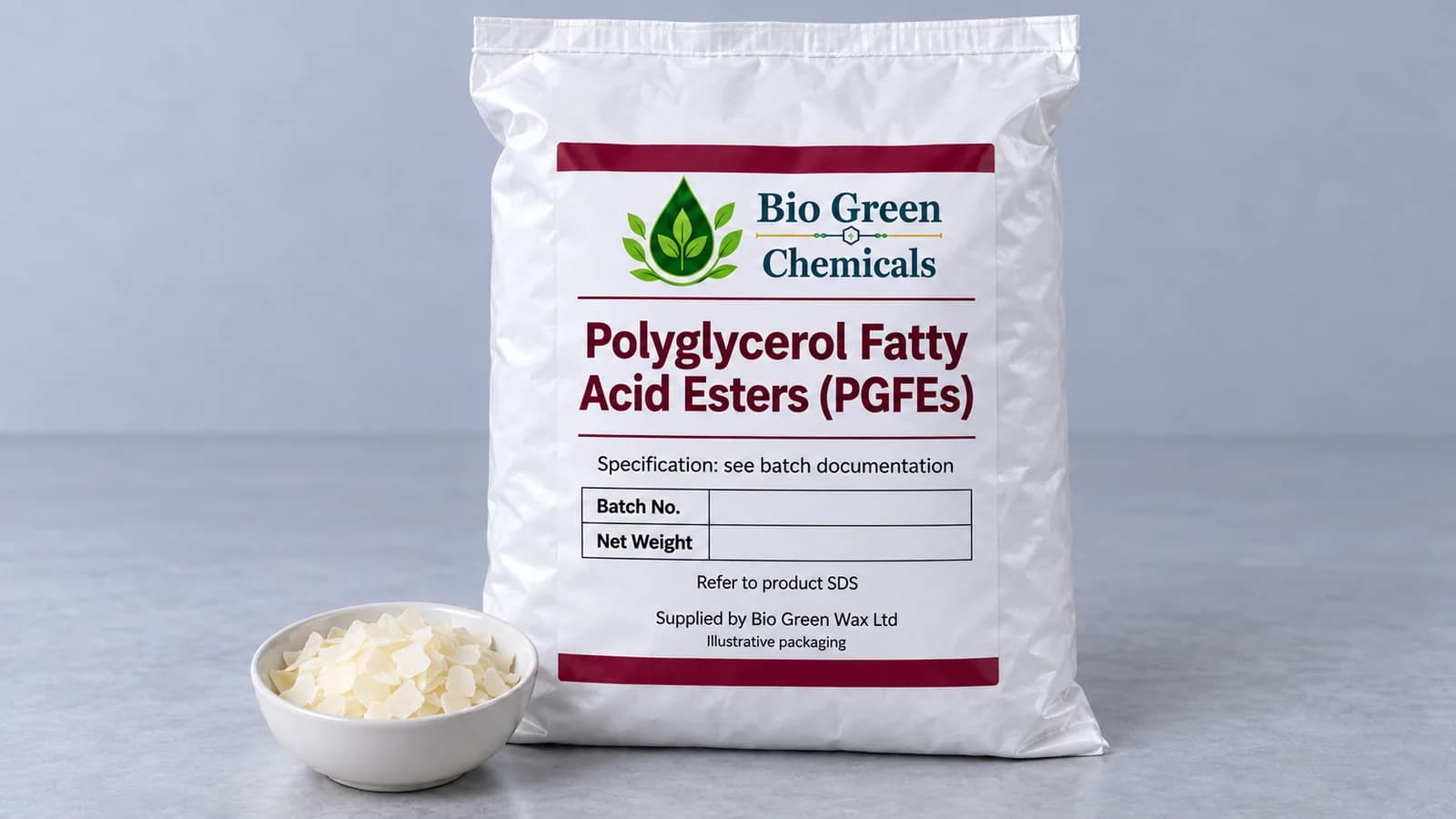
About This Product
Polyglycerol fatty acid esters, abbreviated PGFE, are produced in two stages: glycerol is first polymerised into chains of two, three, six or ten units, and those polyglycerols are then esterified with fatty acids such as lauric, oleic, stearic or ricinoleic. They are supplied as liquids, pastes or waxy solids depending on the combination. Their usefulness comes from being tunable on two independent axes. Lengthening the polyglycerol chain adds hydroxyl groups and makes the molecule more water-loving; changing the fatty acid and the number of esters attached makes it more oil-loving. Adjusting both gives access to almost any HLB value from strongly lipophilic to strongly hydrophilic, using the same basic chemistry. That matters commercially because the conventional way to reach a high HLB is ethoxylation, and PEG-free positioning has become a formulation requirement in natural and clean-beauty ranges. PGFEs deliver comparable emulsifying and solubilising performance from glycerol and fatty acids alone, with no ethylene oxide step and therefore no 1,4-dioxane residue question. Polyglyceryl-3 diisostearate and polyglyceryl-10 laurate are among the most widely specified grades. They are used in PEG-free creams and lotions, water-in-oil systems, cleansing oils and balms, colour cosmetics, and as food emulsifiers. Bio Green Chem supplies polyglycerol fatty acid esters to specification on grade and HLB, hydroxyl value, acid and saponification value, free glycerol and colour.
Specifications
Applications
Packaging Options
- Pack size confirmed on enquiry
Indicative price: $1.00–8.50/kg
Indicative bulk guide only. Prices are market-linked and updated regularly - please request a quote for current pricing and volume rates.