Our Chemicals
Browse our range of industrial and specialty chemicals
Showing 35 products
DPM - Dipropylene Glycol Methyl Ether
Dipropylene glycol methyl ether, DPM, is the two-unit homologue of PM. Doubling the glycol backbone raises the boiling point sharply while keeping full water miscibility, which makes it a slow-evaporating coupling solvent.
DPMA - Dipropylene Glycol Monomethyl Ether Acetate
Dipropylene glycol monomethyl ether acetate, DPMA, is the acetate of DPM. It has no active hydrogen, so it is usable in two-pack polyurethane systems, and its high boiling point makes it a very slow tail solvent.
EE - Ethylene Glycol Monoethyl Ether(EGME)
Ethylene glycol monoethyl ether, EE or 2-ethoxyethanol (CAS 110-80-5), is the ethyl homologue of EM. It shares the same reproductive toxicity classification and restricted status, and has largely been replaced by propylene-series solvents.
DE - Diethylene Glycol Monoethyl Ether
Diethylene glycol monoethyl ether, DE or carbitol (CAS 111-90-0), is a high-boiling, fully water-miscible solvent. Under the INCI name Ethoxydiglycol it is also widely used as a penetration aid in cosmetics.
TE - Triethylene Glycol Monoethyl Ether
Triethylene glycol monoethyl ether, TE (CAS 112-50-5), combines a three-unit glycol backbone with an ethyl cap. It is a very high-boiling, water-miscible solvent used where volatility must be almost eliminated.
EM - Ethylene Glycol Monomethyl Ether
Ethylene glycol monomethyl ether, EM or 2-methoxyethanol (CAS 109-86-4), is the shortest E-series glycol ether. It is classified as a reproductive toxicant in the EU and its use is restricted, so supply is for permitted industrial uses only.
DM - Diethylene Glycol Monomethyl Ether
Diethylene glycol monomethyl ether, DM or methyl carbitol (CAS 111-77-3), is the two-unit ethylene homologue of EM. The second glycol unit raises the boiling point sharply and shifts it out of the restricted short-chain group.
TM - Triethylene Glycol Monomethyl Ether
Triethylene glycol monomethyl ether, TM (CAS 112-35-6), carries three glycol units and a single methyl cap. The extended backbone gives a very high boiling point, low volatility and strong hygroscopicity.
EGP - Ethylene Glycol Monopropyl Ether
Ethylene glycol monopropyl ether, EGP (CAS 2807-30-9), sits between the ethyl and butyl homologues. It offers a middle point on the ethylene-series ladder where EE is too weak a solvent and EB evaporates too slowly.
EB - Ethylene Glycol Monobutyl Ether
Ethylene glycol monobutyl ether, EB or butyl glycol (CAS 111-76-2), is the workhorse of the ethylene series. Unlike the short-chain methyl and ethyl homologues it is not classified as a reproductive toxicant, so it remains in wide use.
DB - Diethylene Glycol Monobutyl Ether
Diethylene glycol monobutyl ether, DB or butyl carbitol (CAS 112-34-5), pairs a two-unit backbone with a butyl cap. Very high boiling and fully water miscible, it is the standard coupling solvent for heavy-duty cleaners.
TB - Triethylene Glycol Monobutyl Ether
Triethylene glycol monobutyl ether, TB (CAS 143-22-6), pairs a three-unit backbone with a butyl cap. It offers the strongest solvency of the triethylene mono-ethers while remaining water miscible and effectively non-volatile.
EDM - Ethylene Glycol Dimethyl Ether(DME)
Ethylene glycol dimethyl ether, EDM or monoglyme (CAS 110-71-4), has methyl groups on both ends, so it carries no hydroxyl at all. That makes it aprotic, which is why it is used with reagents that any alcohol would destroy.
DEDM - Diethylene Glycol Dimethyl Ether
Diethylene glycol dimethyl ether, DEDM or diglyme (CAS 111-96-6), is a high-boiling aprotic solvent that chelates metal cations strongly. It is classified as a reproductive toxicant in the EU and is subject to authorisation.
TEDM - Triethylene Glycol Dimethyl Ether
Triethylene glycol dimethyl ether, TEDM or triglyme (CAS 112-49-2), has four ether oxygens on an open chain and no hydroxyl. That gives it exceptional cation-chelating power at a high boiling point.
TETREDM - Tetraethylene Glycol Dimethyl Ether
Tetraethylene glycol dimethyl ether, TETREDM or tetraglyme (CAS 143-24-8), is the longest common glyme, with five ether oxygens. It combines the strongest cation solvation in the series with a boiling point above 275 degrees.
DEDE - Diethylene Glycol Diethyl Ether
Diethylene glycol diethyl ether, DEDE (CAS 112-36-7), is the ethyl-capped analogue of diglyme. It is aprotic and high-boiling, with lower water miscibility than the dimethyl ether and a different regulatory position.
DEME - Diethylene Glycol Methyl Ethyl Ether
Diethylene glycol methyl ethyl ether, DEME (CAS 1002-67-1), is capped with a methyl group at one end and an ethyl at the other. That asymmetry gives properties between diglyme and the diethyl ether without blending two solvents.
NHD - Polyethylene Glycol Dimethyl Ether
Polyethylene glycol dimethyl ether, NHD (CAS 24991-55-7), is the physical solvent used to scrub carbon dioxide and hydrogen sulphide from gas streams. It absorbs acid gases under pressure and releases them when pressure drops.
MPEG - Polyethylene Glycol Monomethyl Ether
Polyethylene glycol monomethyl ether, MPEG (CAS 9004-74-4), is a polymer capped at one end and left with a single reactive hydroxyl at the other. That asymmetry is what makes controlled PEGylation and surfactant synthesis possible.
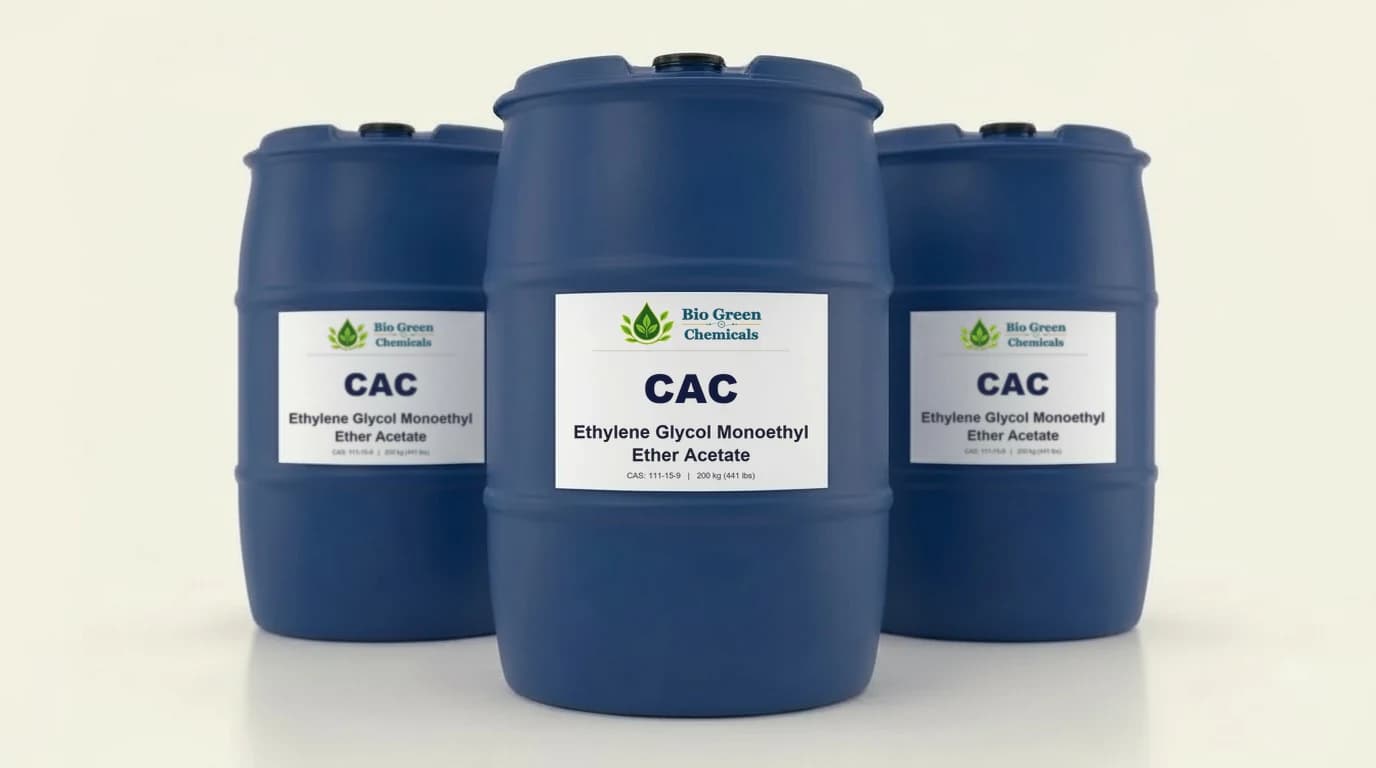
CAC - Ethylene Glycol Monoethyl Ether Acetate
Ethylene glycol monoethyl ether acetate, CAC (CAS 111-15-9), is the acetate of EE. It carries the same reproductive toxicity classification as its parent alcohol, because the ester hydrolyses back to it in the body.
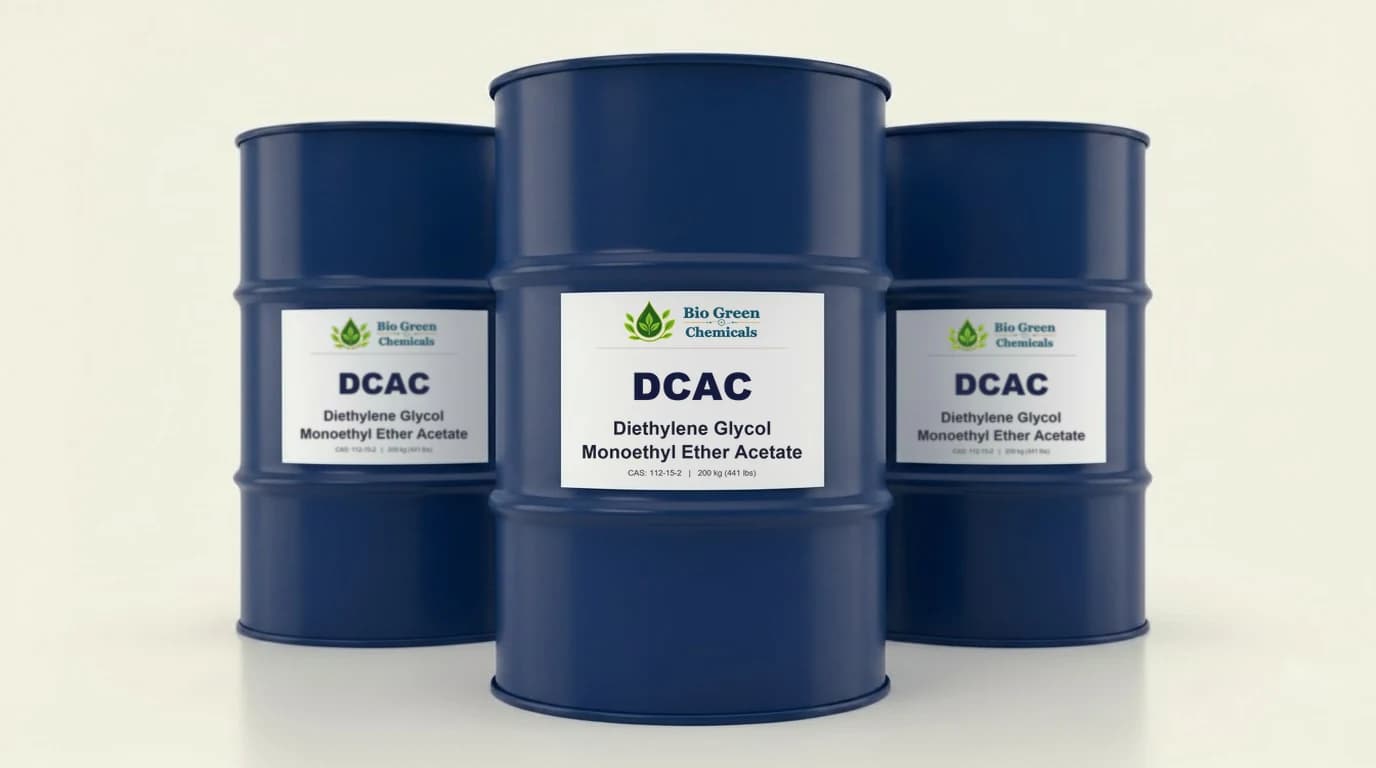
DCAC - Diethylene Glycol Monoethyl Ether Acetate
Diethylene glycol monoethyl ether acetate, DCAC or carbitol acetate (CAS 112-15-2), is the acetate of DE. It is a slow, high-boiling, hydroxyl-free solvent used as a retarder and flow aid in coatings and inks.
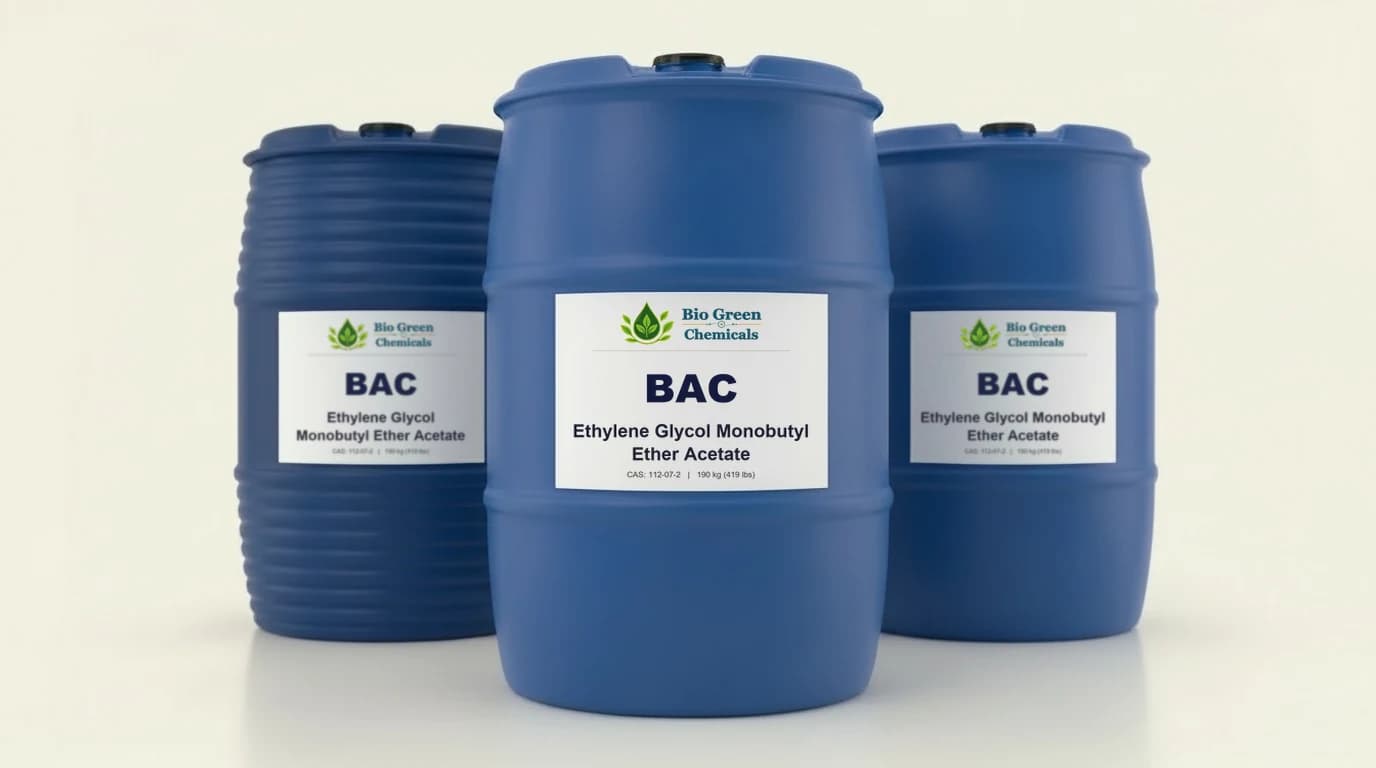
BAC - Ethylene Glycol Monobutyl Ether Acetate
Butyl glycol acetate, BAC (CAS 112-07-2), is EB with its hydroxyl esterified. Removing that active hydrogen makes it usable in two-pack polyurethane systems where a free alcohol would react with the isocyanate.
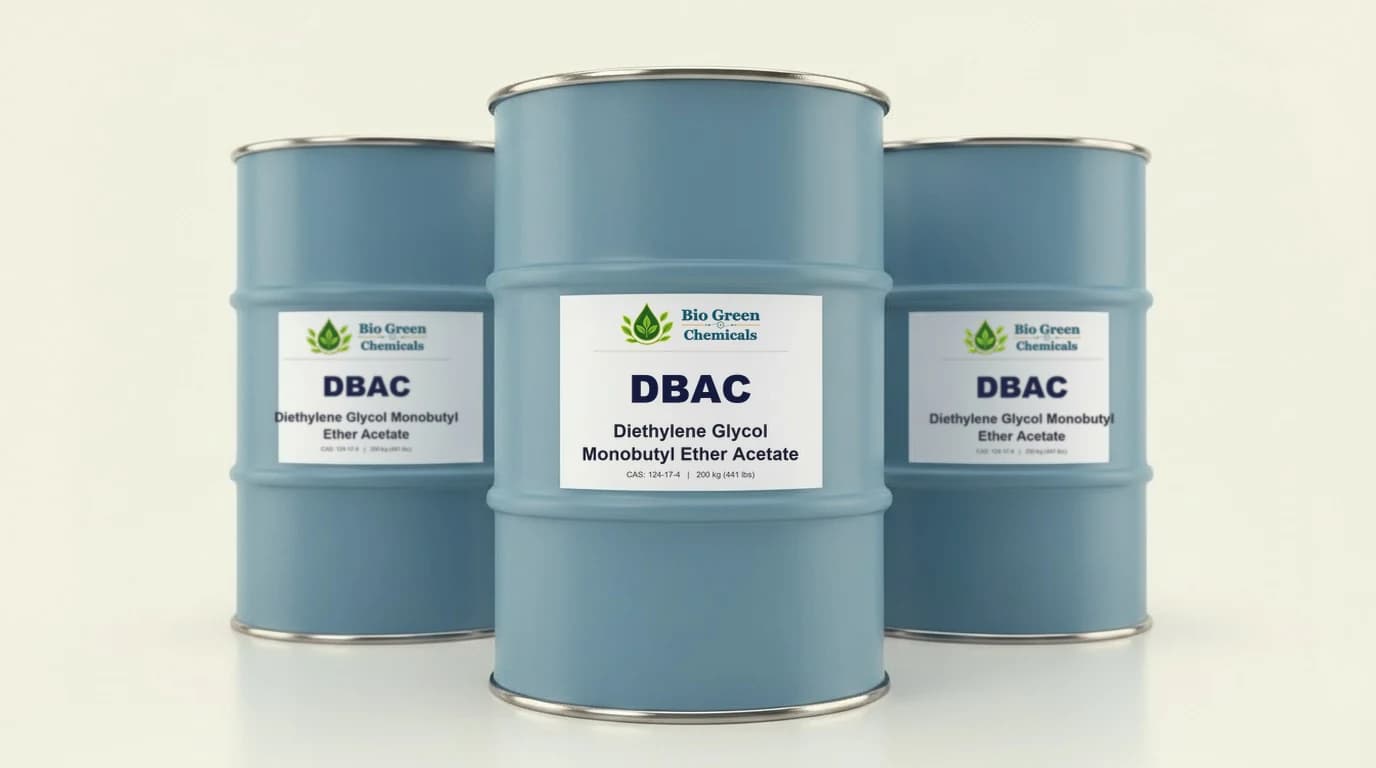
DBAC - Diethylene Glycol Monobutyl Ether Acetate
Diethylene glycol monobutyl ether acetate, DBAC (CAS 124-17-4), is the acetate of DB. With no active hydrogen and a very high boiling point, it is among the slowest solvents available for two-pack polyurethane systems.
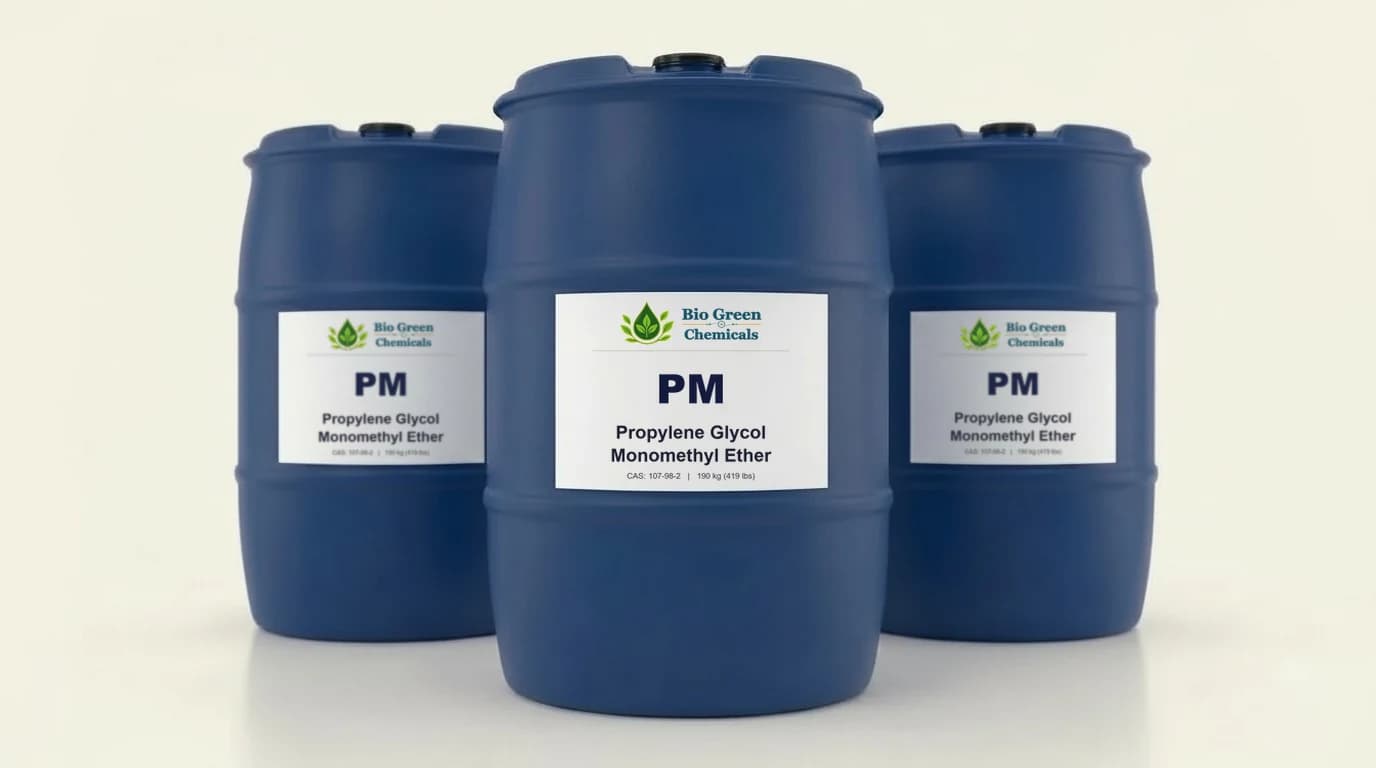
PM - Propylene Glycol Monomethyl Ether
Propylene glycol monomethyl ether, PM (CAS 107-98-2), is the most widely used P-series glycol ether. Commercial grade is over 99.5 percent alpha isomer, because it is the minor beta isomer that carries the toxicological concern.
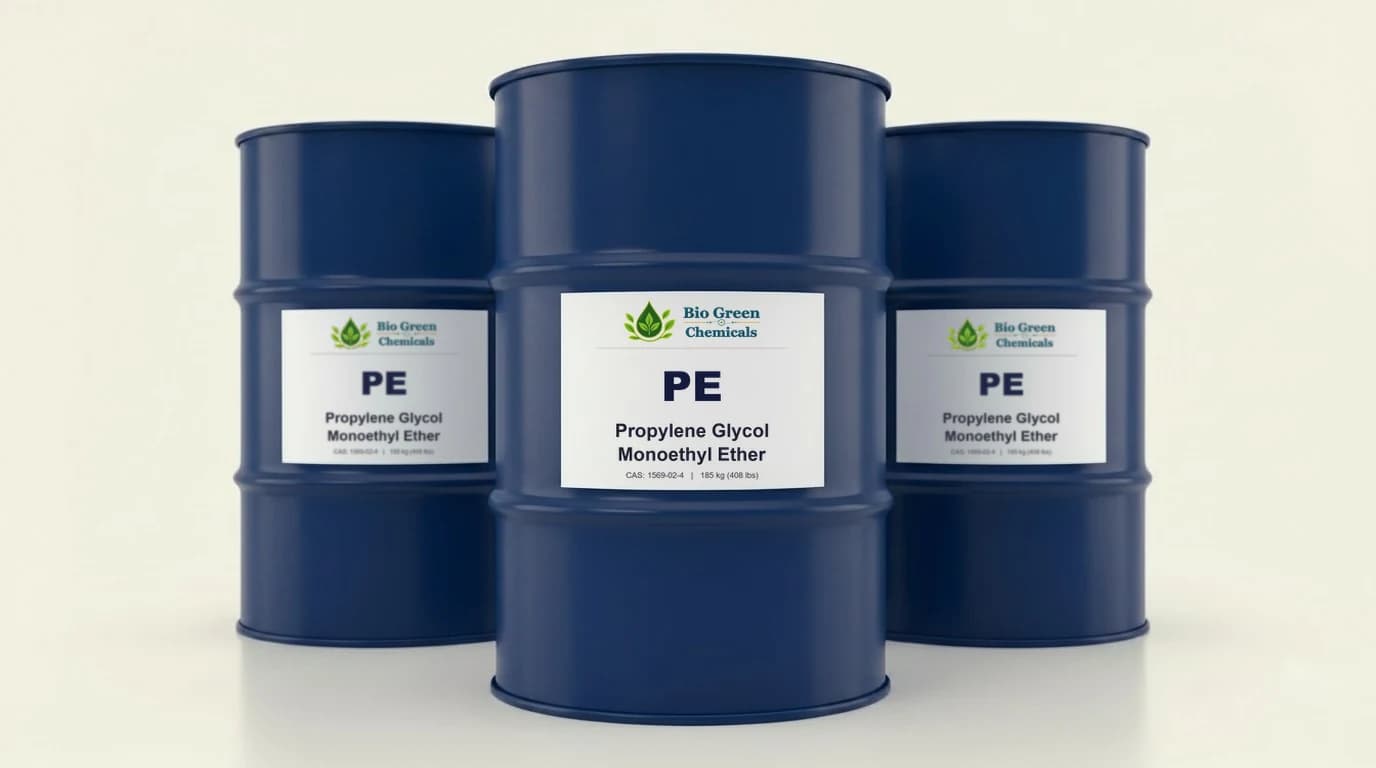
PE - Propylene Glycol Monoethyl Ether
Propylene glycol monoethyl ether, PE (CAS 1569-02-4), is the ethyl member of the P-series. It gives stronger resin solvency than PM while keeping the favourable toxicological profile that distinguishes propylene-series ethers.
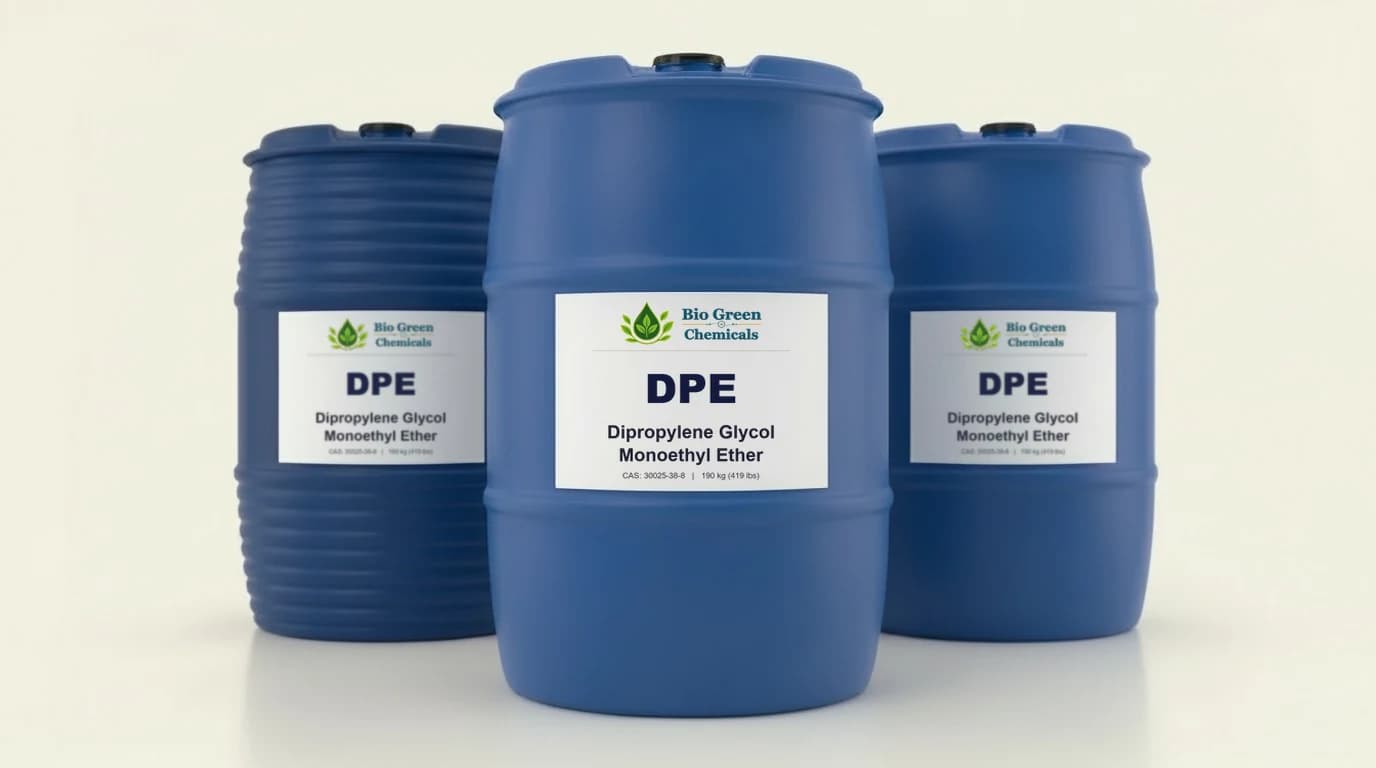
DPE - Dipropylene Glycol Monoethyl Ether
Dipropylene glycol monoethyl ether, DPE (CAS 30025-38-8), pairs a two-unit glycol backbone with an ethyl cap. It is a high-boiling, low-odour, water-miscible solvent widely accepted in consumer cleaning products.
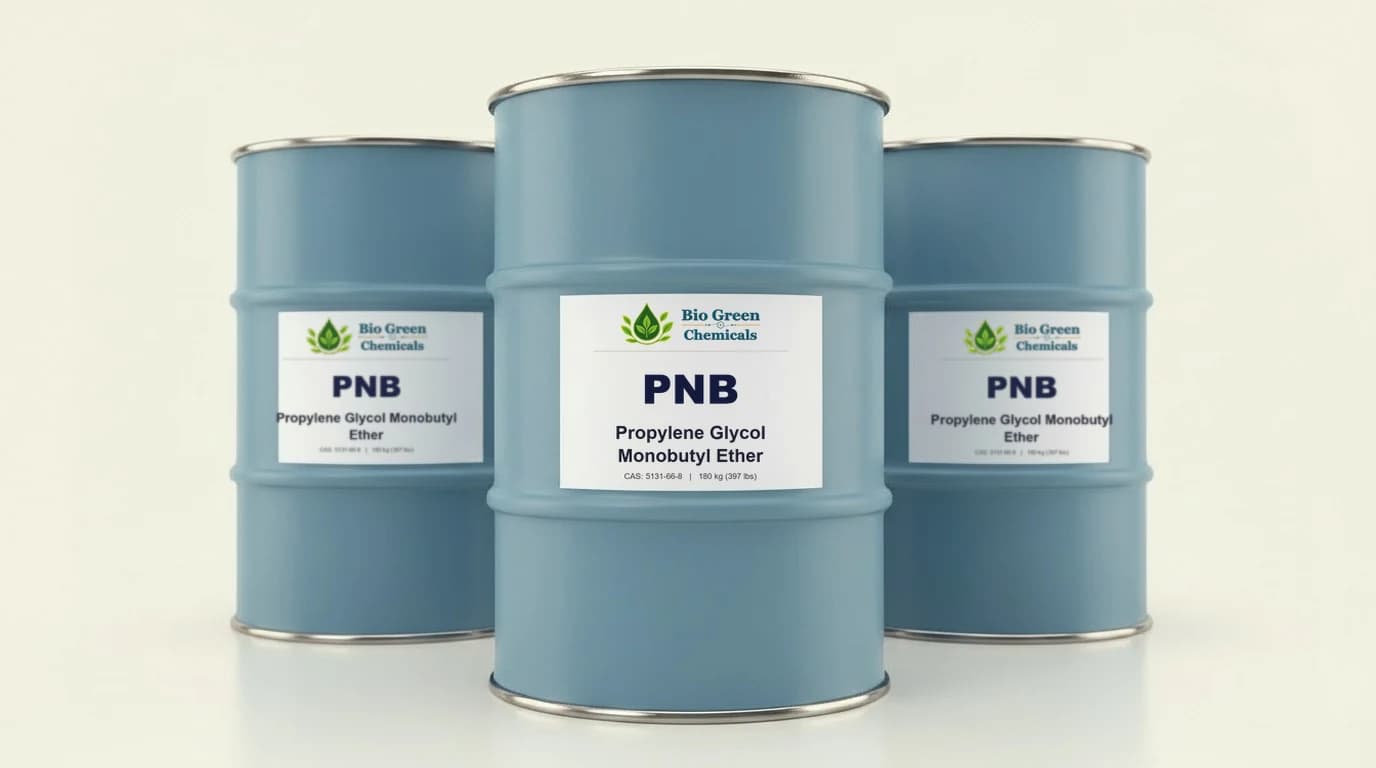
PNB - Propylene Glycol Monobutyl Ether
Propylene glycol monobutyl ether, PnB (CAS 5131-66-8), is the strongest solvent in the single-unit propylene series. Its slow evaporation makes it a tail solvent, staying in the film to aid flow after faster solvents have gone.
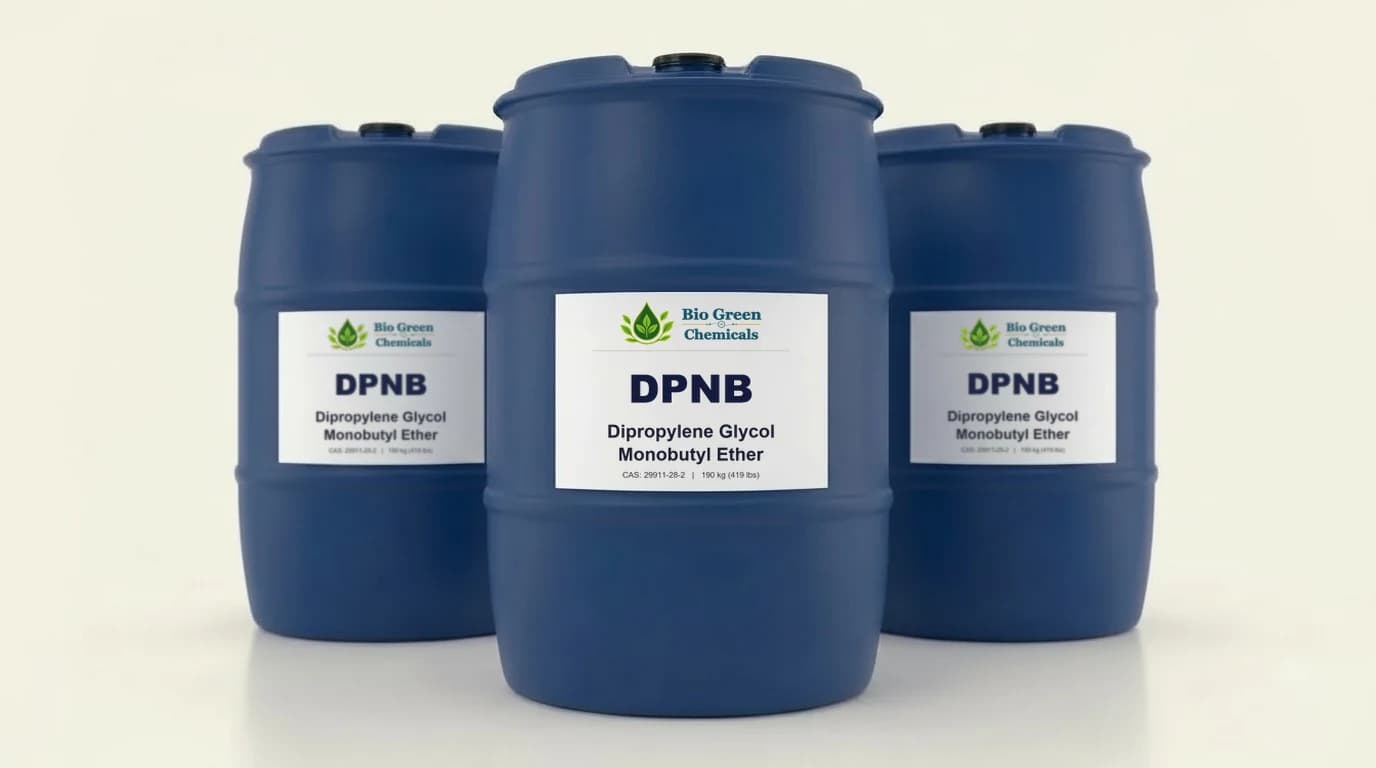
DPNB - Dipropylene Glycol Monobutyl Ether
Dipropylene glycol monobutyl ether, DPnB (CAS 29911-28-2), is among the most widely specified coalescents in architectural paint. Its strong polymer affinity and very slow evaporation make it effective at low addition.
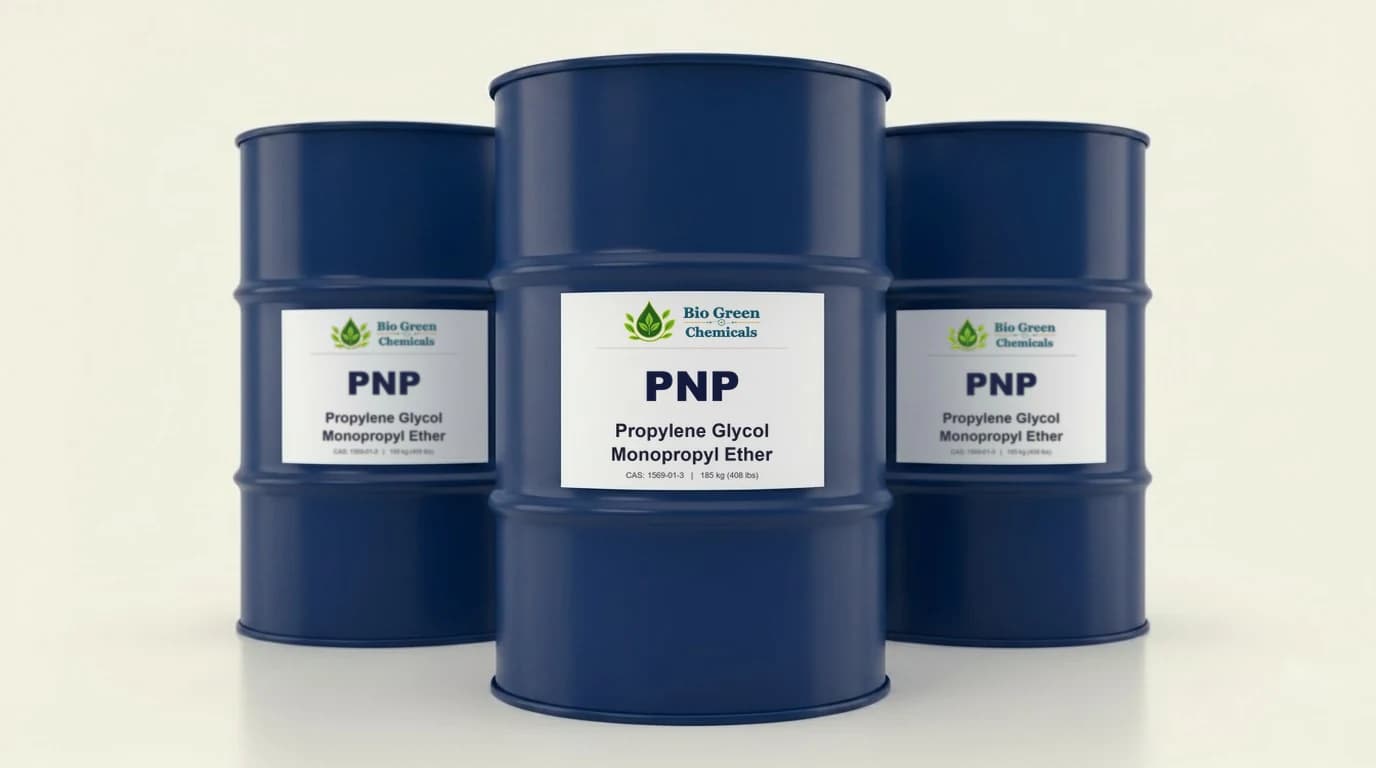
PNP - Propylene Glycol Monopropyl Ether
Propylene glycol monopropyl ether, PnP (CAS 1569-01-3), combines full water miscibility with strong solvency for oils and greases. That pairing makes it a standard coupling solvent in water-based cleaning formulations.
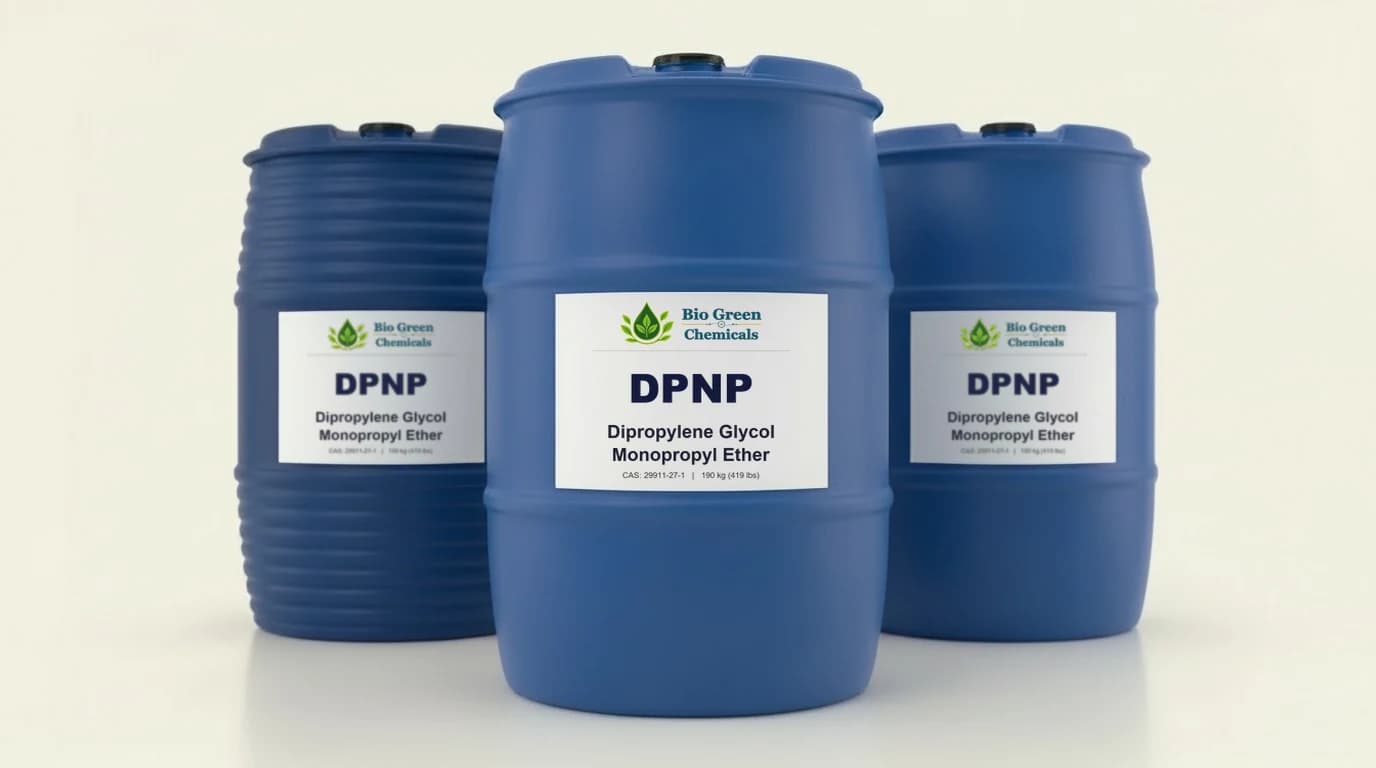
DPNP - Dipropylene Glycol Monopropyl Ether
Dipropylene glycol monopropyl ether, DPnP (CAS 29911-27-1), combines a two-unit backbone with a propyl cap. It is a slow-evaporating coalescent that stays in a latex film long enough to complete polymer fusion.
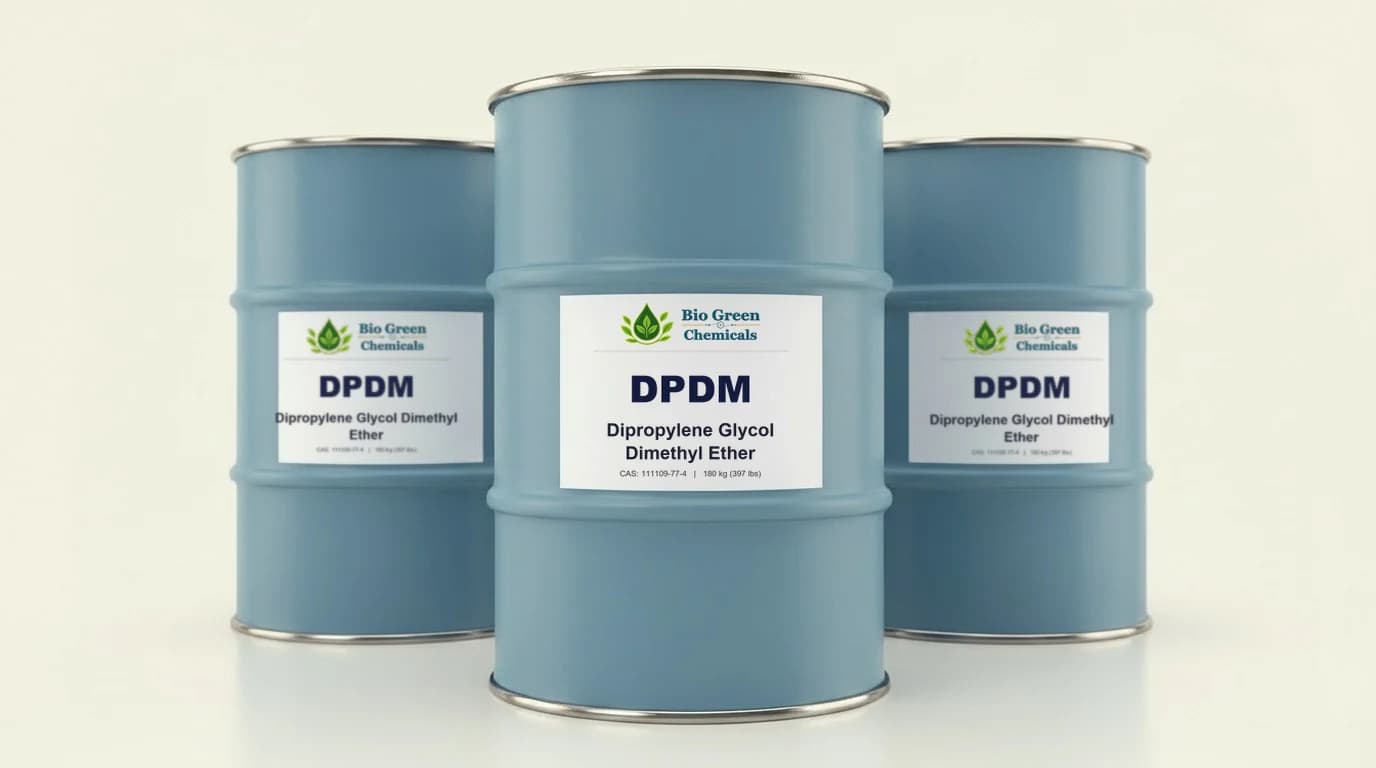
DPDM - Dipropylene Glycol Dimethyl Ether
Dipropylene glycol dimethyl ether, DPDM, is capped with methyl groups at both ends, so it carries no hydroxyl. It is a high-boiling aprotic solvent used where an active hydrogen would interfere with the chemistry.
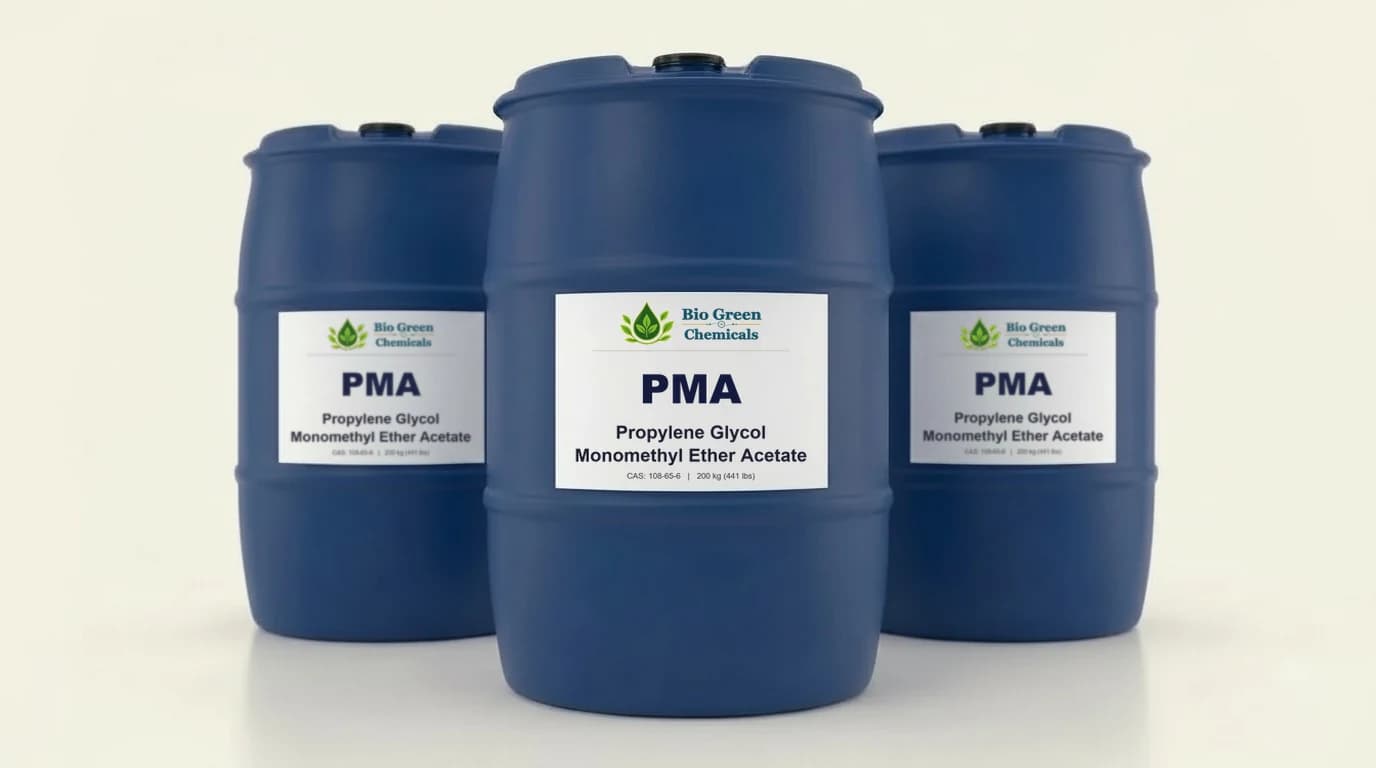
PMA - Propylene Glycol Monomethyl Ether Acetate
Propylene glycol monomethyl ether acetate, PMA or PGMEA (CAS 108-65-6), is the standard solvent of the semiconductor industry. It is the carrier and developer solvent for photoresists, where purity is specified in parts per billion.
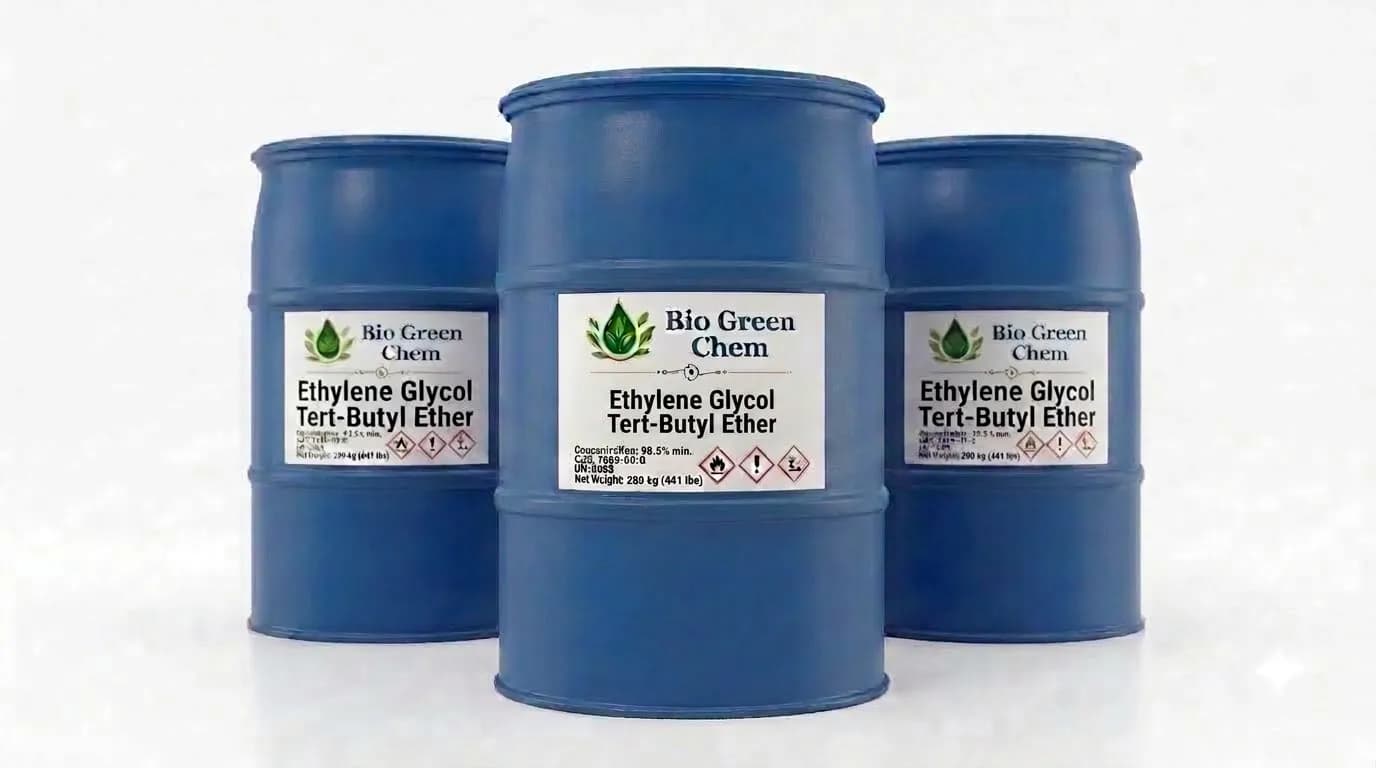
Ethylene Glycol Tert-Butyl Ether
Ethylene glycol tert-butyl ether (CAS 7580-85-0) carries a branched tertiary butyl group rather than a straight chain. That branching lowers its boiling point and changes its solvency relative to the linear butyl isomer, EB.
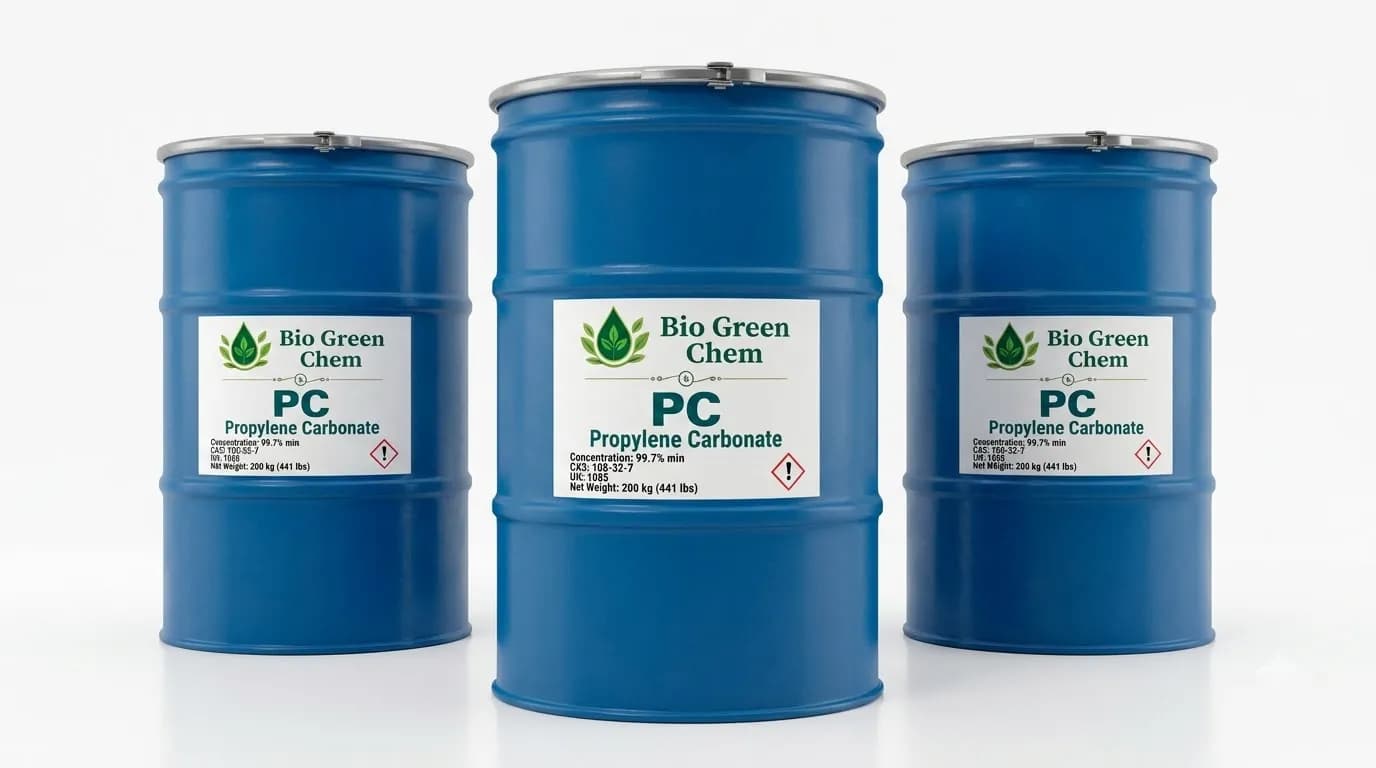
Propylene Carbonate (PC)
Propylene carbonate (CAS 108-32-7, EINECS 203-572-1) is a polar aprotic solvent with an unusually high dielectric constant. It is readily biodegradable and low in toxicity, which is why it displaces solvents such as NMP.