About This Product
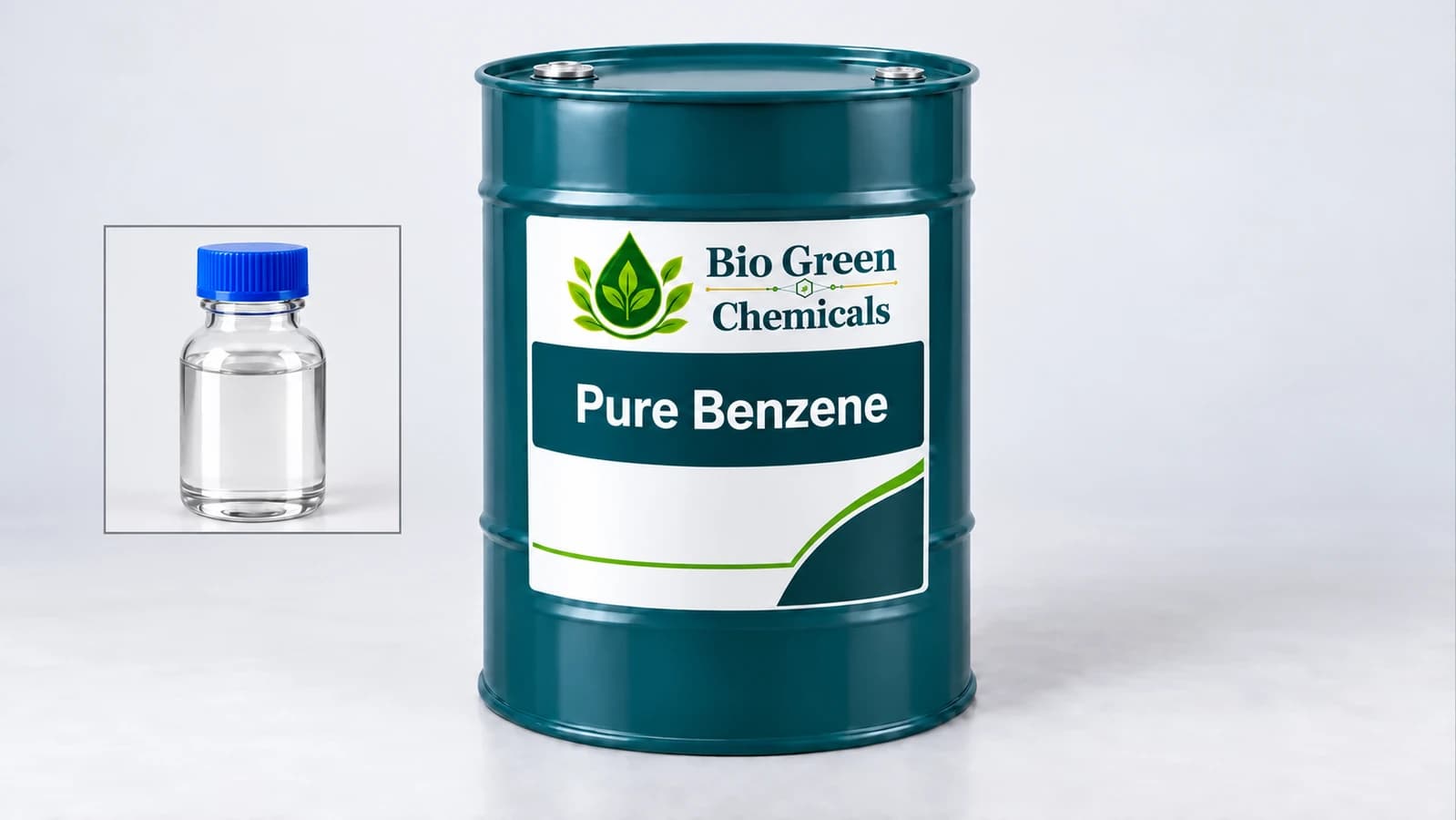
Benzene of this grade comes from a refinery aromatics complex. Naphtha is passed over a platinum catalyst in a catalytic reformer, where naphthenes are dehydrogenated and paraffins cyclised into aromatics; the reformate is then contacted with a selective solvent that separates the aromatics from the remaining paraffins, and the aromatic extract is fractionated into benzene, toluene and xylenes. Benzene is the lightest of the three and the one bought almost entirely as a chemical feedstock rather than as a solvent. Purity in benzene is judged first by solidification point. Pure benzene freezes at a temperature many plants see in winter, and every impurity, whether a co-boiling paraffin or a trace of toluene, pulls that point down. Measured on an anhydrous basis, the solidification point must be min 4.85 °C, which makes it a direct and sensitive purity measure. The distillation range within 1°C (including 80.1°C) confirms a single narrow-boiling component, and a specific gravity of 0.8820 – 0.8860 gives a quick receipt check against contamination. Nitration grade means the material passes the tests that matter to a mixed-acid nitrator and to downstream catalysts. An acid wash colour of max 2 holds down the olefins and thiophenic compounds that react with concentrated sulphuric acid to form coloured, tarry by-products. Acidity is nil, the product is free of H2S & SO2 by the sulphur compounds test, and the copper strip result is non-corrosive, which protects alkylation and hydrogenation catalysts as well as carbon-steel equipment. Colour (Pt-Co) is max 20, an essentially water-white liquid. Most benzene is converted rather than used as it is: alkylated with ethylene to ethylbenzene for styrene, with propylene to cumene for phenol and acetone, hydrogenated to cyclohexane for caprolactam and nylon, nitrated to nitrobenzene for aniline and MDI, and alkylated with long-chain olefins to linear alkyl benzene for detergents. Toluene and mixed xylenes on this site come from the same extraction train but are bought mainly as solvents and intermediates. Benzene is a known human carcinogen and is handled only under strict industrial controls, with closed transfer, vapour control and exposure monitoring; its classification and handling requirements are set out in the SDS. Because it solidifies at a relatively high temperature, tanks and lines may need heating in cold weather. Bio Green Chem supplies Pakistani-origin benzene with packaging and mode of transport agreed on each offer, in line with the carriage rules for a flammable liquid. Its certificate of analysis accompanies each consignment. Benzene's technical datasheet can be read on this page, and an SDS reaches buyers on request.